What I Read in 2019

In past years I’ve done a list of all the comics (and comics-related stuff) I’ve read, with a short write-up for each item. This year, that’s just not feasible given the amount of material I read and the time I have available… but here’s my list for 2019 with a few comments on things here and there. 

Note that there are most certainly books I’ve forgotten to add to my list that I’ll no doubt remember after I’ve posted this, and there are for sure a ton of mini-comics in particular that I read quickly then prematurely filed in my office minicomic heap without recording them. 


Charlotte Impératrice (FR) – Matthieu Bonhomme

Charlotte Impératrice : 1. La Princesse et l'Archiduc - un ...

Bonhomme is a French cartoonist who is sadly not well-represented in English translation. This book begins a multi-volume story of Carlota of Mexico. The art style is a bit more neo-realistic than previous Bonhomme stuff I’ve read and the coloring is really interesting: it seems like an attempt to pair flat coloring of figures with limited palettes and  extensive use of gradients for backgrounds. Some of the big panels and spreads in here are mind-blowing. You see his process for one in this video.

Here – Richard McGuire

Here by Richard McGuire Review :: Comics :: Reviews :: Paste

The basic conceit of the original strip this book’s an expansion of is so brilliant that it’s literally changed the formal language of comics. I enjoyed reading this, but there’s an air of of “remaking Stairway to Heaven” to the project. Still, I’ll take what I can get from McGuire, who doesn’t do actual full-on comics very often. 

The Invisibles volumes 2 & 3 – Grant Morrison

The Invisibles: Book 1 by Grant Morrison graphic novel ...

I’ve been a big fan of this series ever since it came out, but had not read the full third series until now. That third installment is a bit haphazard for sure, but the second volume–still my favorite volume–is pretty great even on a third (fourth?) read.  I’m still listening along with The King Mobcast as they go through the series. 

Born to be Posthumous – Mark Dery 
Bezoar # 3  – various artists
Beneath the Dead Oak Tree – Emily Carroll
Audubon: On the Wings of the World – Fabien Grolleau

Atomic Empire – Thierry Smolderen and Alexandre Clérisse

Culture SF - Souvenir de l'empire de l'Atome

This book is worth checking out for its aesthetic alone. As you can see above, it’s got a late 50’s/early 60’s advertising art/UPA thing going on that’s unlike pretty much anything else you’re gonna see in comics (all done in illustrator, apparently, as you can see in this video). I was pretty surprised that this book didn’t make more of a splash… but (inexplicably) all the promotion I could find for from its North American publisher didn’t have any samples of the interior art! The story is fascinating and ambitious–and I admit I didn’t fully get the ending–but it’s definitely one of my favorites of the year.

Beyond the Windy Isles – Hugo Pratt
Celtic Tales – Hugo Pratt

Image result for Celtic Tales by Hugo Pratt

Beyond the Windy Isles is absolutely great stuff–just what you want from Corto Maltese: seafaring proto-Han Solo adventures drawn in Pratt’s exquisite “about to fly off the hinges” style… Which is what makes Celtic Tales such and odd bump in the Corto road. It’s odd both story-wise and art-wise. The stories find Corto in land-locked European settings that don’t really give Pratt a chance to show off his best chops, drawing stuff like vegetation and water. And, as weird as it sounds to say, some of the drawing in this volume does kind of fly off the rails. Things are sloppy. Characters are off-looking, Don’t even get me started on the story where characters from Arthurian legend help Corto blow up a WWII sub (or something like that).  

Guirlanda (FR) – by Lorenzo Mattotti and Jerry Kramsky
Frankenstein – by Junji Ito
The Creepy Case Files of Margo Maloo: The Monster Mall by Drew Weing
I, Rene Tardi, Prisoner Of War In Stalag IIB Vol. 1 – Jacques Tardi
Popeye, Vol. 1: I Yam What I Yam – E.C. Segar
Popeye, Vol. 2: Well Blow me Down – E.C. Segar

Breaking the Frames: Populism and Prestige in Comics Studies – Marc Singer
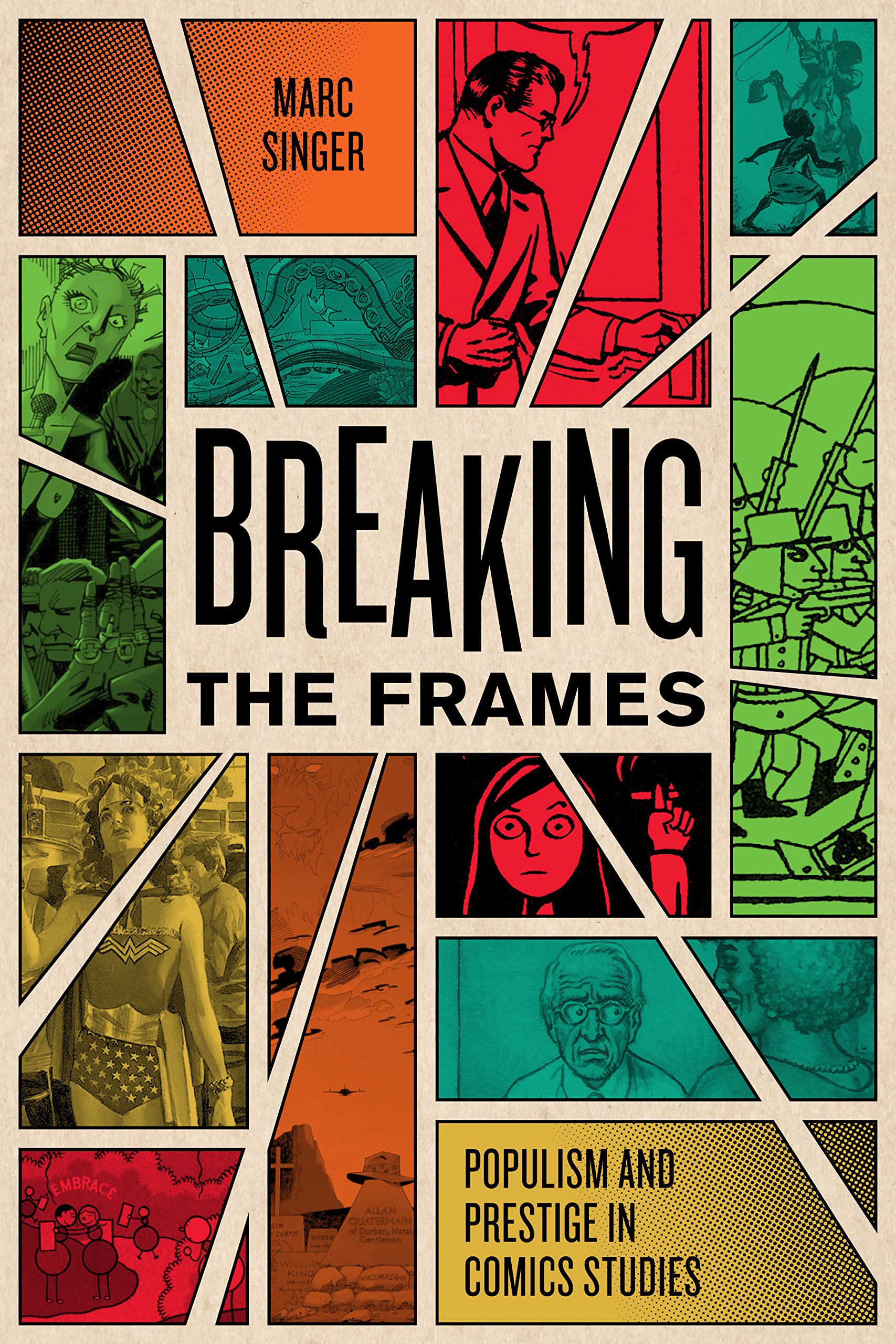
Arguably the most important book about comics in 2019–and for sure the one that stirred the most controversy. I wrote a post with my thoughts on it here.

Emma G. Wildford (FR) – Zidrou (Writer), Edith (Artist)
Lone Wolf and Cub Omnibus Volume 2 – Kazuo Koike and Goseki Kojima
Little Bird #1 & #2 – Darcy Van Poelgeest and Ian Bertram

Witch Hat Atelier vol. 1 & 2: Kamome Shirahama
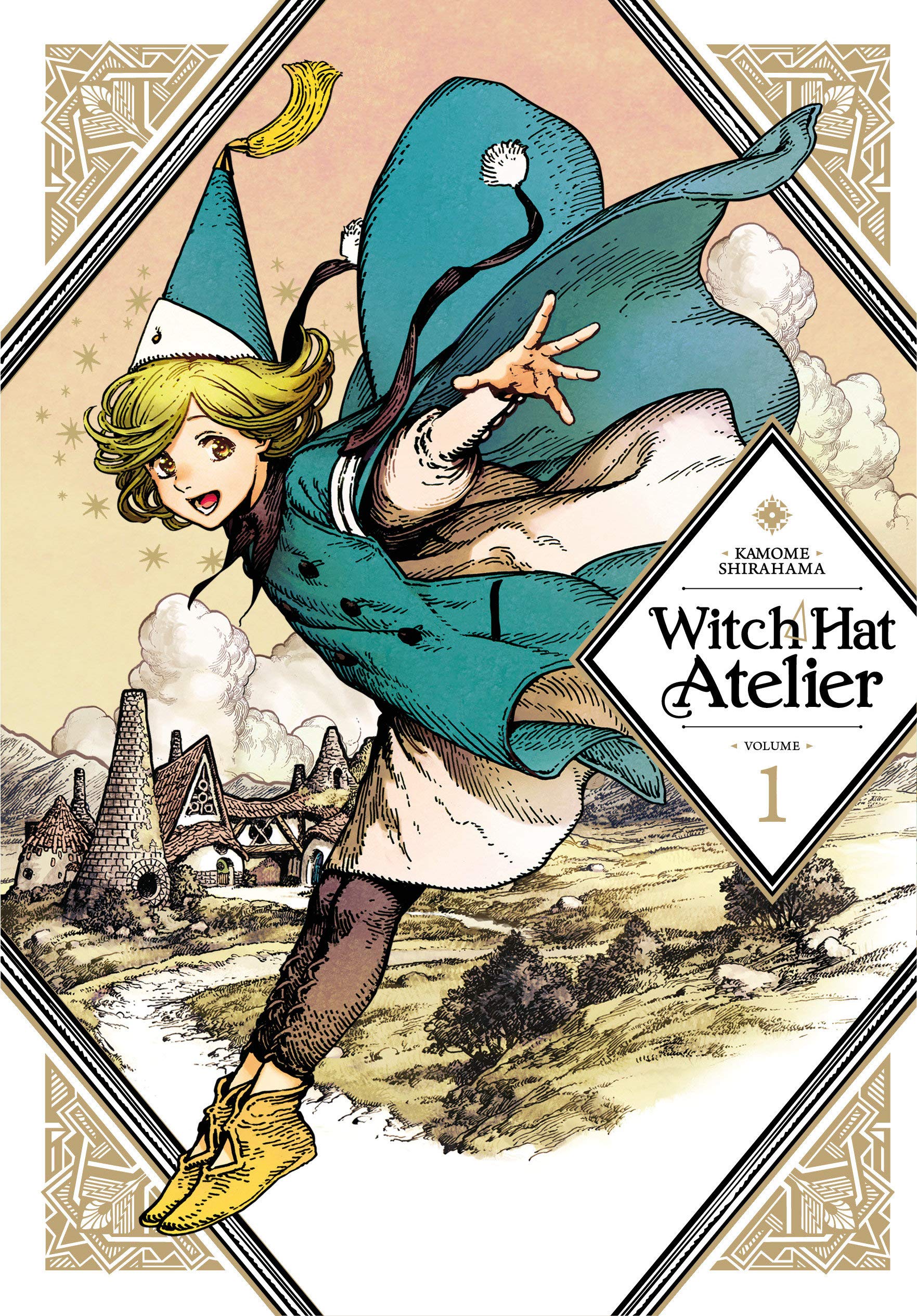
Image result for witch hat atelier

My favorite manga of recent vintage. The first volume is slightly rote story-wise–it’s the classic “regular kid discovers they’re actually a super-special magic user and winds up at wizard school” bit–but, by the second volume things begin to differentiate from the standard “wizard school” narrative and get interesting. The really unique magic system outlined in the book is one of its best features, as is the gobsmackingly pretty Moebius-inflected (but still obviously manga) artwork. 

The Art of Nothing: 25 Years of MUTTS and the Art of Patrick McDonnell – Patrick McDonnell
Image result for The Art of Nothing: 25 Years of MUTTS and the Art of Patrick McDonnell

This is a big, beautiful retrospective art book celebrating the first 25 years of the newspaper strip, Mutts. It’s filled with scans of original art, early advertising/illustration art by McDonnell, color guides for Sunday strips, and selected “best of” strips. Mutts is one of the few currently running truly great newspaper comics and it’s great to see it get such a high-caliber milestone retrospective.  

Sobek – James Stokoe

Image result for Sobek - James Stokoe

This one may be a bit difficult to track down, but it’s well worth it. It’s an abjectly ridiculous (and I mean that in the absolute best way) story about a crocodile god that begrudgingly heeds the calls of his worshipers to do battle with a rival deity. As with all things James Stokoe, the art is jaw-dropping panel after jaw-dropping panel of exquisite detail and bonkers color.   

Pope Hats #6 – Hartley Lin
Oishinbo – Izakaya: Pub Food – Tetsu Kariya and and Akira Hanasaki
Le Journal de mon Père (FR) – Jirō Taniguchi
The Columbus Scribbler #3 – various artists

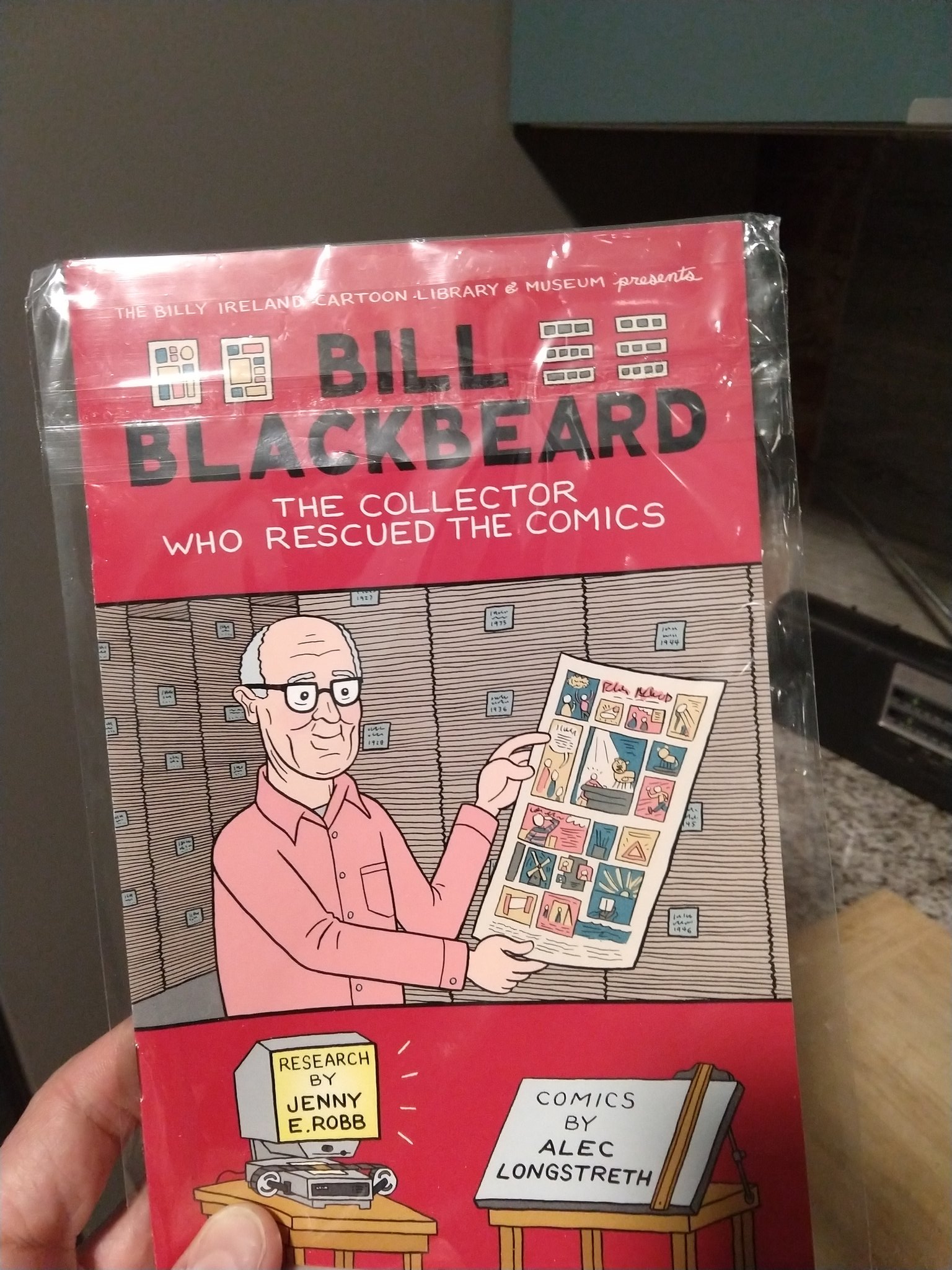
Bill Blackbeard – The Collector Who Rescued Comics – Jenny E. Robb & Alec Longstreth
Image

You’ve gotta get this one at The Billy Ireland Cartoon Library and Museum here in Columbus! If–like me–you were obsessed with the old Smithsonian Collection of Newspaper Comics as a kid, you know who Bill Blackbeard is. This short comic, illustrated by Alec Longstreth (Basewood, Phase 7), is a quick history of his life and influence, based on research by Billy Ireland’s Jenny E. Robb. 

Ready for Pop – Hurk

In Review: Ready for Pop by Hurk – downthetubes.net

Hurk is apparently a staple of the indie comics scene in the U.K., but not well known here in the U.S… which is too bad, because this book is fantastic. As you can see, it’s got a great 90’s-esque indie comics look to it that’s all but vanished here in the U.S. largely as a result of the ubiquity of color printing. The story’s set in mid-60’s London and centers on a pop singer who’s been inexplicably shrunken. Nicely drawn, fun, and funny–pick it up if you can. 

Wasted Space #1 – Michael Moreci & Hayden Sherman
Egg Cream #1 – Liz Suburbia
Meeting Comics #1 – Andrew Neal
Paul Moves Out – Michel Rabagliati
Pope Hats #1 – Ethan Rilly
Planetes Vol. 2 – Makoto Yukimura
The Pterodactyl Hunters in the Gilded City – Brendan Leach

Canopus #1-#4 – Dave Chisholm
Image

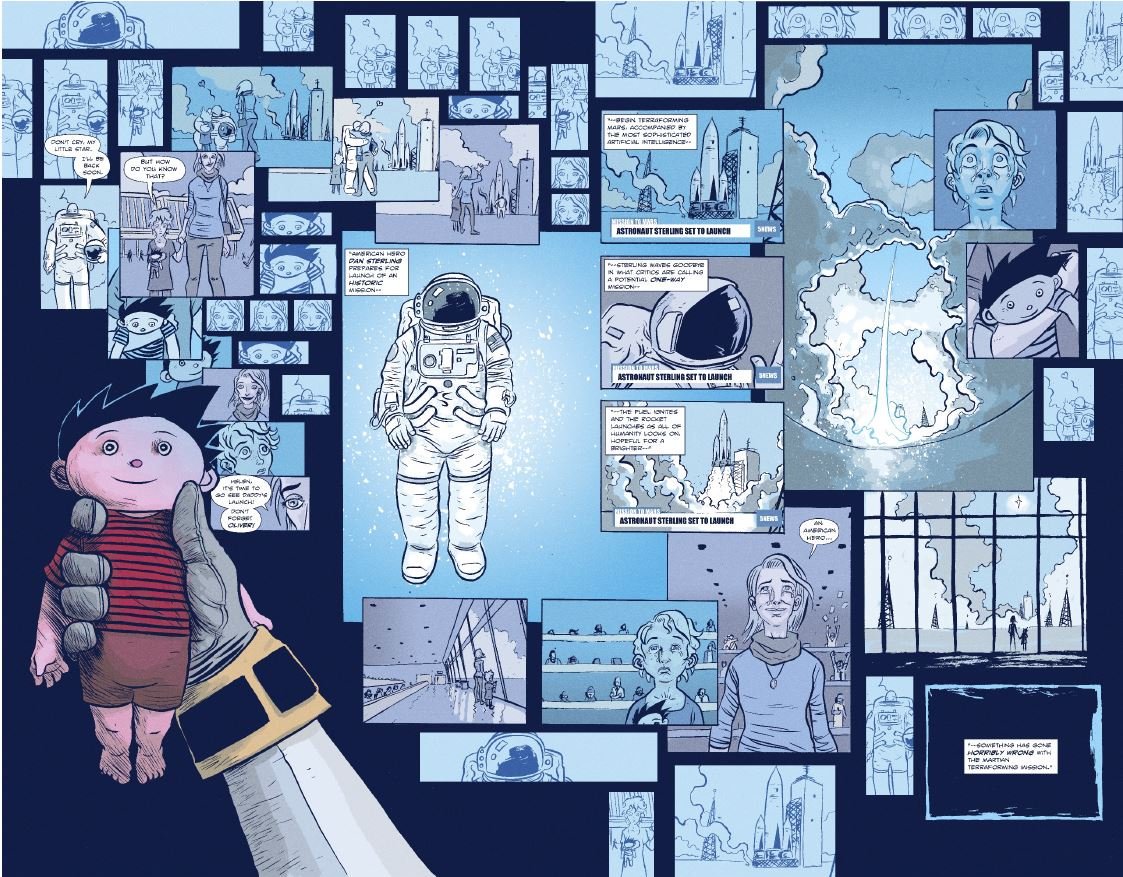
This series isn’t coming out until February, but Dave’s been posting bits and pieces to Twitter intermittently… and he generously let me read an advanced digital version of the series. This story ticks a lot of boxes for me: a SF story drawn in a somewhat cartoony style, great Solaris-esque premise, beautiful coloring, unconventional page layouts and storytelling. Definitely be on the lookout for this in a few months from Scout Comics.  

Tintin and the Picaros – Hergé

Hergé and Tintín..AMAZING !! | El Baúl de Guardián 

So, this may or may not be the end of my couple years’ long chronological read/reread of Tintin (I can’t decide if I’m gonna bother with Alph-Art). This book seems to be largely considered the worst of the late-era Tintin books, but I found it more just rote than anything. Coming not too far after the heartfelt Tintin in Tibet and then the near-meta story that is Castafiore Emerald, this seems (aside from some typical late-era weirdness like odd close-up staging and characters behaving a bit out-of-character at times) this just seems like a standard “Tintin goes somewhere” adventure from the beginning of Hergé’s career. Now the previous book, Flight 714… there’s a terrible Tintin book!


See you next year… and read more comics!

Selected Sketchbook Drawings – October 2019

I haven’t posted any sketchbook pages in forever, so here goes… 

Truth be told, I’d weirdly fallen out of my years-long habit of drawing nightly in my sketchbook and have only recently gotten back into it. Why had I fallen off? I’m not exactly sure–other than that I’ve had a lot of “life getting in the way” events happening in the last year and a half or so. And, as I’ve been working pretty steadily on Four-Fisted Tales, I’ve been keeping up with drawing pretty much every day, even if it wasn’t in my sketchbook. Thankfully though I’ve gotten back in the sketchbook habit–and I’m all the better for it. Non-directed drawing is something that I feel is really beneficial, even if you’re working on/drawing a comic regularly. 

(And if you’re interested in more regular sketchbook stuff, I regularly post my sketchbook work to my IG – @ben_f_towle.) 

So, below is just a handful of things selected from either my actual physical sketchbook or from “pages” of digital sketching that I’ve been doing on my Wacom MobileStudio Pro. (I’vs also started regularly attending weekly live animal-drawing sessions at CCAD, but those are so loose and gestural–not to mention hard to scan, given their size–that I’m not including them here.)

Here’s a digital sketch I did of (80’s-era) Madonna. I believe this is from a photo from a semi-recent MOJO Magazine. 

One of the things that’s really helped me get back into sketchbook work is attending a weekly drink-n-draw here in Columbus. There are a few different comics-focused events of the sort, but the one I go to is Tuesday nights at Two Dollar Radio. I make a point to work only non-digitally there and try out new materials as much as possible. (The fact that my office at CCAD is literally a stone’s throw from the art supply store is good for my artistic development… but bad for my bank account for sure.)

This is some experimentation with a carbon pencil. I first got interested in carbon pencils via Mark Schultz’s recent illustration work. He’s able to get them to blend seamlessly with traditional pen and ink work. I’m using it here more like regular charcoal or pencil. 


These two characters are obviously digital. As with all the digital stuff here, this was done in Clip Studio Paint. With these I’m using some tone layers in two different percentage values. 

Here’re a few more digital sketches: a whole “page” and then a close up of some kinda weird elephant creature I drew. I’m playing around with a lot of CSP stuff: tone layers, hatching brushes, etc.

Along those same lines (fooling around with a lot of digital CSP stuff) here’s a small, quick digital sketch of my dog that I really liked and a few random animal sketches on a single page:

I spent several of my early drink-n-draw sessions at the beginning of the school year working with my little Cotman watercolor kit. Here’re a few excerpts: a full page of random doodling, a warthog in Edwardian garb (don’t ask–no idea), and some explorations of Akira Toriyama’s (amazing) car designs:

Finally, here’s a handful of ballpoint pen sketches–the first an image of Kathleen Hanna from (again) a MOJO Magazine, then just a few doodles. I taught a unit on ballpoint illustration in one of my classes this term and as a side effect, I’ve been really getting into ballpoint myself. It’s a pretty unforgiving medium, but I love the way you can get anything from a colored pencil-like uniform, smooth color to very obvious hatchy mark-making.

SPX 2019! (And Other Comics Stuff During the Weekend…)

SPX 2019: Third wave of special guests includes Hannah ...

I’ve missed the last two SPX’s, so I’m very excited to be attending this year’s event… but that’s not the point of this (very quick) blog post. In planning my trip, I’ve noted a few other comics-related events that are going on at the same period in the Washington area which don’t seem to be well-covered or well-advertised.


Comic Art: 120 years of Panels and Pages

Weirdly, I can find almost no info about this online, but at the end of the week a comics exhibit opens at the Library of Congress. Here’s about the only thing I found about it online: 

In conjunction with the 25th Anniversary of SPX, the Library of Congress is holding a year-long retrospective of the history of comics. Works from the SPX Collection at the Library of Congress will be displayed from Jaime Hernandez, Bill Griffith, and Raina Telgemeier among others. These works will be shown alongside those of George Herriman, Walt Kelly, Richard Outcault and other historically distinguished comics creators.

The exhibition in the Thomas Jefferson Building on the ground floor behind the gift shop in the Graphic Arts Gallery.

Visitor Hours to the Library of Congress Thomas Jefferson Building (Tours, Exhibitions, Gallery Talks):

* Friday: 8:30 a.m. – 4:30 p.m.
* Saturday: 8:30 a.m. – 4:30 p.m.
* Sunday: Closed


100 Years of Cartoons in El Universal

There is also an exhibit of Mexican political cartooning currently in D.C., 100 Years of Cartoons in El Universal: Mexico-United States As Seen By Mexican Cartoonists. Here’s the blurb from the Mexican Cultural Institute website:

The Mexican Cultural Institute is proud to announce its newest exhibit, 100 Years of Cartoons in El Universal: Mexico – United States as Seen by Mexican Cartoonists, taking place from September 4 through October 30, 2019. The exhibit collects a brief sample of the thousands of cartoons published in 100 years in the widely known newspaper, El Universal, where almost all Mexican cartoonists of the 20th century have traveled through. This exhibit reads as a nodal part of the history of the cartoon in Mexico and includes a brief representation of the artists who traced and portrayed the history of the country. The pages of El Universal have shown the critical work, with aesthetic greatness, by artists such as Andrés Audiffred, Eduardo del Río Rius, Helioflores and Rogelio Naranjo, who have all shaped Mexican national events with art and humor.

There’s a good write-up on the show on Mike Rhode’s excellent blog of D.C. area comics events: 100 Years of Cartoons in El Universal. 

The Institute is located at 2829 16th St., NW and here are the hours:

Monday-Friday: 10 a.m. to 6 p.m.
Saturday: 12 p.m. to 4 p.m.
Sunday: Closed


See you there! 

Forest vs. Trees in Marc Singer’s Breaking the Frames

At this point it’s not news that Marc Singer’s recent book, Breaking the Frames: Populism and Prestige in Comics Studies, has stirred up a fair amount of controversy. It’s a testament to the provocative nature of the book’s assertions that this controversy has spilled out beyond the usually insular world of the book’s chosen subject matter–comics studies in academia–into the wider sphere of comicsdom in general. I’m case in point; while I do teach illustration at an art school, I’m by no stretch an “academic,” but I bought and read Breaking the Frames shortly after its release. I’ve noted as well much discussion of the book on Twitter (most notably via Kim O’Connor’s weekly chapter-by-chapter read through) and it’s been brought up at more than one beer-sodden post-con get-together I’ve attended. And of course it’s no doubt been a subject of much chatter I’m not privy to in academic circles.     

When I read through Breaking the Frames I took detailed notes, thinking I’d do (as I now am in fact doing) a blog post about the book and my thoughts on it. Now however, some seven months after the book’s release, I doubt I have much to say about the minutiae of the book’s particular arguments that’s not already been hashed over in some other more widely-read venue. I do, though, have a couple of–as the title of this post hints at–very general points that I took away from my reading.

What Comics Studies is Studying

The first passage in this book that made me stop and do a double-take occurs before the book proper even gets going. It’s here, at the end of the introduction, where Singer lays out how the book is organized:

This certainly wasn’t intended as any sort of “bombshell” proclamation, but I did a full stop when I read it–not because I doubted its veracity, but exactly the opposite: I recognized it as true. In laying out the organizational scheme for an analysis of the field of comics studies as a whole, Singer just casually drops that you can basically divide the types of comics that the field actively engages with into exactly two genres: superhero comics… and non-fiction/memoirs.

Imagine reading a book on the current state of film studies that–without much further comment on the matter–divided itself into a section on high school summer vacation comedies and a section on nature documentaries. Before you got much further, your first thought would most certainly be, “Well, there’s clearly something wrong with the current state of film studies that’s not related to the actual practices within the field, but rather what material the field is engaging with.” And that’s exactly what I thought here.

The most interesting, exciting, active, popular, and engaging work in comics in the last twenty or so years has been occurring in areas like YA/all ages comics, indie comics, webtoons, mini-comics, webcomics, and manga. This obviously isn’t germane to the particular arguments that Singer will later go on to lay out in Breaking the Frames, but fact that comics studies is apparently not engaging much with these vital areas of contemporary comics (other than some instances of crossover with memoir) seems like a pretty major systemic problem that should merit some discussion. 

Singer acknowledges this in passing in the same section, saying that works outside these two general areas (as well as concerns about marginalized creators who have to this point been excluded from canon) are, “not a part of this book, which takes as its primary subject comics scholarship in its present form.” I’d argue that what comics scholarship is not taking as its primary subject in its present form is just as important as what it is.


Comics are Made out of Little Drawings

Here’s the another very odd (to me, anyway) thing I noted in Breaking the Frames:

This is a passage in which Singer quotes a scholar discussing Frank Miler’s The Dark Knight Returns. Again, this isn’t notable in itself, but it is notable in the context of the overall book in that it occurs on page 80–a full third of the way through Breaking the Frames–and it’s the first time artwork is mentioned in any evaluative sense.

Comics are made of drawings. That’s arguably their defining feature. And yet, the fact that comics are made up of drawings is often completely ignored and they’re discussed solely in terms of their plots–no differently really than if they were prose stories.

This has been a peculiar trait of comics academia for as long as I’ve been aware of it. It’s not wholly unsurprising given that the field of comics studies originated within academia from English, literature, communications, etc. departments. It is, though, damn strange. 

Somewhat related, I noted on several occasions that discussion would drift without any explanation from comics to TV shows or movies about superheroes and then back again to comics. In these sections I found myself stopping in my tracks and wondering, Why are we talking about Smallville or some Batman movie in this book that’s ostensibly about comics criticism?

To be fair, the latter chapters of the book engage a bit more with the artwork than the initial chapters do, but again, this tendency to conceptualize–and write about–comics as simply narrative seems to be a large holistic issue that should bear some addressing before getting into the particulars of current comics studies. 


Why are we Talking about This Book?

An observation of a somewhat different nature than the two above: reading Breaking the Frames really highlighted for me that comics that are discussed and viewed as important among comics fans and cartoonists, and comics that are discussed and viewed as important among comics academics form a Venn diagram in which there’s for sure some overlap, but also substantial areas that don’t intersect. The most surprising example of this for me was the amount of attention that Breaking the Frames pays to Kyle Baker’s Nat Turner. 

I don’t think I’ve heard a fellow cartoonist or anyone I interact with on Twitter (or elsewhere online) even mention Nat Turner in the last decade, yet Breaking the Frames concludes with a nearly fifty-page chapter on the book (which, admittedly, I mostly skimmed, having not read Nat Turner recently enough to really engage with such a granular discussion of it). This is in no way a knock on Nat Turner (I love Kyle Baker’s work); just an observation that this is one of many books which are apparently canon in academia but which for whatever reason don’t occupy the same space discourse-wise outside of academia. 

I noted as well some other interesting and peculiar apparent disparities between attitudes about comics in academia and the comics talk of more general fans/practitioners. Singer devotes a fair amount of effort to “defending” comics–and in particular superhero comics–as an art form from its supposed marginalized status. Is comics still “marginalized” within academia? I genuinely don’t know… but there’s definitely a “chip on the shoulder” vibe to a lot of that sort of discussion in the book that seems more in line with the early 2000’s than now–at least to someone looking in from the outside.

Similarly, there’s almost an entire chapter devoted to pointing out something that seems obvious on its face to me (and is acknowledged by pretty much everyone it’s come up in discussion with): that Marjane Satrapi’s drawing style is derived stylistically in a large part from David B. (who was her mentor for a while). This is apparently a matter of some contention within comics academia.


Breaking the Frames is Good and You Should Read it

That fact that this book has caused a bit of a kerfuffle is, to my mind, a good sign that it’s addressing things that need to be addressed. The points I raise above, as per the title of this post, are just a few “big picture” observations about the book–and are admittedly observations coming from someone well outside of comics studies. As someone who makes–as well as teaches–comics, it’s fascinating to see how people engage with work on the page. I’ve likely overplayed the “kerfuffle” aspect of Breaking the Frames, as a substantial portion of it isn’t Singer directly criticizing the work of other comics scholars, but him engaging directly with comics himself. Some of these comics are works that I’m interested in (Chris Ware’s work, Persepolis, Alan Moore’s work, etc.) and some of it not, but Singer’s writing is always interesting, engaging, and well-argued. 

Smokey Stover, A Christmas Story, Dr. Seuss: The Oneness

So, over Christmas I was watching A Christmas Story for the bajillionth time (as one does) and noticed, in the scene were Ralphie is decrypting the message from his Little Orphan Annie Decoder Ring, a Sunday newspaper comic peeking out among the stuff on a table:

I took a picture of the strip and quickly posted it to twitter (as one does), completely ignoring the obvious title on the left and opining that this was most likely Dr. Seuss’s (AKA Theodor Geisel’s) short-lived newspaper strip, Hejji. The strip is in fact Smokey Stover by Bill Holman. Absent the title, though, it’s easy to understand why I might have mistaken the art for Seuss’s. That elephant is nearly identical style-wise to Seuss’s drawing style–and specifically to Seuss’s famous elephant character, Horton. Here, for example is a typical Seuss elephant:

And here’re a few examples by Smokey Stover artist Bill Holman:

You don’t even need to be a particularly keen observer of stylistic cartoonist quirks to see the obvious influence here. While I couldn’t track down the particular Smokey Stover strip shown in A Christmas Story, I’d bet dollars to doughnuts that it predates 1954’s Horton Hears a Who significantly–especially if any attention at all was paid to keeping things in-period for the film, which seems to take place roughly in the early 40’s.  Here’s a full Smokey Stover Sunday page from, I believe, around 1940:

What I found interesting here wasn’t just the obvious stylistic homage (“stylistic homage” being the term we cartoonists use vs. the lay term “blatant swipe”) but that this obviously highly influential American comic strip is rarely discussed and not even collected in this, the “golden age” of newspaper comic strip collections where you can find full runs of everything from Prince Valiant to White Boy and even The Wiggle Much at your fingertips. And unlike strips such as White Boy or The Wiggle Much, Smokey Stover was immensely popular with the everyday public. At the strip’s height in the late 40’s, the titular lead character of the strip may have been the single most used figure for nose art on U.S. WWII bombers.

As with some other very popular newspaper strips of the time, Smoky Stover introduced a number of now-common phrases into common usage, most notably the term “foo fighter.” Smokey, a fire fighter, referred to himself as a “foo fighter” (one of the strip’s many bits of odd verbiage and wordplay) and the phrase was  adopted by WWII pilots to refer to night-time flying targets which couldn’t be identified–UFO’s. If you know the phrase these days, it’s likely because of Dave Grohl’s post-Nirvana band of the same name.

The strip’s influence on comics, though, is curiously less apparent.  Harvey Kurtzman has gone on record as having been influenced by Smokey Stover, specifically citing it as the origin of a lot of the nonsense words that peppered MAD Magazine (potrzebie!) as well as possibly the famous visual “chicken fat” scattered around the magazine’s pages. Beyond that, though, it’s hard to find much of a Smokey Stover vein of influence in other comics… at least here in the U.S.

Interestingly, a place I really do see a possible strong Bill Holman influence is in some British cartooning of roughly the same period. If you’ve ever seen early material from the British kids’ comics magazine, The Beano, you’ll note some strong stylistic similarities with Holman’s strip–both visually and in the style of humor. Visually, the most obvious example is Beano cartoonist Leo Baxendale. Here’s one of his strips:

In addition to the obvious visual similarities, Bexendale’s work–and in a general sense, a lot of early Beano strips–share Bill Holman’s screwy, madcap sense of humor. I’ve not seen any specific mention of Smokey Stover running in U.K. papers, but there were certainly many popular U.S. strips that did, so I’d consider it a reasonable supposition that Stover may have. (And if anyone can confirm this or has specifics of where/when it ran in the U.K., please comment or email!)

So, then: why isn’t Smokey Stover a strip that’s more talked about, held in higher regard? Well, to be blunt I’d say some of it is simply that Holman isn’t a cartoonist with the same level of visual chops as folks like Herriman, Segar, etc. But also, though, Smokey Stover is part a tradition of “screwball comics” whose humor is primarily goofy and gag-based–think Gus Mager, Rube Goldberg, Milt Gross. The whole “screwball” style of humor, even in films, fell solidly out of fashion in the U.S. shortly after WWII… but seems to have persisted in some form or another much longer on British shores with things like The Benny Hill Show, The Goon Show, Monte Python, etc.

Comics like Krazy Kat, Popeye/Thimble Theater, and Peanuts all broadly traffic in humor, but they each have an undercurrent of melancholy or even occasionally the macabre that lend them a more ostensibly “serious” air; Smoky Stover is pure screwball nonsense–and I mean that in the best sense of the term.

Holman’s Smokey Stover will likely never be held up with the same lofty regard as Herriman and his like, but it’s odd how such an obviously influential and hugely popular strip seems to have been swept under the cultural rug.