
(Continuing my look at the minis I’ve been reading from this summer’s comics events. Earlier installment(s): Part I, Part II, part III, part IV)
Well, I guess given that there’s a coating of snow on the ground as I look out my studio window, it’s probably time for me to go ahead and wrap up my Summer of Minis series. So here goes; this is the last of them:
Phase 7 #015 by Alec Longstreth
OK, I’d be lying if I told you I wasn’t a little disappointed that this issue of Phase 7 didn’t contain another completed chapter of Alec’s graphic novel in-progress, Basewood. On the other hand, since each page of Basewood looks like it takes about six months to complete, I guess that’s understandable. This issue is a sort of “best of” compilation of pages from Alec’s sketchbook going back a few years. I enjoyed this issue; it made me pine away a bit for the bygone days of the “sketch mini”–the cheap one or two dollar stapled minicomic of a cartoonist’s sketchbook excerpts. These days that format seems to have given way to the giant, copy shop-bound, expensive reproduced sketchbook that a lot of pros sell at conventions. I also really love the way Phase 7 has totally spurned the “hand silk-screened, silk thread bound, dye cut, etc.” minicomics trend and is keeping it pure and simple, Procellino style: straight-up black and white folded 8.5 x 11 copy paper.
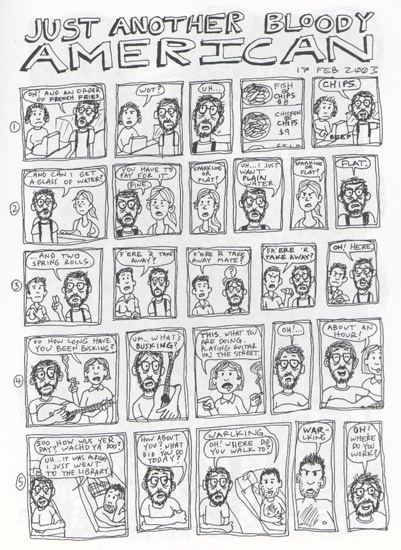 Purchase copies of Phase 7 here.
Courtship of Ms. Smith – Alexis Frederick-Frost
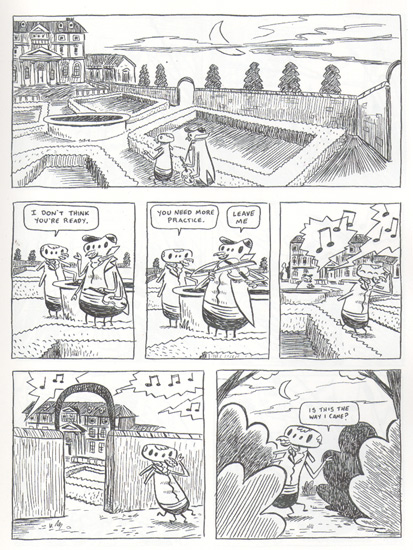
I met Alexis Frederick-Frost during my initial visit to The Center for Cartoon Studies a few years back and I’ve been following his work ever since. If you haven’t checked out his Xeric-winning historical fiction/cycling GN, La Primavera, you should definitely do so. Courtship of Ms. Smith is the story of a spider who seems destined never to find true love… because she continues to ingest all of her suitors. If you know the cartoonist’s work, you’ll be immediately struck by how different his work looks in this mini: he’s converted from the lush brush work on display in work like Adventures in Cartooning to mostly dip pen. It’s great-looking stuff for sure: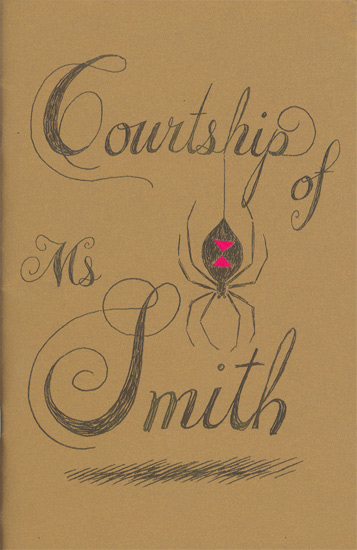
You can purchase Courtship of Ms. Smith here.
Life of Vice #1 – Robin Enrico
This is a mini I picked up just because it looked fun and was reasonably-priced; I know nothing about the cartoonist. Life of Vice takes place in a convertible cruising through the Nevada desert while the protagonist conducts an interview with rock-n-rollist/ex-wrestling persona/sex advice columnist/general partaker of debauchery, Becky Vice. There’s some obvious Hunter Thompson homage going on here of course, but not overly-so. Robin Enrico has a fun, visually appealing style and the size (5×5″), shape, and two-color cover of this mini make for a great-looking package. I occasionally got a little lost with the storytelling, but nothing majorly distracting; I’ll pick up more of these for sure next time we cross paths.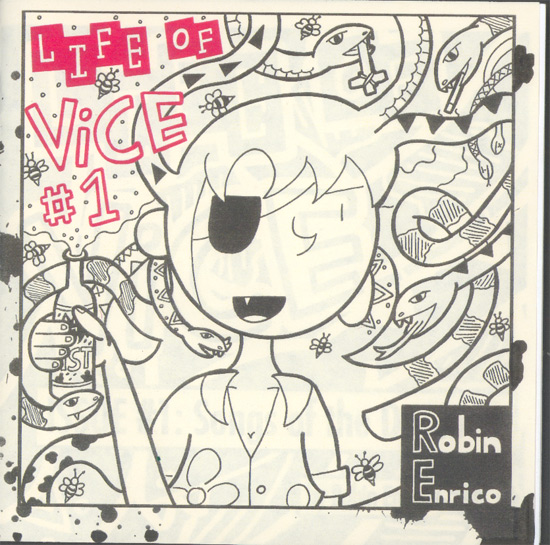
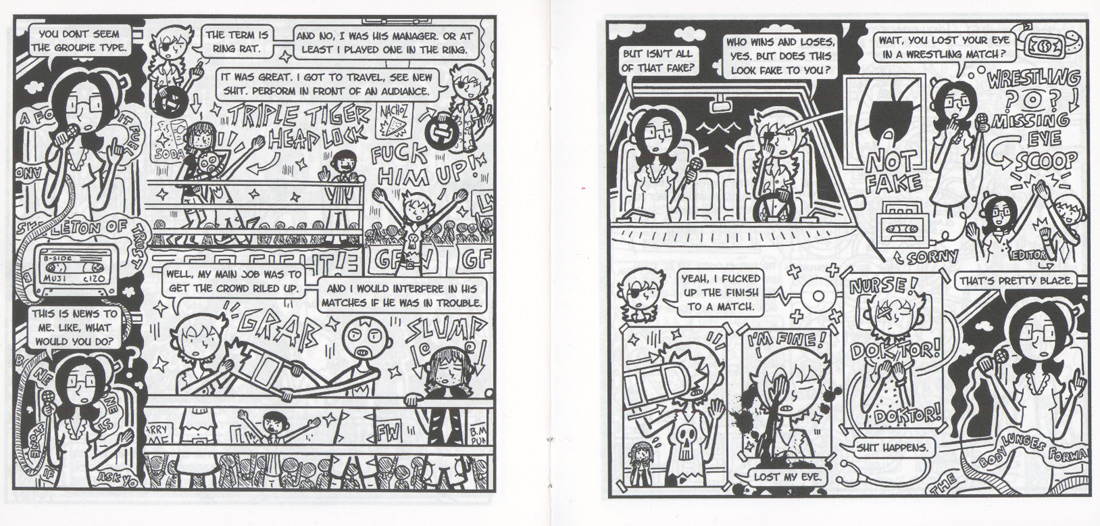 You can purchase Life of Vice issues here.
Nathan Sorry #1 – Rich Barrett
I wasnt’ really sure whether I should include this in a “Summer of Minis” post or not–not because it’s not a fantastic book, but because I don’t really consider it a minicomic in the strictest sense. I enjoyed reading Nathan Sorry in folded over 8.5×11″ minicomic format, but this is for sure not this story’s final form. The whole time I was reading it, I thought: This (whenever it’s completed) needs to be collected in a big hardback collection a la the Oni Local collection. Anyway, until then, I’m happy to read these as minis. The premise here is great: as far as anyone else knows, the protagonist Nathan Sorry was in one of the Twin Towers when it fell on 9/11. In fact, he wasn’t. Now “off grid” and officially dead, he flees to middle America. As the story develops, we realize that Nathan was a (somewhat unwitting) small time white collar crook, helping his immediate higher-up with some nefarious financial scheme. The first issue was a great start. I’m looking forward to seeing where the rest of the story goes.
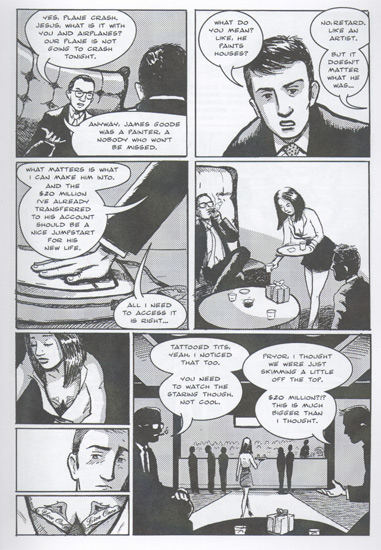 Nathan Sorry is available in a variety of formats here.
The Trugglemat – Neil Brideau
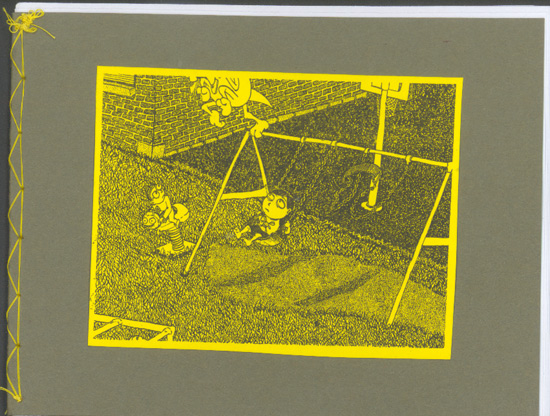
This is another one I just picked up because it looked interesting. The story here is a bit Edward Gorey-ish in tone: the children in the protagonist’s town are all mysteriously disappearing courtesy of a monster that’s devouring them all and the only person the monster reveals itself to is the little girl narrating the story–yet the monster never eats her. The townspeople of course do not believe her, so she’s left to just wait around as all the other kids are eaten and the adults continue to futilely search for the culprit. The narration here is first person and on the side of each page’s image–and told in rhyme.
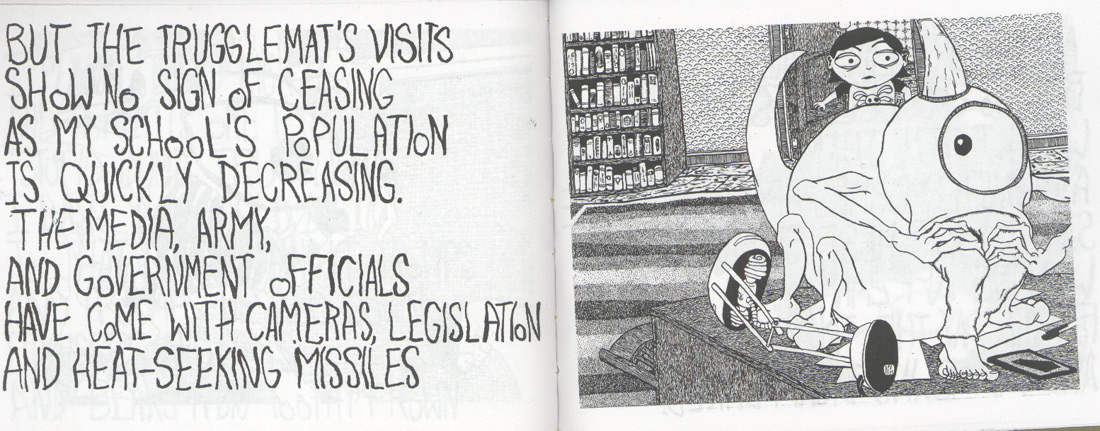
I could not locate The Trugglemat for sale anywhere online.
Kindle #1 – Bridgit Scheide
OK, so this really isn’t a minicomic at all; it is though, a self-published “floppy” that I got this summer and that I wanted to mention. Kindle is a fantasy book, but one whose tone is closer to something like Castle Waiting or even Lud-in-the-Mist than the books that probably come to mind when you think “fantasy.” The book’s main character, Taggart, is a half-goblin half-human who spends his time drinking and working on a novel in a local pub in the town of Seywerth. There’s also a parallel storyline beginning here that involves one of Seywerth’s clergymen. I really dig Bridgit’s lovely and strikingly atypical comics art–sample below:
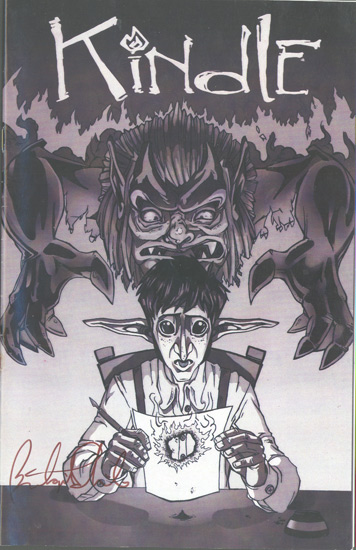
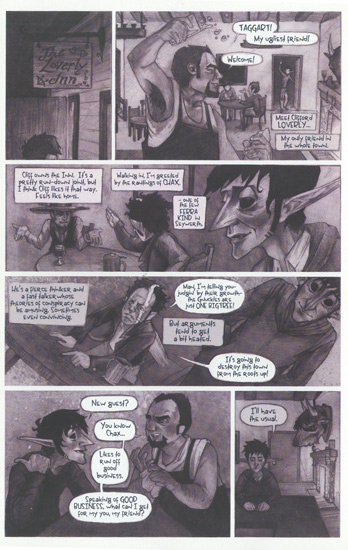
I couldn’t find Kindle for sale online, but here’s here’s the artist’s website/blog.
——–
Well, that concludes my 5-part (!) review of my summer’s minicomics reading. I’m really looking forward to hitting this year’s upcoming indy-ish comics events–TCAF, HeroesCon and maybe SPX–and picking up another round of minis. Keep those photocopiers busy, folks!










Recent Comments