SPX 2019! (And Other Comics Stuff During the Weekend…)

SPX 2019: Third wave of special guests includes Hannah ...

I’ve missed the last two SPX’s, so I’m very excited to be attending this year’s event… but that’s not the point of this (very quick) blog post. In planning my trip, I’ve noted a few other comics-related events that are going on at the same period in the Washington area which don’t seem to be well-covered or well-advertised.


Comic Art: 120 years of Panels and Pages

Weirdly, I can find almost no info about this online, but at the end of the week a comics exhibit opens at the Library of Congress. Here’s about the only thing I found about it online: 

In conjunction with the 25th Anniversary of SPX, the Library of Congress is holding a year-long retrospective of the history of comics. Works from the SPX Collection at the Library of Congress will be displayed from Jaime Hernandez, Bill Griffith, and Raina Telgemeier among others. These works will be shown alongside those of George Herriman, Walt Kelly, Richard Outcault and other historically distinguished comics creators.

The exhibition in the Thomas Jefferson Building on the ground floor behind the gift shop in the Graphic Arts Gallery.

Visitor Hours to the Library of Congress Thomas Jefferson Building (Tours, Exhibitions, Gallery Talks):

* Friday: 8:30 a.m. – 4:30 p.m.
* Saturday: 8:30 a.m. – 4:30 p.m.
* Sunday: Closed


100 Years of Cartoons in El Universal

There is also an exhibit of Mexican political cartooning currently in D.C., 100 Years of Cartoons in El Universal: Mexico-United States As Seen By Mexican Cartoonists. Here’s the blurb from the Mexican Cultural Institute website:

The Mexican Cultural Institute is proud to announce its newest exhibit, 100 Years of Cartoons in El Universal: Mexico – United States as Seen by Mexican Cartoonists, taking place from September 4 through October 30, 2019. The exhibit collects a brief sample of the thousands of cartoons published in 100 years in the widely known newspaper, El Universal, where almost all Mexican cartoonists of the 20th century have traveled through. This exhibit reads as a nodal part of the history of the cartoon in Mexico and includes a brief representation of the artists who traced and portrayed the history of the country. The pages of El Universal have shown the critical work, with aesthetic greatness, by artists such as Andrés Audiffred, Eduardo del Río Rius, Helioflores and Rogelio Naranjo, who have all shaped Mexican national events with art and humor.

There’s a good write-up on the show on Mike Rhode’s excellent blog of D.C. area comics events: 100 Years of Cartoons in El Universal

The Institute is located at 2829 16th St., NW and here are the hours:

Monday-Friday: 10 a.m. to 6 p.m.
Saturday: 12 p.m. to 4 p.m.
Sunday: Closed


See you there! 

Forest vs. Trees in Marc Singer’s Breaking the Frames

At this point it’s not news that Marc Singer’s recent book, Breaking the Frames: Populism and Prestige in Comics Studies, has stirred up a fair amount of controversy. It’s a testament to the provocative nature of the book’s assertions that this controversy has spilled out beyond the usually insular world of the book’s chosen subject matter–comics studies in academia–into the wider sphere of comicsdom in general. I’m case in point; while I do teach illustration at an art school, I’m by no stretch an “academic,” but I bought and read Breaking the Frames shortly after its release. I’ve noted as well much discussion of the book on Twitter (most notably via Kim O’Connor’s weekly chapter-by-chapter read through) and it’s been brought up at more than one beer-sodden post-con get-together I’ve attended. And of course it’s no doubt been a subject of much chatter I’m not privy to in academic circles.     

When I read through Breaking the Frames I took detailed notes, thinking I’d do (as I now am in fact doing) a blog post about the book and my thoughts on it. Now however, some seven months after the book’s release, I doubt I have much to say about the minutiae of the book’s particular arguments that’s not already been hashed over in some other more widely-read venue. I do, though, have a couple of–as the title of this post hints at–very general points that I took away from my reading.

What Comics Studies is Studying

The first passage in this book that made me stop and do a double-take occurs before the book proper even gets going. It’s here, at the end of the introduction, where Singer lays out how the book is organized:

This certainly wasn’t intended as any sort of “bombshell” proclamation, but I did a full stop when I read it–not because I doubted its veracity, but exactly the opposite: I recognized it as true. In laying out the organizational scheme for an analysis of the field of comics studies as a whole, Singer just casually drops that you can basically divide the types of comics that the field actively engages with into exactly two genres: superhero comics… and non-fiction/memoirs.

Imagine reading a book on the current state of film studies that–without much further comment on the matter–divided itself into a section on high school summer vacation comedies and a section on nature documentaries. Before you got much further, your first thought would most certainly be, “Well, there’s clearly something wrong with the current state of film studies that’s not related to the actual practices within the field, but rather what material the field is engaging with.” And that’s exactly what I thought here.

The most interesting, exciting, active, popular, and engaging work in comics in the last twenty or so years has been occurring in areas like YA/all ages comics, indie comics, webtoons, mini-comics, webcomics, and manga. This obviously isn’t germane to the particular arguments that Singer will later go on to lay out in Breaking the Frames, but fact that comics studies is apparently not engaging much with these vital areas of contemporary comics (other than some instances of crossover with memoir) seems like a pretty major systemic problem that should merit some discussion. 

Singer acknowledges this in passing in the same section, saying that works outside these two general areas (as well as concerns about marginalized creators who have to this point been excluded from canon) are, “not a part of this book, which takes as its primary subject comics scholarship in its present form.” I’d argue that what comics scholarship is not taking as its primary subject in its present form is just as important as what it is.


Comics are Made out of Little Drawings

Here’s the another very odd (to me, anyway) thing I noted in Breaking the Frames:

This is a passage in which Singer quotes a scholar discussing Frank Miler’s The Dark Knight Returns. Again, this isn’t notable in itself, but it is notable in the context of the overall book in that it occurs on page 80–a full third of the way through Breaking the Frames–and it’s the first time artwork is mentioned in any evaluative sense.

Comics are made of drawings. That’s arguably their defining feature. And yet, the fact that comics are made up of drawings is often completely ignored and they’re discussed solely in terms of their plots–no differently really than if they were prose stories.

This has been a peculiar trait of comics academia for as long as I’ve been aware of it. It’s not wholly unsurprising given that the field of comics studies originated within academia from English, literature, communications, etc. departments. It is, though, damn strange. 

Somewhat related, I noted on several occasions that discussion would drift without any explanation from comics to TV shows or movies about superheroes and then back again to comics. In these sections I found myself stopping in my tracks and wondering, Why are we talking about Smallville or some Batman movie in this book that’s ostensibly about comics criticism?

To be fair, the latter chapters of the book engage a bit more with the artwork than the initial chapters do, but again, this tendency to conceptualize–and write about–comics as simply narrative seems to be a large holistic issue that should bear some addressing before getting into the particulars of current comics studies. 


Why are we Talking about This Book?

An observation of a somewhat different nature than the two above: reading Breaking the Frames really highlighted for me that comics that are discussed and viewed as important among comics fans and cartoonists, and comics that are discussed and viewed as important among comics academics form a Venn diagram in which there’s for sure some overlap, but also substantial areas that don’t intersect. The most surprising example of this for me was the amount of attention that Breaking the Frames pays to Kyle Baker’s Nat Turner

I don’t think I’ve heard a fellow cartoonist or anyone I interact with on Twitter (or elsewhere online) even mention Nat Turner in the last decade, yet Breaking the Frames concludes with a nearly fifty-page chapter on the book (which, admittedly, I mostly skimmed, having not read Nat Turner recently enough to really engage with such a granular discussion of it). This is in no way a knock on Nat Turner (I love Kyle Baker’s work); just an observation that this is one of many books which are apparently canon in academia but which for whatever reason don’t occupy the same space discourse-wise outside of academia. 

I noted as well some other interesting and peculiar apparent disparities between attitudes about comics in academia and the comics talk of more general fans/practitioners. Singer devotes a fair amount of effort to “defending” comics–and in particular superhero comics–as an art form from its supposed marginalized status. Is comics still “marginalized” within academia? I genuinely don’t know… but there’s definitely a “chip on the shoulder” vibe to a lot of that sort of discussion in the book that seems more in line with the early 2000’s than now–at least to someone looking in from the outside.

Similarly, there’s almost an entire chapter devoted to pointing out something that seems obvious on its face to me (and is acknowledged by pretty much everyone it’s come up in discussion with): that Marjane Satrapi’s drawing style is derived stylistically in a large part from David B. (who was her mentor for a while). This is apparently a matter of some contention within comics academia.


Breaking the Frames is Good and You Should Read it

That fact that this book has caused a bit of a kerfuffle is, to my mind, a good sign that it’s addressing things that need to be addressed. The points I raise above, as per the title of this post, are just a few “big picture” observations about the book–and are admittedly observations coming from someone well outside of comics studies. As someone who makes–as well as teaches–comics, it’s fascinating to see how people engage with work on the page. I’ve likely overplayed the “kerfuffle” aspect of Breaking the Frames, as a substantial portion of it isn’t Singer directly criticizing the work of other comics scholars, but him engaging directly with comics himself. Some of these comics are works that I’m interested in (Chris Ware’s work, Persepolis, Alan Moore’s work, etc.) and some of it not, but Singer’s writing is always interesting, engaging, and well-argued. 

Smokey Stover, A Christmas Story, Dr. Seuss: The Oneness

So, over Christmas I was watching A Christmas Story for the bajillionth time (as one does) and noticed, in the scene were Ralphie is decrypting the message from his Little Orphan Annie Decoder Ring, a Sunday newspaper comic peeking out among the stuff on a table:

I took a picture of the strip and quickly posted it to twitter (as one does), completely ignoring the obvious title on the left and opining that this was most likely Dr. Seuss’s (AKA Theodor Geisel’s) short-lived newspaper strip, Hejji. The strip is in fact Smokey Stover by Bill Holman. Absent the title, though, it’s easy to understand why I might have mistaken the art for Seuss’s. That elephant is nearly identical style-wise to Seuss’s drawing style–and specifically to Seuss’s famous elephant character, Horton. Here, for example is a typical Seuss elephant:

And here’re a few examples by Smokey Stover artist Bill Holman:

You don’t even need to be a particularly keen observer of stylistic cartoonist quirks to see the obvious influence here. While I couldn’t track down the particular Smokey Stover strip shown in A Christmas Story, I’d bet dollars to doughnuts that it predates 1954’s Horton Hears a Who significantly–especially if any attention at all was paid to keeping things in-period for the film, which seems to take place roughly in the early 40’s.  Here’s a full Smokey Stover Sunday page from, I believe, around 1940:

What I found interesting here wasn’t just the obvious stylistic homage (“stylistic homage” being the term we cartoonists use vs. the lay term “blatant swipe”) but that this obviously highly influential American comic strip is rarely discussed and not even collected in this, the “golden age” of newspaper comic strip collections where you can find full runs of everything from Prince Valiant to White Boy and even The Wiggle Much at your fingertips. And unlike strips such as White Boy or The Wiggle Much, Smokey Stover was immensely popular with the everyday public. At the strip’s height in the late 40’s, the titular lead character of the strip may have been the single most used figure for nose art on U.S. WWII bombers.

As with some other very popular newspaper strips of the time, Smoky Stover introduced a number of now-common phrases into common usage, most notably the term “foo fighter.” Smokey, a fire fighter, referred to himself as a “foo fighter” (one of the strip’s many bits of odd verbiage and wordplay) and the phrase was  adopted by WWII pilots to refer to night-time flying targets which couldn’t be identified–UFO’s. If you know the phrase these days, it’s likely because of Dave Grohl’s post-Nirvana band of the same name.

The strip’s influence on comics, though, is curiously less apparent.  Harvey Kurtzman has gone on record as having been influenced by Smokey Stover, specifically citing it as the origin of a lot of the nonsense words that peppered MAD Magazine (potrzebie!) as well as possibly the famous visual “chicken fat” scattered around the magazine’s pages. Beyond that, though, it’s hard to find much of a Smokey Stover vein of influence in other comics… at least here in the U.S.

Interestingly, a place I really do see a possible strong Bill Holman influence is in some British cartooning of roughly the same period. If you’ve ever seen early material from the British kids’ comics magazine, The Beano, you’ll note some strong stylistic similarities with Holman’s strip–both visually and in the style of humor. Visually, the most obvious example is Beano cartoonist Leo Baxendale. Here’s one of his strips:

In addition to the obvious visual similarities, Bexendale’s work–and in a general sense, a lot of early Beano strips–share Bill Holman’s screwy, madcap sense of humor. I’ve not seen any specific mention of Smokey Stover running in U.K. papers, but there were certainly many popular U.S. strips that did, so I’d consider it a reasonable supposition that Stover may have. (And if anyone can confirm this or has specifics of where/when it ran in the U.K., please comment or email!)

So, then: why isn’t Smokey Stover a strip that’s more talked about, held in higher regard? Well, to be blunt I’d say some of it is simply that Holman isn’t a cartoonist with the same level of visual chops as folks like Herriman, Segar, etc. But also, though, Smokey Stover is part a tradition of “screwball comics” whose humor is primarily goofy and gag-based–think Gus Mager, Rube Goldberg, Milt Gross. The whole “screwball” style of humor, even in films, fell solidly out of fashion in the U.S. shortly after WWII… but seems to have persisted in some form or another much longer on British shores with things like The Benny Hill Show, The Goon Show, Monte Python, etc.

Comics like Krazy Kat, Popeye/Thimble Theater, and Peanuts all broadly traffic in humor, but they each have an undercurrent of melancholy or even occasionally the macabre that lend them a more ostensibly “serious” air; Smoky Stover is pure screwball nonsense–and I mean that in the best sense of the term.

Holman’s Smokey Stover will likely never be held up with the same lofty regard as Herriman and his like, but it’s odd how such an obviously influential and hugely popular strip seems to have been swept under the cultural rug. 

What I Read in 2018

In years past, I’ve regularly done “Faves of 20xx” lists of various things–comics, art supplies, documentaries, etc.–that I’ve enjoyed during the year. This year, though, I managed to keep a list of all the comics and comics-related books I read throughout the year and so instead of a Faves list, I’m just going to do a quick blurb about each of these items instead. Here goes–in roughly the order I read them (other than series I read more than one volume of–those are grouped together):


 Moomin: The Complete Tove Jansson Comic Strip – by Jove Jansson 

I’ve been reading through this tremendous volume on and off since I received it for Christmas a while back and I completed it at the beginning of 2018. For many years, the Moomin newspaper comic strip was a work shrouded in mystery and rumor, chunks of which were passed around in photocopied form from cartoonist to cartoonist. This complete collection from Drawn & Quarterly is a blessing–every strip published, including the end of the series that was taken over largely by Lars Jansson. There’s not much I can say about this strip that’s not already been said other than that it should be required reading for anyone interested in comics. Jansson’s designs for the various characters populating Moominvalley are amazing and unlike pretty much anything else that’s ever graced the interior of a newspaper. What’s most striking about this strip is that it exists at all; it seems to break every conventional rule of newspaper strip cartooning: the stories are often bizarre, the politics and messages of the stories are brazenly anti-authoritarian, even her drawing breaks the “rules” of cartooning–employing in-story elements as panel borders and the like. 


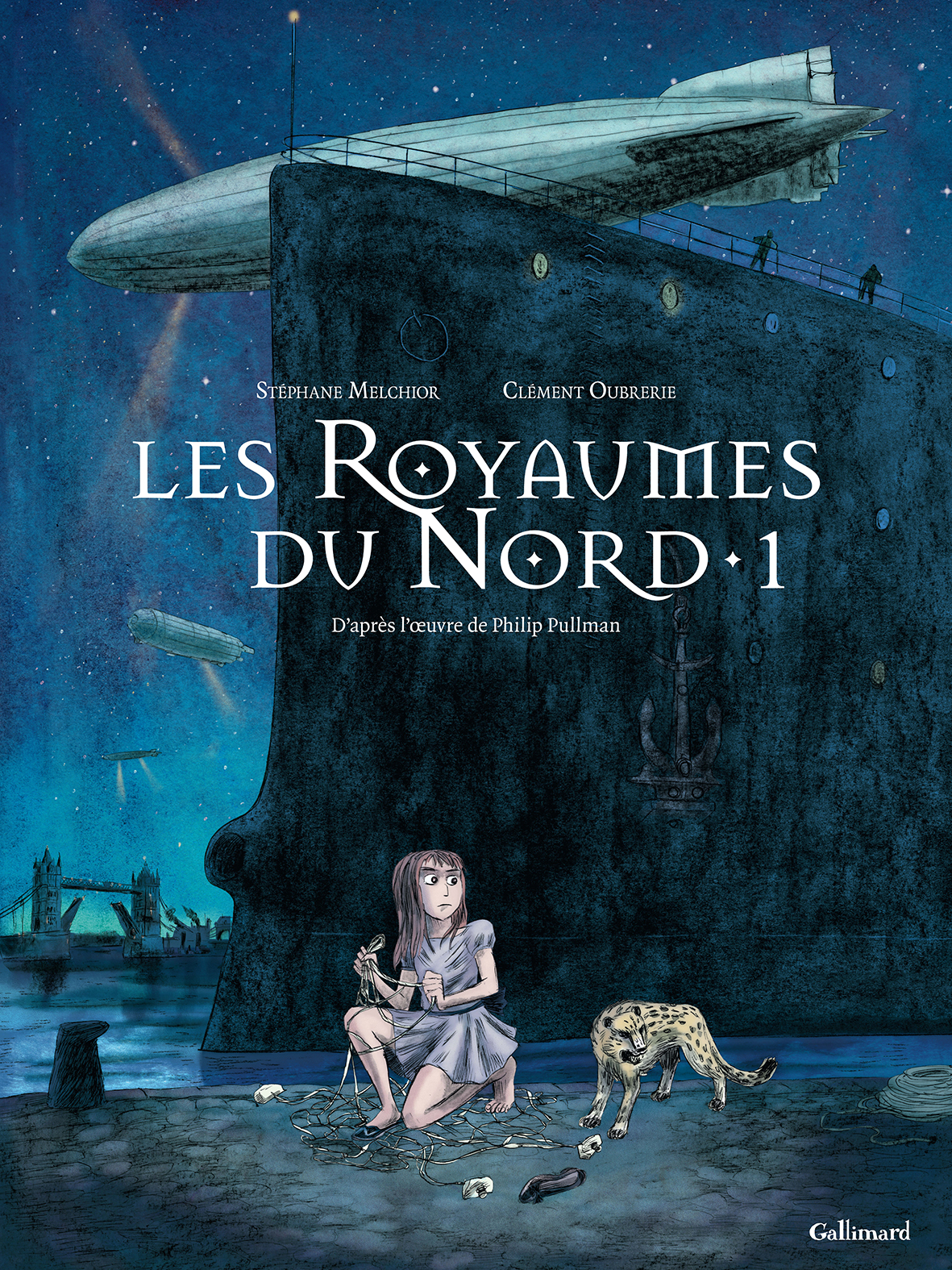
 Les royaumes du nord,  Vols 1 & 2 – by Stéphane Melchior and Clément Oubrerie (French)


I bought the first volume of this in French a while back but since then there’s been an English translation of the series. Just because I’m an obsessive book nerd and I want to have a matching set, though, I’ve been soldiering on with the French versions, one of which I read at the beginning of the year and the other of which I completed in the fall. This is, obviously, an adaptation of the first book of Philip Pullman’s His Dark Materials series. It’s been years since I read the source material, but from what I recall this seems to be a fairly straightforward adaptation. The thing I like most about this particular adaptation is its drawing style: Oubrerie’s lose, almost impressionistic drawing style works so well with the steampunk-ish Victorian mise-en-scène from the original book. It’s refreshing to see this style of artwork employed for an adaptation like this rather than the usual North American standard neo-realistic “sword and sorcery” style that seems to be the inexplicable default for pretty much every comics adaptation of SF or fantasy work. 


Calamity Jane: The Calamitous Life of Martha Jane Cannary, 1852–1903 – by Christian Perrissin and Matthieu Blanchin

This is a solid comics biography that’s only slightly marred by some not-great translation problems. First off: the art is really pretty. It’s lose and animated–and the only color is a subtle sepia wash. The overall look evokes old sepia toned photographs–which I’m sure is exactly the point. The translation here, though, is a bit buggy–not the actual word choices themselves, but the fact that what must have been large chunks of French text are often replaced with much shorter lines of English text, leaving balloons with huge awkward swaths of empty space.   


Corto Maltese, Under the Sign of Capricorn – by Hugo Pratt

I’ve always loved Pratt’s drawing (I saw a stunning exhibit of it in Lyon not too long ago in fact) but I’ve not actually read any of it until this year. This is the inaugural volume of the recent Corto collection from IDW which wisely starts somewhat mid-stream with this storyline from a now-fairly well developed Pratt. Most of the key characters are in place here and Pratt’s mature, distinctive drawing style is on display. Story-wise, this stuff is all great fun. Corto himself is sort of a nautical Han Solo with bell-bottoms: a chaotic good adventurer and ladies’ man with a heart of gold. Aside from the inexplicably clunky cover design (drop shadow? seriously?) this is a beautiful volume and the reproduction of Pratt’s stunning linework is a thing to behold. 


The Art of Charlie Chan Hock Chye – by Sunny Liew

It’s impressive enough to produce just a really good comic, but here Sunny Liew has managed not just to produce a great comic but has done something almost wholly new with the medium. This is a biography of a completely fictional cartoonist, the eponymous Charlie Chan Hock Chye, whose invented personal history is used by Liew to document and comment on the history of Malaysia and Singapore. In doing so, he shows us “Hock Chye’s” work throughout his life and to do so Liew impressively mimics an array of period-appropriate cartooning styles that are instantly recognizable to anyone with a knowledge of the medium–from classic newspaper strips to Frank Miller’s Dark Knight Returns. While there are points where this conceit strains under it’s self-imposed demands–like a Pogo-esque newspaper comic that, though beautifully drawn, is weighed down awkwardly by its required political allegories–this book is an epic achievement and well deserves all the accolades it’s received. 


The New Mutants: Bill Sienkiewicz Marvel Artist Select Series – By Chris Claremont and Bill Sienkiewicz

I was lucky enough to have picked up a copy of this at San Diego a few years back, but only this year got around to sitting down and reading it. I hadn’t read most of this stuff since it came out, and some of the later issues I’d not read at all. Rather than repeat myself, if you want to know my thoughts on this you can read this big blog post I did about it here.


The Castafiore Emerald – by Hergé

Continuing on with my re-read of the Tintin series in sequence, I tackled The Castafiore Emerald early this year. This has always been my favorite Tintin book and this read didn’t change my opinion. It is, though, quite obviously a book that assumes you’ve read a lot of Tintin; the whole story is basically a farcical send-up of the usual Tintin tropes that’ve been established in the previous books in the series–and in some cases, maybe not that farcical, as with Tintin’s championing of the Gypsies in the book. This latter bit seemed to me like a deliberate statement from the author in response to some of Tintin’s more controversial storylines in the past.  


Spy Seal #1 – by Rich Tommaso

This is obviously just the first issue of a multi-part series, but I really enjoyed the opening chapter of the story-to-come. Spy Seal is a stylistic mashup: “funny animal” characters, an overtly Hergé-esque ligne claire drawing style, and mid-sixties Cold War British spy thriller. I’ll most certainly pick up the collected edition of the full story. (In fact, the only real misgiving I have about Spy Seal is why it was presented as individual issues in the first place–an odd choice for the audience this type of comic is likely to draw.)  


Valerian: The Complete Collection Vol. 2 – by Pierre Christin and Jean-Claude Mézières

While the Valerian movie was apparently a huge flop, we should all be thankful that it prompted the release of this new collection of English translations of the source material. I read and enjoyed the first volume last year, but these are the first stories where the Valerian formula is really in place and where drawing-wise the characters have settled into their final designs. You also now start to get some overt political and societal commentary as well. This’d be a good volume to pick up if you’ve never read any Valerian before.


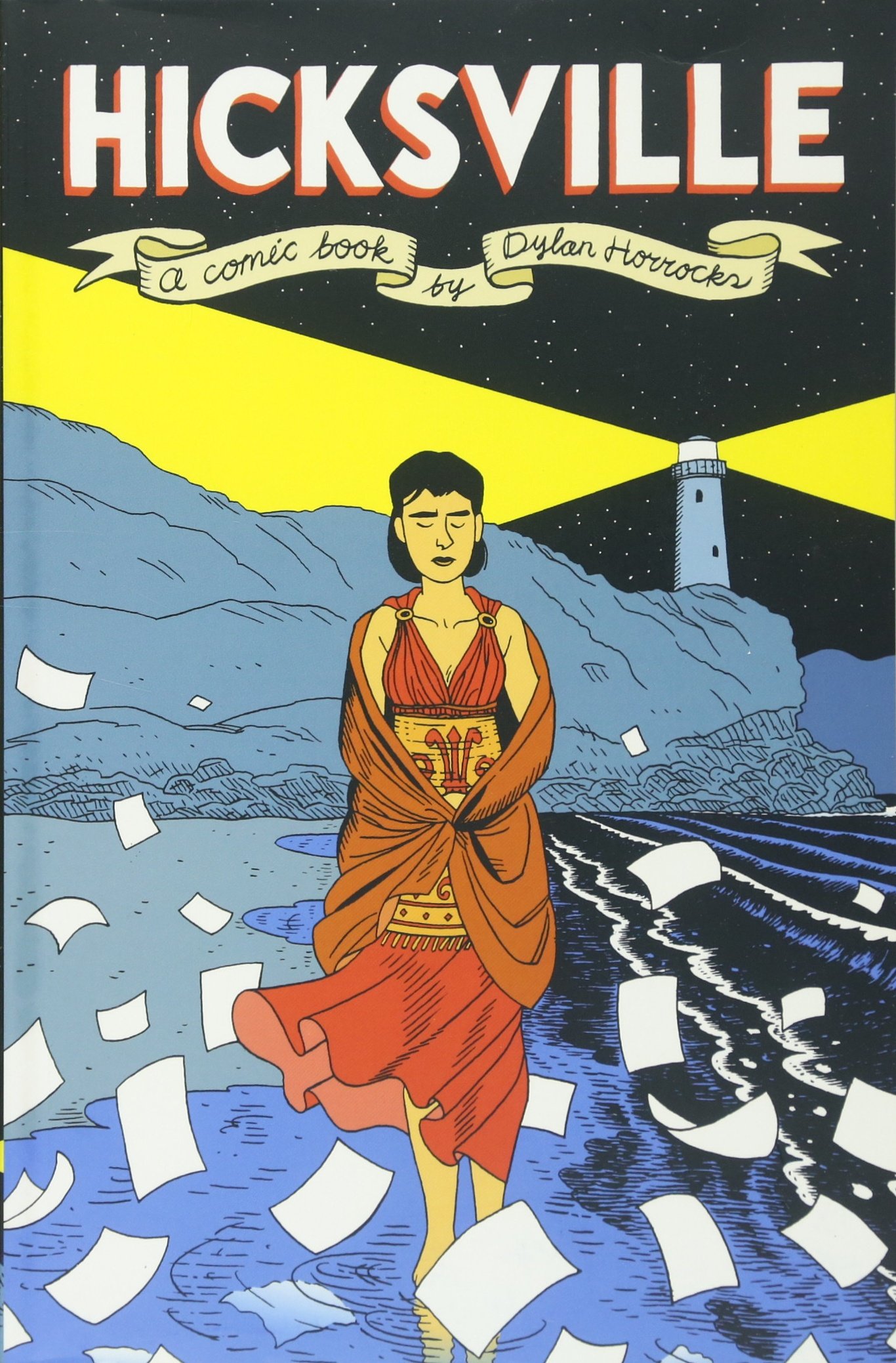
Hicksville – by Dylan Horrocks

I’d somehow managed to make it to 2018 without reading this classic GN of the late 90’s. While there are a few parts of Hicksville that stand out a bit as being overly-of their time, most notably the plot elements that are obvious allusions to 90’s Image Comics, I thoroughly enjoyed this book. It’s as heartfelt a love letter to comics as I can imagine. In fact, it’s a bit of a mystery to me why Hicksville (and Box Office Poison for that matter) isn’t talked about and held in the same popular high esteem as the other big “canonical” late 90’s GNs: Jimmy Corrigan and Blankets.


Buddy Does Seattle and Buddy Does Jersey – by Peter Bagge

Hate is a seminal comic in my development as a cartoonist. It’s one of the first comics I read as an adult–after having moved away from comics for a while–that made a huge impression on me and I re-read it every few years. While Hate often discussed for its humor or its being emblematic of a particular time period (90’s “grunge”-era) what makes this work so rich and enduring for me is the characters and how well they’re written, especially as they grow and develop in the latter half of the series. I know it’ll probably never happen, but I’d sure love to see a Complete Eightball-style Hate collection. Hate has never been collected in its original trim size and with the latter half of the series in color, as it was originally printed–and certainly never with the original covers, ads, letters, etc. 


Conan le Cimmérien: La Reine de la côte noire – by Jean-David Morvan and Pierre Alary (French)

Pierre Alary is just about at the top of my list of French cartoonists whose work remains criminally untranslated into English… and sadly, owing to copyright laws (Conan is in the public domain in France, but not in the U.S.) this will join the ranks of Alary books we’ll probably never get an English translation of. Alary really gets a chance to show off here, staging some epic battles with lots of gore, lots of combatants, etc. And really, the art here is the appeal for me. Story-wise it’s, ya’ know, a Conan story–so pretty straightforward stuff. I think Dark Horse, who currently has the Conan license in the U.S., recently did an adaptation of this same Howard story. It’d be interesting to compare the two versions against the original at some point. 


Flight 714 – by Hergé

This is the first book in my long Tintin “reread” that’s not actually a reread: I’ve never read the final few Tintin books before now. Unfortunately Flight 714 I found to be a radical drop in quality from Hergé’s previous book–and personal fave–The Castafiore Emerald. The plot of 714 is… well, odd. About half-way through the book the protagonist basically winds up losing all narrative agency, then at the end there’s a pretty egregious deus ex machina incursion/explanation. Add to this some noticeably off-model drawings of the characters and atypical staging (what’s with all the weird, tight panels of characters’ faces?) and Flight 714 is a bit of a disappointment. On the bright side, though: Bob de Moor’s design for the plane, the Carreidas 160, is fantastic. 


Machine Man 1-4 – by Barry Windsor-Smith, Herb Trimpe, and Tom DeFalco

This Marvel mini-series from the 80s had been on my reread list forever and I never acted on partially because I was afraid that the series–which I loved as a child–would have aged really poorly. Did it? Well, the “futuristic” jargon is pretty painful to get through and the plot is decent but not spectacular. You know what didn’t age poorly, though? Barry Windsor-Smith’s completely mind-blowing artwork–including and especially his coloring. I’d love to see an in-depth article written about this book–specifically on how and to what extent Trimpe’s input was actually followed by BWS, and also about the technical aspects of BWS’s coloring. 


Petey & Pussy: Puppy Love by John Kerschbaum

John Kerschbaum is hands-down one of the funniest cartoonists working today–and he’s got great cartooning chops to boot. This second Petey & Pussy collection continues on in the vein of the fist one from 2008: the same hilarious animals-with-human-heads main characters as well as the horrific pet bird and the equally horrific old lady that owns them all. Humor is a neglected genre in contemporary comics and even in that limited sphere Kerschbaum doesn’t seem to get the attention he deserves. If you like stuff by Peter Bagge, Kate Beaton, Michael Kupperman, etc. pick this up for sure. 


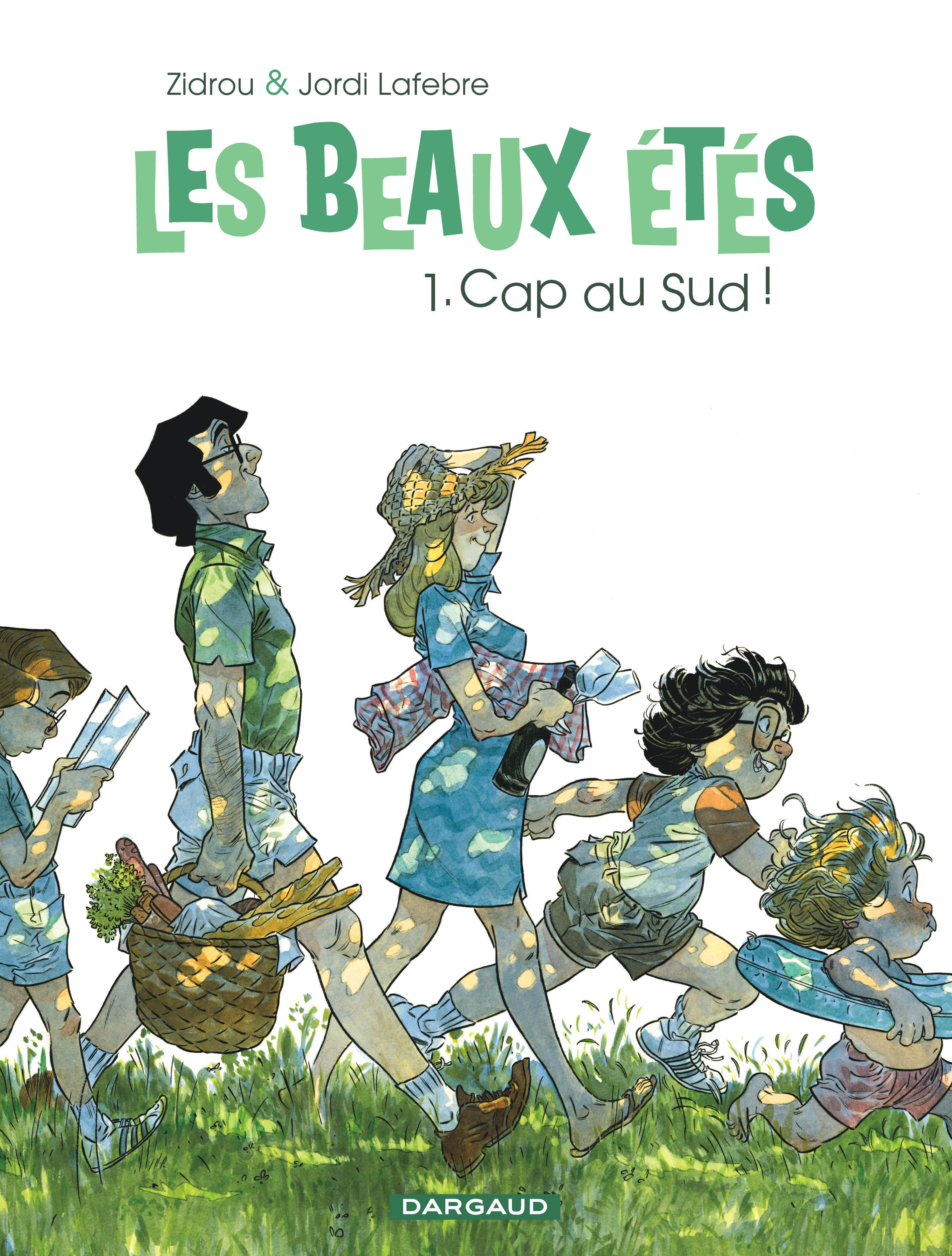
Les beaux étes, Cap au Sud (Vol 1) and La Calanque (Vol 2) – by Zidrou and Jordi Lafebre (French)

Alas, yet another series that I started in French only to have an English translation appear shortly thereafter. Anyway… First off: Jordi Lafebre is one of the flat-out best cartoonists putting out work these days. I’d have bought these books if they were written in ancient Sumerian. That said, I definitely enjoyed the first volume of this series a lot more story-wise. Cap au sud begins with a family heading out of town on vacation. By about half-way through the book, though, I was tiring a bit of this seemingly-perfect family doing delightfully charming things… which is exactly the point in the story where a complete bombshell drops that affects everything going forward and colors everything you’ve just read. The second volume, though, doesn’t have any such conflict in the narrative and reads more as just a series of happy anecdotes. It’s all, though, just amazing to look at. 


Why Comics? From Underground to Everywhere – by Hilary Chute

Hillary Chute is generally a very astute writer-about and thinker-about comics… which is why I was surprised by my disappointment with this book. It’s not that the writing itself isn’t good (it is, especially the section on comics and illness, for example) but there’s a vast mismatch between what the book purports to do (examine the medium of comics and what it’s well-suited to narrative-wise) and what the book actually is, which is a thorough and insightful examination of a small slice of late-90s/early 2000’s Spiegelman-adjacent creators and books. There’s no mention, for example, of Raina Telgemeier… or of manga at all. If there’s any strain of comics that’s “everywhere” it’s those.  


Sabrina – by Nick Drnaso

I was initially tempted to say that I don’t understand what the big deal is about this book (and it is a big deal–Man Booker nomination, tons of Best Of lists, etc.)… but I’d speculate that I know exactly why this book has gotten the accolades it has–particularly the accolades from the (prose) literary fiction crowd: it’s a story steeped in gravitas, told ploddingly, and drawn in a deliberately dry “Chris Ware meets an airline safety card” diagramatic style that eschews most of comics’ goofier aesthetic trappings.  A lot of people with very good taste in comics loved this book; it just wasn’t for me. (It’s also, curiously, a book about a woman who’s horrifically murdered which gives little attention to the actual murdered woman and instead centers on two dudes and how that affects them. I guess “Women in Refrigerators” isn’t just for the capes and tights crowd any more!)


The Invisibles Vol I – by Grant Morrison and various artists
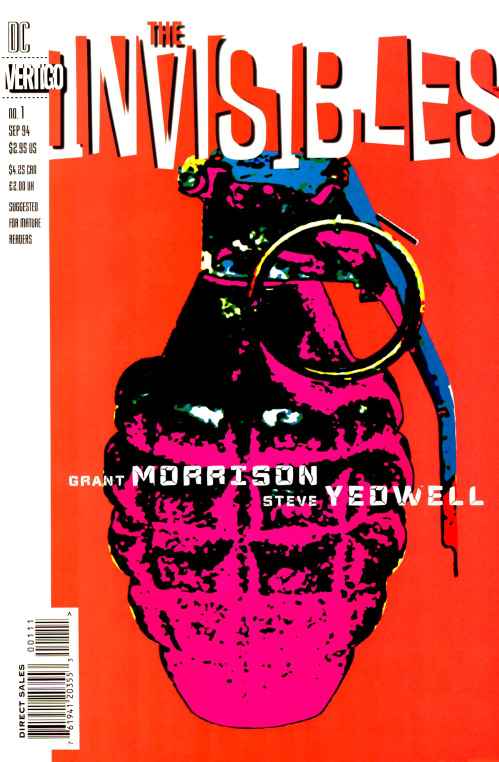
This is another reread project of mine: in 2018 I started rereading Grant Morrison’s Invisibles from the beginning. I was less familiar with the initial volume than the second, which is the series that hooked me back when they were first coming out. The first volume is a bit haphazard, but in a sort of fun Grant Morrison “everything including the kitchen sink” way. I did, though really struggle with the rotating casts of artists which makes things even more scattershot visually issue-to-issue. (And no, this isn’t part of Morrison’s “master plan” to reinforce the subjective nature of reality or whatever; they just couldn’t keep a steady artist on the damn book.) Oddly, I think the best issue of this first series is the one-off “lower decks” issue, #12, drawn by Steve Parkhouse.  I’m looking forward to getting through the second volume in 2019.


Cartoon County: My Father and His Friends in the Golden Age of Make-Believe – by Cullen Murphy

This was a surprise stand-out for me in 2018–easily my favorite book about comics of the year. It’s neither analytical nor rigorously historical, but rather, a charming and heartfelt reminiscence about growing up the child of a working cartoonist in postwar Fairfield County, Connecticut, when it was an affordable suburb of NYC and home to a surprising number of professional cartoonists. A must read for fans of mid-century cartooning and commercial illustration.


  Judge Dredd: Cursed Earth,  Vols I and II – by Pat Mills, Mike McMahon, and Brian Bolland

Having grown up in the U.S., I read Judge Dredd via the Eagle reprints, which differ from their original permutations on two important ways: they were in color, and they were completely out of continuity. So, this is one of the first times I’ve read any Dredd extended story arc (the other being Apocalypse War by my favorite Dredd artist, the late Carlos Ezquerra). I generally enjoyed the story–it’s a solid post-apocalyptic road journey done in typical Dredd tongue-in-cheek style–but I have to admit, I often found myself flipping forward in anticipation of the next Bolland-drawn segment. Perhaps someday I’ll gain an appreciation for McMahon’s style. 


Arzach/Le garage hermitique – by Moebius (French) 

This is a big, high-end French language edition of what–along with The Incal–are arguably considered Moebius’s most important works. I love the ongoing Dark Horse Moebius Library, but it’s a mystery to me why these two works remain out of print in English (given that it’s Moebius, some licensing thing is to blame, most likely).  My rudimentary French was not up to the task of tackling the back-matter, which is unfortunate since there’s a ton of interesting-looking material there including in-depth analysis of Moebius’s coloring and his use of photo reference. 


Shiver – by Junji Ito

Like any collection of short stories, Shiver had some hits and misses for me. There were several here that I’d rank among the best/most horrifying Junji Ito stories I’ve read (“Hanging Blimp,” “Honored Ancestors,” “Greased”) and some that seemed somewhat rote, like “Marionette Mansion” and the two stories featuring the fashion model character. The commentary by Ito is sparse–usually just a page after each story, but interesting.


On the Influence of Steve Ditko

Steve Ditko, the cartoonist best known popularly for his role in the creation of Spider-Man and Dr. Strange for Marvel Comics, died last June at the age of ninety.  His death occasioned obituaries in several high-profile publications such as this one in the New York Times, which among other things reflects on Ditko’s historical importance and creative legacy. A large part of any artist’s legacy is their effect on the art and artists that follow them–their influence–and indeed the headline from that NY Times obituary refers to Ditko as the, “Influential Comic Book Artist.”

But here’s a curious thing: the word “influence” or “influential” appear five times in that article, but in every instance other than its use as a general accolade in the headline, they all refer to people who Ditko was influenced by–Ayn Rand, Mort Meskin–not anyone being influenced by Ditko.

Compare this, for example, to the NY Times obituary of Ditko’s contemporary, Jack Kirby, who died in 1994. In just the first few paragraphs there are specific mentions of things Kirby influenced–how superhero comics post-Kirby are different than superhero comics pre-Kirby. Indeed, Kirby’s aesthetic influence on superhero comics is as ubiquitous as it is self-evident. Grab any modern superhero comic off the rack at your local comics shop and you’re looking at something that’s been shaped by Kirby’s influence. 

A casual flip through a few issues of a contemporary superhero comic, though, is unlikely to yield any sign of Ditko’s visual style. Why is this? I think, because despite the tremendous regard in which Ditko is held by most comics people (myself included) his stylistic influence–such as it is–falls outside the genre in which Ditko’s best-known work falls. If you want to see Steve Ditko’s stylistic influence on comics you need to look not at superhero comics, but at indie comics–specifically indie comics of the late 1990s. 

Of all the articles written about Ditko on the occasion of his death, only one that I read (and I read a ton of them!) addresses this: Jeet Heer’s article in The New Republic.  

As an artist, his lasting influence was among cartoonists working in the tradition of alternative comics and graphic novels: Jaime Hernandez, Gilbert Hernandez, Ben Katchor, Charles Burns and Daniel Clowes.

You will certainly find plenty of Ditko homages in superhero comics–a “Ditkoesque” Dr. Strange background, a new Spider-Man costume design that calls back to Ditko’s original–but Ditko’s aesthetic sense will be largely absent. Some of that is based on history: Marvel’s early “house style” was basically a reflection of Marvel’s policy of having every artist draw as much like Kirby as possible… except for Ditko. Ditko was allowed to be Ditko, and no one was told to emulate Ditko’s style.

A lot of it, though, is that Ditko’s style is just too weird 1. His “heroic” figures are gangly and stiff and even the most mundane sequences in his stories have an air of surreality about them.  It’s a wonder he was as successful a superhero artist as he was. It’s not surprising that following generations of superhero artists weren’t looking to Ditko for their stylistic vocabulary 2. But it’s equally unsurprising that the artists who drove the 1990’s “alternative comics” movement–people like Charles Burns, Dan Clowes, and  Gilbert Hernandez–were doing exactly that; Ditko was the “alternative” cartoonist of early Marvel. 

Ditko takes heat for supposedly not being able to draw “pretty girls,” but in fact most of his characters–men and women alike–are weird-looking. Any closely-examined Ditko crowd scene is a grotesquery. You can see Ditko’s bizarre character design showing through in early Clowes in particular. 


And Ditko’s general world of men in stiff suits, Ronsir Zyl glasses, and porkpie hats (a look already well out of date by the time Ditko first started at Marvel) is right at home in the “Manly World of LLoyd Llewellyn.” 

Ditko’s earlier horror work is, well… horrific, and a pretty obvious influence on Charles Burns–not only Ditko’s drawing style, but his particular vision of horror juxtaposed with a placid, bland Americana aesthetic, something Burns would riff on explicitly in works like Big Baby.


I’d even speculate Dan Clowes’s particularly distinctive way of drawing hands is influenced by Ditko’s well-known and distinctive style of posing his characters’ hands.

I’m citing Clowes and Burns because I know their work the best, but I’m sure a Love and Rockets fan could give you some solid examples from the work of the Hernandez Brothers as well–particularly Gilbert. 

I’ve often wondered if Ditko was even aware of 90s alternative comics and his influence on them. Fans of Ditko’s superhero work were notorious for tracking him down at his New York studio and bugging him (Ditko’s desire not to be constantly badgered by fanboys apparently making him an “eccentric loner”) but I doubt Charles Burns ever banged on his door.  Most influential artists working in the superhero genre are influential largely within that genre. I can’t think of another example like Ditko–an artist whose work in that genre proved so influential in another genre that’s not just outside it, but in some ways a reaction against it. 

But, you don’t have to take my word for it! In closing, here’s a great, rejected Dan Clowes two-page appreciation of Ditko that surfaced shortly after Ditko’s death. And, hey, it looks like Clowes did track Ditko down and bug him. 


1. Kirby would eventually develop a fairly idiosyncratic style as well–to the point that DC had other artists redraw some of his characters to make them less Kirby-esque–but this was later in is career. 

2. The one big exception that comes to mind here is Michel Fife; however he’s an odd case of a superhero artist who operates largely outside of the “Big Two” publishers–and it’s telling that what work he has done for mainstream superhero comics publishers has been largely writing rather than drawing.