Back From the Old School: Showing Motion via Repeated figures in a Single Panel

Lately, I’ve been noting a lot of panels like this in the comics I read and it’s made me wonder about what exactly this technique is, how how it works, and where it came from:

What it is:

This is from Cyril Pedrosa’s recent (and amazing) book L’age d’or, which is now out in English as The Golden Age. What’s going on here formally (and the dialog isn’t really important to it, so you don’t need to be able to read it) is that each set of horses and riders in this image is are the same horses and riders; they’re just progressing through time over a static background. It’s not a technique you see a ton in comics, but once you’re aware of it you’ll find it cropping up more often than you’d suspect in your reading. 

So, what are we actually seeing here formally? Repeated images (usually characters) in comics, moving through time and space over a single background, without the use of gutters/panels to create sequence or explicitly dictate reading order.  

It’s worth noting that Paul Gravett has a great post on a lot of the same general subject matter here–although he doesn’t draw fine distinctions between what could be seen as a few different varieties of repeated image techniques. In Gravett’s article–which appears to be written in 2008–he’s springboarding his discussion off of Gianni De Luca’s (he’ll be mentioned below) extensive use of this technique in his adaptation of Hamlet. Toward the end of the article Gravett has this to say:

While it would be possible to catalogue still more cases of this effect, no doubt in Chris Ware’s output or in manga, from what I have found so far they amount to little more than certain special panels or pages – fascinating efforts, experiments or oddities – but mostly they bear no comparison for me to De Luca’s huge skill and sustained use, not only in Hamlet but also Romeo and Juliet and The Tempest.

This statement may still be true. I wonder, though, if the extensive use of this technique in L’age d’or wouldn’t put it at least in the same ballpark as Ge Luca’s work far as cartoonists really digging in and exploring how this technique can be applied? It’s used pretty extensively throughout L’age d’or and its sustained and repeated use by Pedrosa there is certainly unlike any recent comic that I’m aware of. It’s part of the meat of the story and how it functions–certainly not one-off oddities. 

What it isn’t:

There are several formal devices in comics that look a lot like this technique on the surface. Some function similarly in a formal sense, and some just resemble it superficially but function differently. Here are three formal devices that bear some resemblance to what’s going on in the above image, but aren’t exactly the same thing:

1) Repeated image to represent speed – This is probably the most common sort of repeated image you see in comics. In this Carmine Infantino Flash panel, for example, we understand that there are not actually five identical people here; it’s an image of a single person moving very quickly. And, much like that L’age d’or panel, that character is moving through space and there’re no panel borders breaking up this motion. 

So, why don’t I think this is the same thing? Scott McCloud gets to the root of it in his discussion of this device in Understanding Comics:


“Photographic.” “Film.” This is a device that’s mimicking the effect of a camera. It’s primarily optical rather than diagrammatic.

I think this idea is supported by the (as far as I can tell) total absence of this sort of device in any kind of visual art until after the invention of the camera. (I’d love to be proved wrong, though. If you can find one, let me know on the comments!)

Further, I think supporting the idea that this is different from what we see in that L’age d’or panel is looking at how it’s used. This type of repeated image–the type that emulates a “motion blur” is pretty much always used as a visual indicator of speed. It’s not a coincidence that you see this employed a ton in comics like, well, The Flash. In contrast, I think it’s pretty clear that that L’age d’or panel is not supposed to indicate that the characters are moving quickly; if anything, it evokes a languid  conversation that’s happening over an extended time as the characters meander through their environment. 

Linguist Neal Cohn refers to comics effects where images are repeated to indicate speed or motion as “partial reduplication” (“partial” because only the moving parts of the objects are duplicated visually),  as seen here in this slide he shared with me via Twitter:

My gut feeling here is that, of those images above, the left two are somewhat different formally than the right two. The right ones are pretty clearly mimicking a photographic effect; the left two seem to me to be maybe an extension of this photpgraphy-based language that’s mixed in more with comics’s native diagrammatic abilities. But, that’s a bit of hair-splitting for some other time, perhaps! 

2) The polyptych – I’ve seen several different terms for this particular device, but “polyptych” is what McCloud calls them and that’s what seems to have stuck. The polyptych is kind of a catch-all comics term for any time a single background/location is subdivided into multiple panels. Sometimes a polyptych is simply this–a setting divided into panels–as in this panel from Master of Kung-Fu. There’s nothing moving here, no repeated figures:

Other times, there’s a repeated figure included, which brings it very, very close to our original L’age d’or example, as here in this Gasoline Alley strip:

Unlike the L’age d’or panel, though, we have the added element of division by panels/gutters. The figure is repeated once in each panel. You read it left to right, top to bottom, with the grid dictating your reading movement. 

You can find a great decade-by-decade index of these things online here.

3) Transformation – This, again, has some superficial resemblance to our original panel, but to my mind is pretty different functionally. The classic image of this is a character transforming from one state to another, like The Hulk, as we see here in this slide from Neil Cohn:

We’ve for sure got a repeated character in this kind of thing, but not the sense of a lot of time passing, as we get with the L’age d’or panel. The backgrounds (such as they are) are singular, but there’s no sense of motion being communicated here–the character is not moving through the background space. 

Where did it come from?

So, one thing that interests me about this thing that we see in that L’age d’or panel is how it’s simultaneously comics-y and not comics-y.

It’s very comics-y in that it’s using two-dimensional art to show the passage of time and it’s doing so in a way that’s diagrammatic rather than completely mimetic. It’s not comics-y, though, in that it’s more primitive(?) in a way, since it doesn’t utilize one of comics’s main formal tools: panels. Despite how esoteric discussion of this device may seem at first glance, there’s a common almost-version of this technique that I’m betting even non-comics people know pretty well: the famous “map” comics of The Family Circus.

In this case, though, we don’t get the repeated character as he moves throughout the background–just an indication of where he’s been on his journey.

And <shocker… it may not even be a map at all, according to Bill Keane. Mind blown!

So, back to the origin of this thing… here’s another example of it, from Vincent Vanoli:

I don’t think it’s just coincidence that both the Pedrosa image and this one are from comics that take place in a Medieval-type setting. In both cases, I’d bet the artists were lifting this particular technique from what is, as far as I can tell, its true origin: Renaissance and Medieval art.

Here’s The Tribute Money, from the 1420’s by the painter Masaccio:

Note that this is not just a crowd of people; it’s a story with the same characters repeated as they move both physically through the background/space and through time.  First, at the center of the painting, a tax collector is demanding money; then, off to the left where Peter and Jesus are pointing, we see Peter getting some money out of a fish (The Bible is weird, y’all!); then, finally on the far right of the painting, Peter pays the tax collector.

Similar deal here in The Journey and Meeting of Saint Anthony with Saint Paul the Hermit by the Master of the Osservanza from the early 1400’s:

Some more of these things:

As mentioned, once you’ve seen a few of these, you start to keep an eye out for them. Here’re a few that I’ve noted over the past few months: 

This is from Javier Pulido’s great run on She-Hulk a while back. One neat thing about this one is how you’re moved through the scene in a back-and-forth way that takes you all the way to the rightmost side of the two-page spread, then back to the left-facing page to continue reading.

This is an example from Gianni De Luca, who–as noted by Gravett–uses this technique a ton.

Here’s a beautiful spread from Hicotea: A Nightlights Story by Lorena Alvarez. The reading order of this one threw me for a bit initially because you have to start at the bottom. You then go up the stairs, then “fall” down to the floor on the right.

Yeah, it’s yet another one from L’age d’or, but I had to throw this one in since it’s an example where each individual long panel is a self-contained example of this technique, with them all functioning as a sequence showing the character moving through three different environments. 

I’m throwing this spread from Kyoko Ariyoshi’s manga, Swan, into the mix here as an interesting example that I think kinda-is and kinda-isn’t what I’m talking about. It satisfies the base requirements: repeated figure, moving through a single static background, no panel borders, not a visual shortcut to connote speed. But, it seems to be so overly photography based–and the background so non-essential to how it works–that I’d probably not fully characterize it as being exactly the same thing as the examples above. Like most attempts to put formal comics techniques into strict categories, there’s always a fair amount of wiggle room. Some of De Luca’s work, particularly in Hamlet, seems to skate this fine line as well. 

This is very definitely not the same thing as what’s under discussion, but I wanted to point it out because it’s such an interesting (and early for comics) example of the Flash-style “ghost image to connote speed” thing. The three figures here seem to be used much like the Infantino Flash image above, but the two trailing images here are actually other boxers who have previously trained at this same location–and run on this same stretch of road presumably. 

What the heck do we call these things? 

You may have noticed that amidst all the discussion of this thing, I’ve been conspicuously avoiding actually referring to it by name. That’s mainly because it doesn’t seem to have a fully settled-upon name–and the ones that are used are kind of awkward. But there is some writing on this type of comics device and obviously, in those writings it has to be referred to by some name.

Neil Cohn uses the term “reduplication” to generally refer to any of these devices that involves repeated drawing of the same thing. I like this term, partly because it’s fairly simple and straightforward, but also because of what it means. As Neil explains, “[reduplication] in language is repeating a form to create added meaning. ‘I’ll have the salad-salad, not the potato salad.'” In the case of these comics, this makes a lot of sense: that second (and third, and fourth, etc.) drawing of the figures in, say, that She-Hulk panel create added meaning. He refers to the kind of thing I’m discussing here specifically as “polymorphic reduplication,” although he also seems to use this term for instances in which reduplication is used to show motion. So, this seems to include both the thing I’m discussing, but also more broadly includes something like that Flash panel.

In that Paul Gravett article I mentioned way back at the beginning of this, he goes through and catalogs a few different terms people have used for this technique. Among the labels he turns up is “continuous narrative,” which comes from a book not specifically about comics, but about Renaissance art: Story and Space in Renaissance Art: The Rebirth of Continuous Narrative by Lew Andrews. (A book I’m now going to investigate for sure.)

Charles Hatfield used the terms “undivided polyptych” and “synchronistic” in his book Alternative Comics: An Emerging Literature for these sorts of panels. “Undivided polyptych” has a straight-ahead appeal, since “polyptych” is already a term in comics that people know. “Polyptych,” though is a bit problematic in itself since it’s been appropriated from the world of non-comics art where it’s used to refer to artworks that consist of several individual physical frames/panels stuck together–which may or may not have any narrative content, may or may not even have a continuous image, and don’t seem to ever be used to connote motion:

Whatever these things are called, I’ve become (obviously) fascinated with them. Part of their appeal to me is for sure just my attraction to any sort of  formal experimentation that pushes comics’ conventional “toolkit” of techniques. Beyond that, though, I think the reason I’m drawn to this very specific type of use of repeated image (rather than the “motion blur”/photography-derived technique, or even the slightly more comics-y Gasoline Alley-type polyptych) is that it so clearly shows that two of the main things that we comics people are specifically very concerned with–visual narrative and using two-dimensional space to show the passage of time–are things that, in fact, have been concerning artists in general for centuries.  


The Vasquez Rocks of Comics

Even if you don’t recognize the name “Vasquez Rocks,” you’ve likely seen the rocks themselves. The Vasquez Rocks are a group of distinctively-shaped rock formations outside of Los Angles that have appeared in many, many T.V. shows and movies–from Westerns like Bonanza (and Blazing Saddles!) through to relatively modern films like Little Miss Sunshine and Jay and Silent Bob Strike Back. If, though, like me, you’re a Star Trek fan, you’ll know these rocks from many, many appearances in the franchise–both in its film and T.V. versions–beginning with the TOS episode, Arena, in which Kirk famously fights the Gorn:

So, do we have a Vazquez Rocks of comics?

Now, when I say, “the Vasquez Rocks of comics,” I’m not meaning literal appearances of the Vasquez Rocks in comics–although, that has happened. Here, for example, French cartoonist Christophe Blain has inserted them in his most recent Gus adventure. The rocks are only one of many, many references in the book to old American Westerns–including, coincidentally, a cameo by Star Trek’s DeForest Kelley (who was also in numerous Westerns).

No, when I say “Vasquez Rocks of comics,” what I’m getting at are locations that appear in different comics repeatedly because of the ubiquity of a particular reference image that turns up in images searches! I first noticed this phenomenon when working on the very first story in Four-Fisted Tales, a story that takes place during the battle of Verdun in WWI. Here’s a panel from the story:

Months after drawing that panel, though, I happened upon a review of this comic–which also deals with the battle of Verdun:

I knew immediately what the story here was. If you do a Google image search for “battle of Verdun” this will appear on about the eighth or ninth row in the results:

This artist and I had both done the same Google image search and both decided to incorporate the same image into our comics (for obvious reasons–it’s a pretty striking image). Once this phenomenon came to my attention, though, I started keeping an eye out for it.

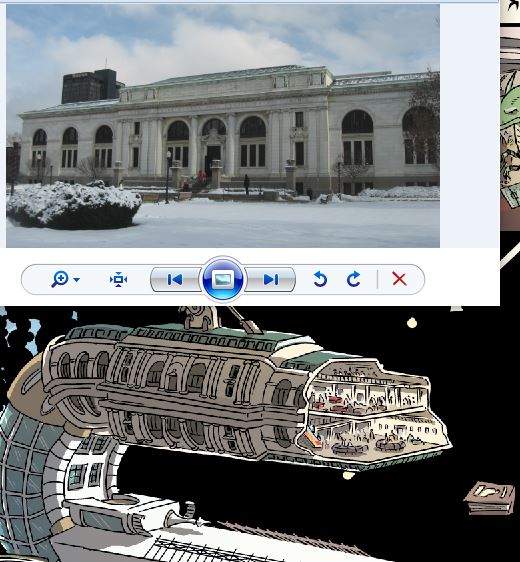
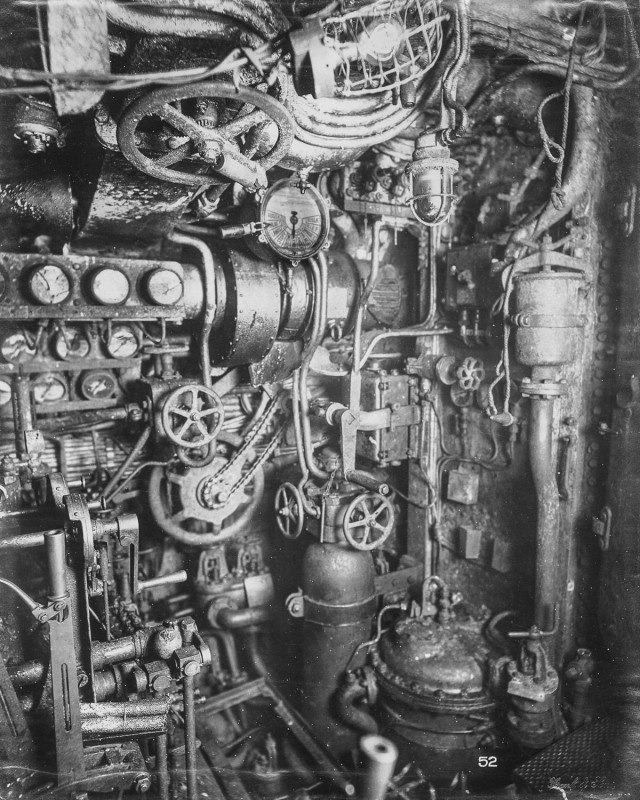
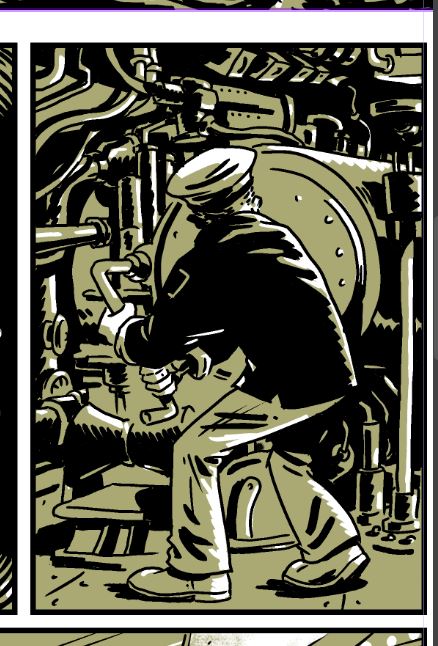
Here’s another one. This image is from Trench Dogs (another coincidence: it’s published by Dead Reckoning, who also will be publishing Four-Fisted Tales). It’s the interior of a submarine. 

When I saw this page, it looked familiar… because I’d seen the photo ref image that I’m certain it was based on. It turned up via Google image search both when I was researching subs for my previous book, Oyster War, and for a story with a submarine in Four-Fisted Tales. While not nabbed quite as whole-hog as the Verdun example, you can see elements of the photo incorporated into the Trench Dogs page–even down to the wheel/chain thing in the very last panel. 


I did a similar thing with it in Four-Fisted Tales: just grabbed elements here and there (although, most of this image is based on a more modern bit of photo ref, since it’s a WWII sub):

So, I hereby decree that henceforth, this phenomenon of cartoonists swiping from the same photo ref image be referred to as “Vasquez rocking.” 

Note: I will update this post as I catalog more images of comics Vasquez rocking… and of course, if you spot any such Vasquez rocking out in the wild, leave a comment or hit me up on twitter!

From the Sketchbook: Dogfighting Dogs!

I’m certainly the five billionth person to do drawings of dog pilots (when they “dogfight” they’re literally dogs!! Get it?!) but for whatever reason, I recently wound up doing a batch of quick watercolors of dogs in WWII-era pilot gear. Well, “for whatever reason” isn’t entirely accurate; the reason is at least partially that I had just watched the recent documentary, Spitfire, about the WWII fighter plane of the same name. (Streaming on Amazon Prime btw. Watch it!)

So, here’re a few dogs:

But, hey, when I went to get pictures of these from my sketchbook, I remembered I’d done a couple of cats too! So, here they are:

If your first thought on seeing those was, “Hey, that’s kinda like MAUS, where the various factions are depicted as different animals,” that was pretty much a thought I had as well–except what came to mind was one of my fave “funny animal” comics, Apocalypse Meow (or Cat Shit One, as it’s known in Japan). Sadly out of print for ages here in the U.S., it’s a war comic with antro characters set in Vietnam. 

Anyway, I like those cat and dog WWII characters, but I doubt I’ll ever do anything with them. I’m in the middle of a military/war book at the moment (Four-Fisted Tales) and when that’s done, I’m going to jump back on my antro animals book (In the Weeds), so I’ve kinda got both the “military” and the “animal characters” bit on the roster already.

Incidentally, those images were done with a materials combination I just recently started fooling with and very much like: watercolor, then finished with carbon pencil (and a bit of gouache for highlights). Here, for example, is a recent drawing of an alien I did using the same technique:

What I Read in 2019

In past years I’ve done a list of all the comics (and comics-related stuff) I’ve read, with a short write-up for each item. This year, that’s just not feasible given the amount of material I read and the time I have available… but here’s my list for 2019 with a few comments on things here and there. 

Note that there are most certainly books I’ve forgotten to add to my list that I’ll no doubt remember after I’ve posted this, and there are for sure a ton of mini-comics in particular that I read quickly then prematurely filed in my office minicomic heap without recording them. 


Charlotte Impératrice (FR) – Matthieu Bonhomme

Charlotte Impératrice : 1. La Princesse et l'Archiduc - un ...

Bonhomme is a French cartoonist who is sadly not well-represented in English translation. This book begins a multi-volume story of Carlota of Mexico. The art style is a bit more neo-realistic than previous Bonhomme stuff I’ve read and the coloring is really interesting: it seems like an attempt to pair flat coloring of figures with limited palettes and  extensive use of gradients for backgrounds. Some of the big panels and spreads in here are mind-blowing. You see his process for one in this video.

Here – Richard McGuire

Here by Richard McGuire Review :: Comics :: Reviews :: Paste

The basic conceit of the original strip this book’s an expansion of is so brilliant that it’s literally changed the formal language of comics. I enjoyed reading this, but there’s an air of of “remaking Stairway to Heaven” to the project. Still, I’ll take what I can get from McGuire, who doesn’t do actual full-on comics very often. 

The Invisibles volumes 2 & 3 – Grant Morrison

The Invisibles: Book 1 by Grant Morrison graphic novel ...

I’ve been a big fan of this series ever since it came out, but had not read the full third series until now. That third installment is a bit haphazard for sure, but the second volume–still my favorite volume–is pretty great even on a third (fourth?) read.  I’m still listening along with The King Mobcast as they go through the series. 

Born to be Posthumous – Mark Dery 
Bezoar # 3  – various artists
Beneath the Dead Oak Tree – Emily Carroll
Audubon: On the Wings of the World – Fabien Grolleau

Atomic Empire – Thierry Smolderen and Alexandre Clérisse

Culture SF - Souvenir de l'empire de l'Atome

This book is worth checking out for its aesthetic alone. As you can see above, it’s got a late 50’s/early 60’s advertising art/UPA thing going on that’s unlike pretty much anything else you’re gonna see in comics (all done in illustrator, apparently, as you can see in this video). I was pretty surprised that this book didn’t make more of a splash… but (inexplicably) all the promotion I could find for from its North American publisher didn’t have any samples of the interior art! The story is fascinating and ambitious–and I admit I didn’t fully get the ending–but it’s definitely one of my favorites of the year.

Beyond the Windy Isles – Hugo Pratt
Celtic Tales – Hugo Pratt

Image result for Celtic Tales by Hugo Pratt

Beyond the Windy Isles is absolutely great stuff–just what you want from Corto Maltese: seafaring proto-Han Solo adventures drawn in Pratt’s exquisite “about to fly off the hinges” style… Which is what makes Celtic Tales such and odd bump in the Corto road. It’s odd both story-wise and art-wise. The stories find Corto in land-locked European settings that don’t really give Pratt a chance to show off his best chops, drawing stuff like vegetation and water. And, as weird as it sounds to say, some of the drawing in this volume does kind of fly off the rails. Things are sloppy. Characters are off-looking, Don’t even get me started on the story where characters from Arthurian legend help Corto blow up a WWII sub (or something like that).  

Guirlanda (FR) – by Lorenzo Mattotti and Jerry Kramsky
Frankenstein – by Junji Ito
The Creepy Case Files of Margo Maloo: The Monster Mall by Drew Weing
I, Rene Tardi, Prisoner Of War In Stalag IIB Vol. 1 – Jacques Tardi
Popeye, Vol. 1: I Yam What I Yam – E.C. Segar
Popeye, Vol. 2: Well Blow me Down – E.C. Segar

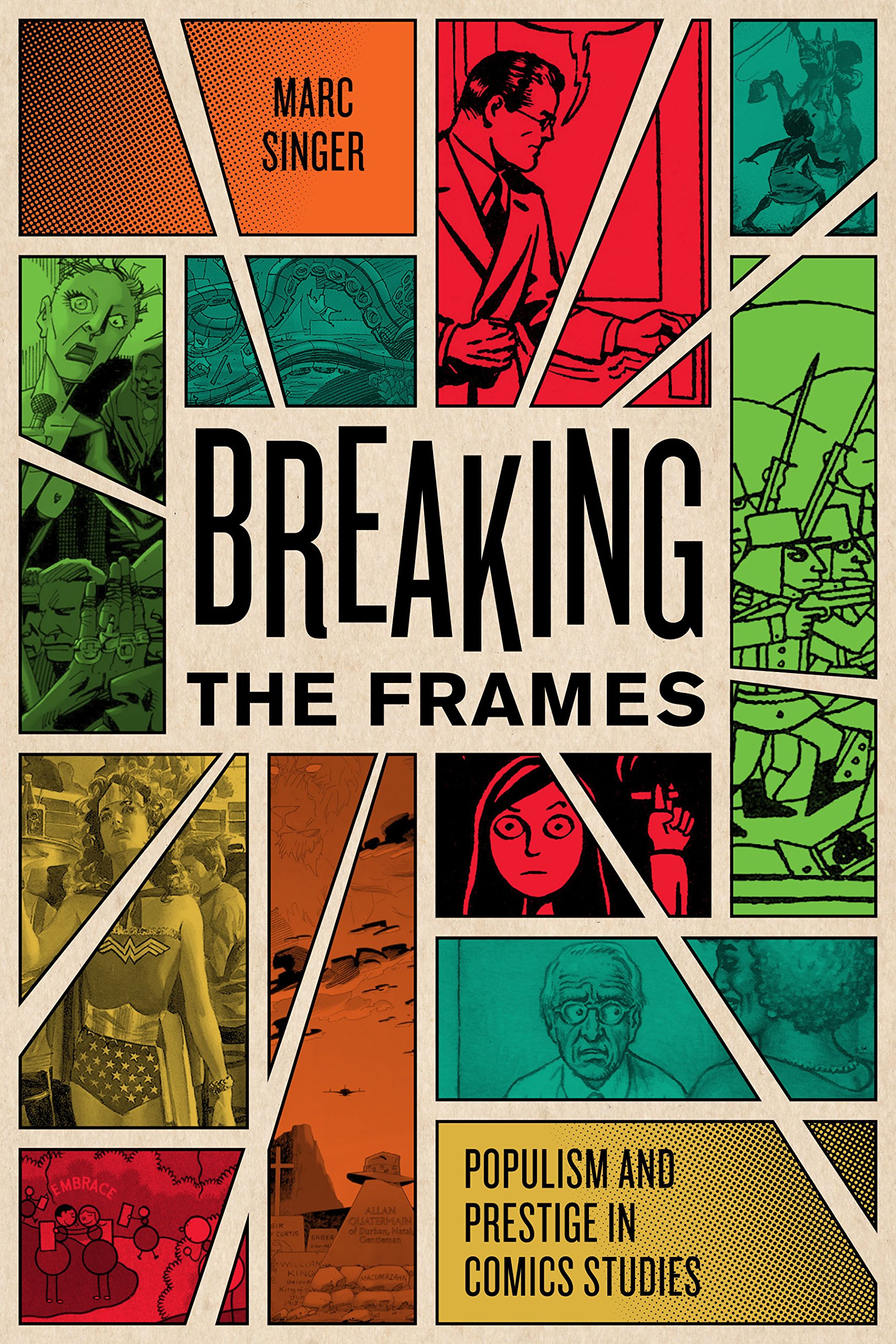
Breaking the Frames: Populism and Prestige in Comics Studies – Marc Singer

Arguably the most important book about comics in 2019–and for sure the one that stirred the most controversy. I wrote a post with my thoughts on it here.

Emma G. Wildford (FR) – Zidrou (Writer), Edith (Artist)
Lone Wolf and Cub Omnibus Volume 2 – Kazuo Koike and Goseki Kojima
Little Bird #1 & #2 – Darcy Van Poelgeest and Ian Bertram

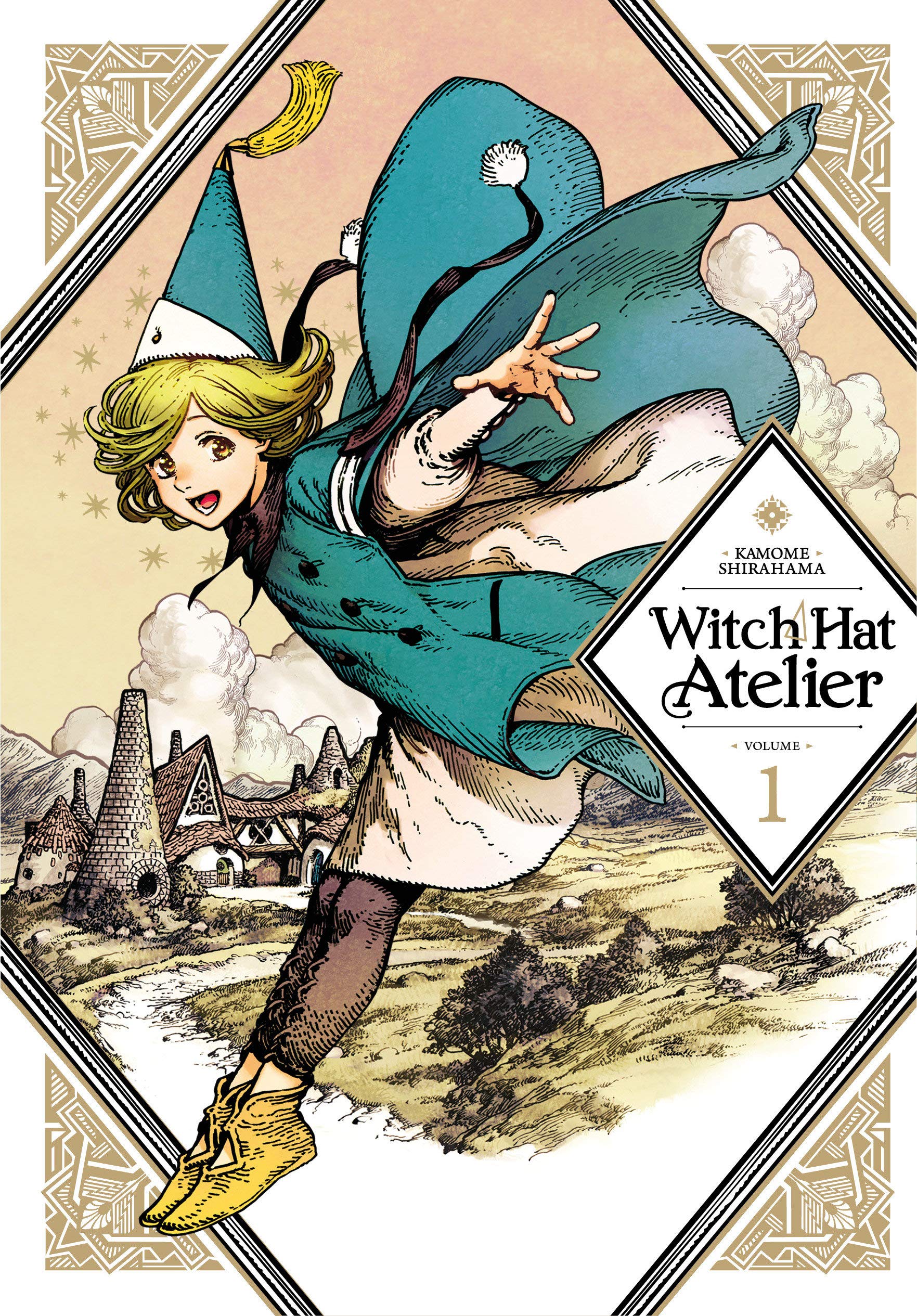
Witch Hat Atelier vol. 1 & 2: Kamome Shirahama

Image result for witch hat atelier

My favorite manga of recent vintage. The first volume is slightly rote story-wise–it’s the classic “regular kid discovers they’re actually a super-special magic user and winds up at wizard school” bit–but, by the second volume things begin to differentiate from the standard “wizard school” narrative and get interesting. The really unique magic system outlined in the book is one of its best features, as is the gobsmackingly pretty Moebius-inflected (but still obviously manga) artwork. 

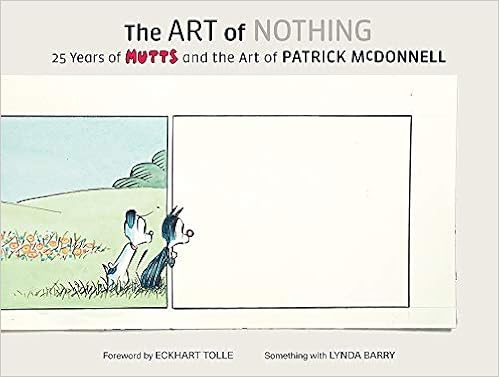
The Art of Nothing: 25 Years of MUTTS and the Art of Patrick McDonnell – Patrick McDonnell

Image result for The Art of Nothing: 25 Years of MUTTS and the Art of Patrick McDonnell

This is a big, beautiful retrospective art book celebrating the first 25 years of the newspaper strip, Mutts. It’s filled with scans of original art, early advertising/illustration art by McDonnell, color guides for Sunday strips, and selected “best of” strips. Mutts is one of the few currently running truly great newspaper comics and it’s great to see it get such a high-caliber milestone retrospective.  

Sobek – James Stokoe

Image result for Sobek - James Stokoe

This one may be a bit difficult to track down, but it’s well worth it. It’s an abjectly ridiculous (and I mean that in the absolute best way) story about a crocodile god that begrudgingly heeds the calls of his worshipers to do battle with a rival deity. As with all things James Stokoe, the art is jaw-dropping panel after jaw-dropping panel of exquisite detail and bonkers color.   

Pope Hats #6 – Hartley Lin
Oishinbo – Izakaya: Pub Food – Tetsu Kariya and and Akira Hanasaki
Le Journal de mon Père (FR) – Jirō Taniguchi
The Columbus Scribbler #3 – various artists

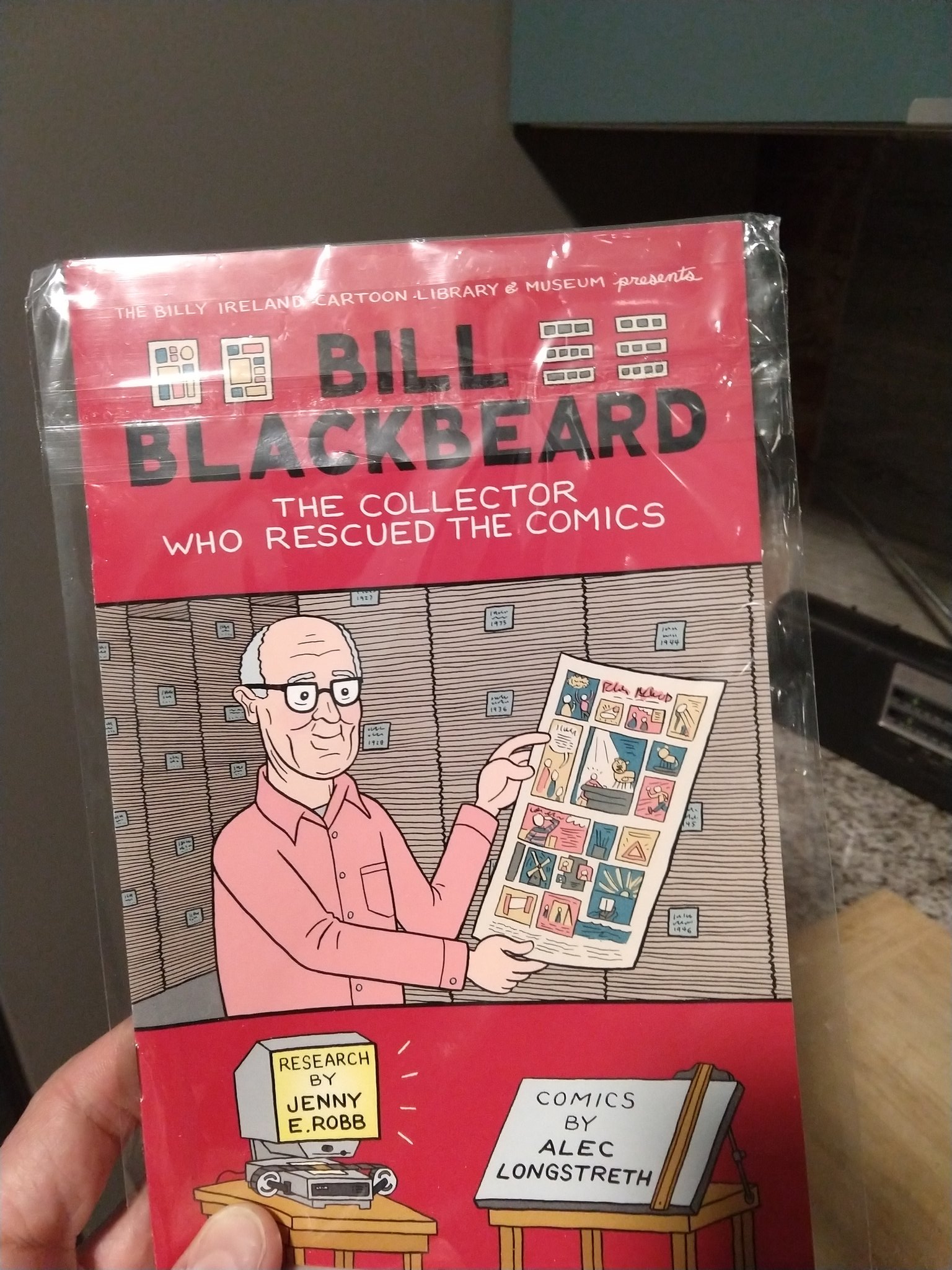
Bill Blackbeard – The Collector Who Rescued Comics – Jenny E. Robb & Alec Longstreth

Image

You’ve gotta get this one at The Billy Ireland Cartoon Library and Museum here in Columbus! If–like me–you were obsessed with the old Smithsonian Collection of Newspaper Comics as a kid, you know who Bill Blackbeard is. This short comic, illustrated by Alec Longstreth (Basewood, Phase 7), is a quick history of his life and influence, based on research by Billy Ireland’s Jenny E. Robb. 

Ready for Pop – Hurk

In Review: Ready for Pop by Hurk – downthetubes.net

Hurk is apparently a staple of the indie comics scene in the U.K., but not well known here in the U.S… which is too bad, because this book is fantastic. As you can see, it’s got a great 90’s-esque indie comics look to it that’s all but vanished here in the U.S. largely as a result of the ubiquity of color printing. The story’s set in mid-60’s London and centers on a pop singer who’s been inexplicably shrunken. Nicely drawn, fun, and funny–pick it up if you can. 

Wasted Space #1 – Michael Moreci & Hayden Sherman
Egg Cream #1 – Liz Suburbia
Meeting Comics #1 – Andrew Neal
Paul Moves Out – Michel Rabagliati
Pope Hats #1 – Ethan Rilly
Planetes Vol. 2 – Makoto Yukimura
The Pterodactyl Hunters in the Gilded City – Brendan Leach

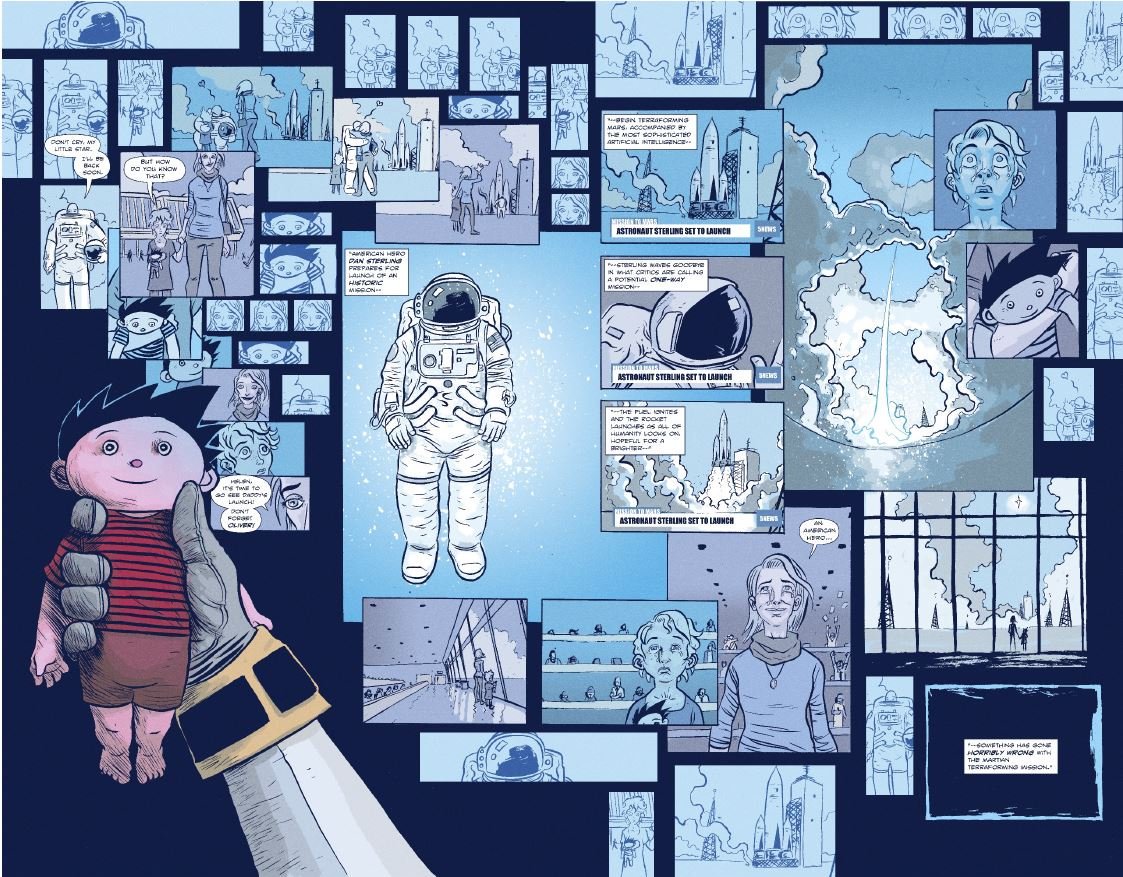
Canopus #1-#4 – Dave Chisholm

Image

This series isn’t coming out until February, but Dave’s been posting bits and pieces to Twitter intermittently… and he generously let me read an advanced digital version of the series. This story ticks a lot of boxes for me: a SF story drawn in a somewhat cartoony style, great Solaris-esque premise, beautiful coloring, unconventional page layouts and storytelling. Definitely be on the lookout for this in a few months from Scout Comics.  

Tintin and the Picaros – Hergé

Hergé and Tintín..AMAZING !! | El Baúl de Guardián 

So, this may or may not be the end of my couple years’ long chronological read/reread of Tintin (I can’t decide if I’m gonna bother with Alph-Art). This book seems to be largely considered the worst of the late-era Tintin books, but I found it more just rote than anything. Coming not too far after the heartfelt Tintin in Tibet and then the near-meta story that is Castafiore Emerald, this seems (aside from some typical late-era weirdness like odd close-up staging and characters behaving a bit out-of-character at times) this just seems like a standard “Tintin goes somewhere” adventure from the beginning of Hergé’s career. Now the previous book, Flight 714there’s a terrible Tintin book!


See you next year… and read more comics!

Selected Sketchbook Drawings – October 2019

I haven’t posted any sketchbook pages in forever, so here goes… 

Truth be told, I’d weirdly fallen out of my years-long habit of drawing nightly in my sketchbook and have only recently gotten back into it. Why had I fallen off? I’m not exactly sure–other than that I’ve had a lot of “life getting in the way” events happening in the last year and a half or so. And, as I’ve been working pretty steadily on Four-Fisted Tales, I’ve been keeping up with drawing pretty much every day, even if it wasn’t in my sketchbook. Thankfully though I’ve gotten back in the sketchbook habit–and I’m all the better for it. Non-directed drawing is something that I feel is really beneficial, even if you’re working on/drawing a comic regularly. 

(And if you’re interested in more regular sketchbook stuff, I regularly post my sketchbook work to my IG – @ben_f_towle.) 

So, below is just a handful of things selected from either my actual physical sketchbook or from “pages” of digital sketching that I’ve been doing on my Wacom MobileStudio Pro. (I’vs also started regularly attending weekly live animal-drawing sessions at CCAD, but those are so loose and gestural–not to mention hard to scan, given their size–that I’m not including them here.)

Here’s a digital sketch I did of (80’s-era) Madonna. I believe this is from a photo from a semi-recent MOJO Magazine. 

One of the things that’s really helped me get back into sketchbook work is attending a weekly drink-n-draw here in Columbus. There are a few different comics-focused events of the sort, but the one I go to is Tuesday nights at Two Dollar Radio. I make a point to work only non-digitally there and try out new materials as much as possible. (The fact that my office at CCAD is literally a stone’s throw from the art supply store is good for my artistic development… but bad for my bank account for sure.)

This is some experimentation with a carbon pencil. I first got interested in carbon pencils via Mark Schultz’s recent illustration work. He’s able to get them to blend seamlessly with traditional pen and ink work. I’m using it here more like regular charcoal or pencil. 


These two characters are obviously digital. As with all the digital stuff here, this was done in Clip Studio Paint. With these I’m using some tone layers in two different percentage values. 

Here’re a few more digital sketches: a whole “page” and then a close up of some kinda weird elephant creature I drew. I’m playing around with a lot of CSP stuff: tone layers, hatching brushes, etc.

Along those same lines (fooling around with a lot of digital CSP stuff) here’s a small, quick digital sketch of my dog that I really liked and a few random animal sketches on a single page:

I spent several of my early drink-n-draw sessions at the beginning of the school year working with my little Cotman watercolor kit. Here’re a few excerpts: a full page of random doodling, a warthog in Edwardian garb (don’t ask–no idea), and some explorations of Akira Toriyama’s (amazing) car designs:

Finally, here’s a handful of ballpoint pen sketches–the first an image of Kathleen Hanna from (again) a MOJO Magazine, then just a few doodles. I taught a unit on ballpoint illustration in one of my classes this term and as a side effect, I’ve been really getting into ballpoint myself. It’s a pretty unforgiving medium, but I love the way you can get anything from a colored pencil-like uniform, smooth color to very obvious hatchy mark-making.