N is for Nathaniel Chanticleer

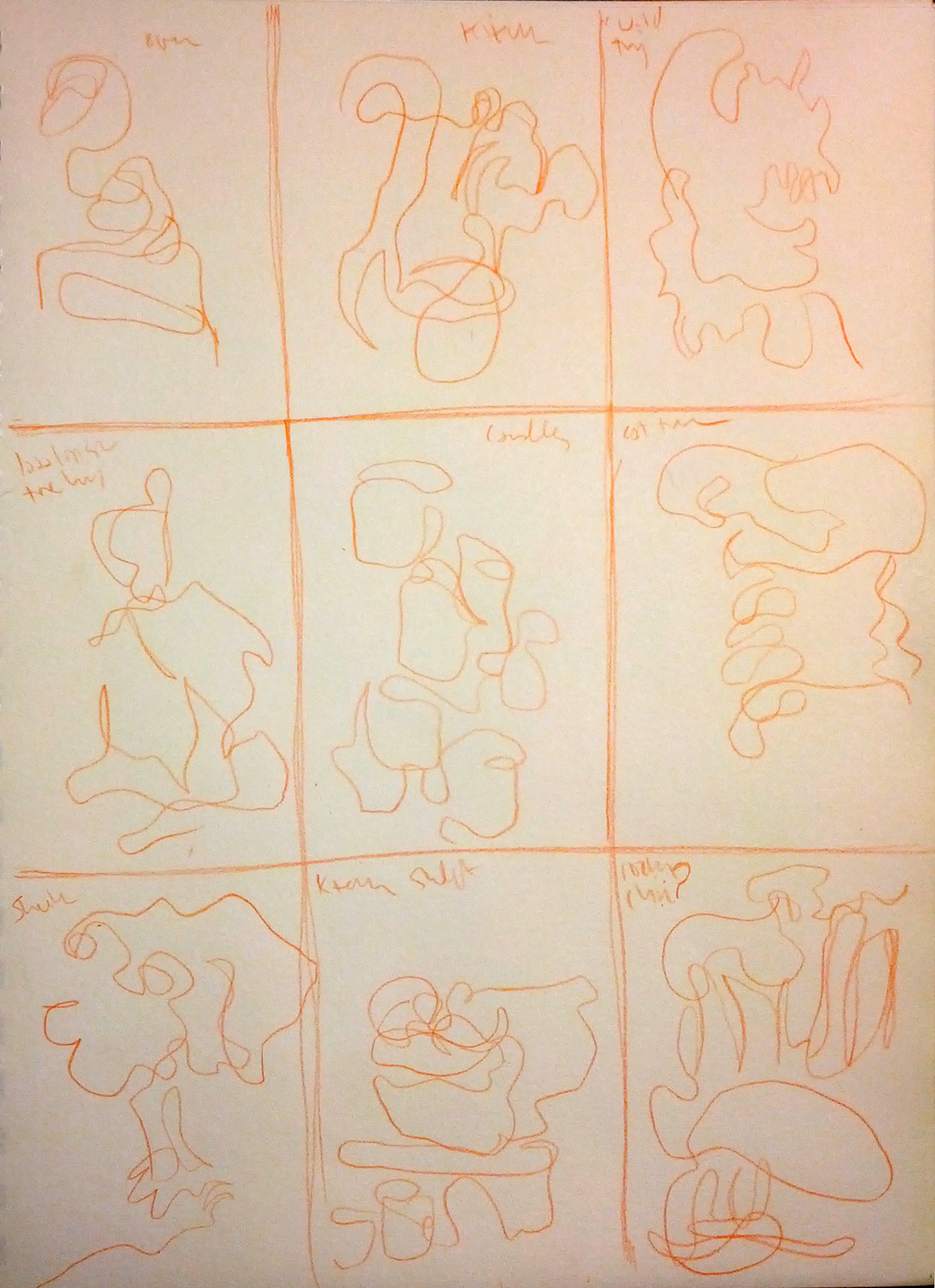
O.K., I’ll fess up: this isn’t one of my favorite AlphaBooks illustrations. It’s based on a sketch I did on Thursday night that I’d normally have just pitched and considered a first attempt, but I was out of town this past weekend and had to go with what I had. It’s not a bad drawing, but I do tend to “default” to this egg-shaped body/trotting gesture a lot and I’d have liked to stretch myself a bit more if I’d had time. But, anyhoo:

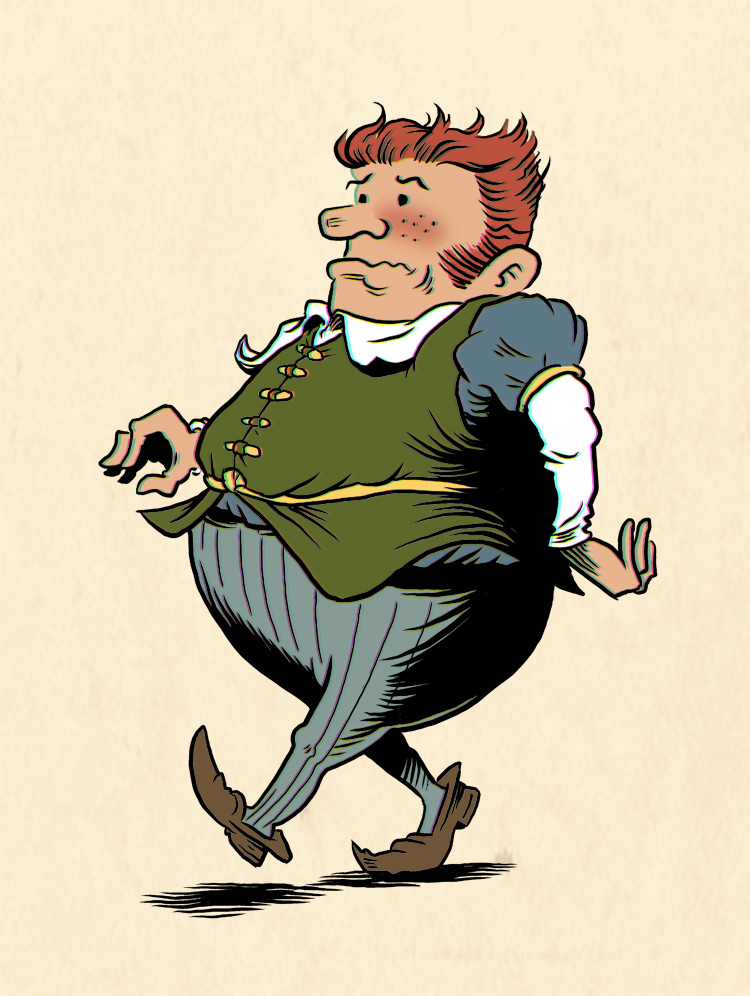
N is for Nathaniel Chanticleer — From Lud-in-the-Mist by Hope Mirrlees

Despite being championed by folks like Neil Gaiman–who called it “one of the finest [fantasy novels] in the English language”–a lot of readers of modern fantasy aren’t really aware of this amazing book by enigmatic author Hope Mirlees. Sadly, it seems to have been out of print in the U.S. since the 1970s. (I’ve seen a few newer versions, but they’ve all had an air of dodginess about them and I’m not sure if  they’re legit releases or not.) The novel does, though, clearly have a cult following and its influence runs through books like Johnathan Strange and Mr. Norell and John Crowley’s Little, Big (not coincidentally, two of my other two favorite fantasy novels).

Lud-in-the-Mist was written in 1926, eleven years before Tolkien’s The Hobbit, and it often gets compared to that work. Aside from generally falling into the genre of High Fantasy and the importance of both books’ pastoral settings, though, I don’t see a lot of similarity there (although, I do love both books). I couldn’t for the life of me Google up the original quote, but I recall a review that nailed the differences pretty well–along the lines of, “If The Hobbit is a story told by your stodgy intellectual grandfather, Lud-in-the-Mist is one told by your slightly loony great aunt.”

The novel centers on the character I’ve selected here, Nathaniel Chanticleer, who governs the proudly sensible town of Lud-in-the-Mist but who’s forced to deal with the repercussions of his son’s having eaten some forbidden “fairy fruit.” As you can probably guess, the book deals with the conflict between chaos and order, fantasy and reality, etc.

There’s not much description of Chanticleer in the novel beyond this:

Master Nathaniel Chanticleer, the actual head of the family, was a typical Dorimarite in appearance; rotund, rubicund, red-haired, with hazel eyes in which the jokes, before he uttered them, twinkled like trout in a burn.

Overall, the town of Lud-in-the-Mist has a vaguely Medieval or Renaissance feel to it, so I dressed him accordingly. The adult Nathaniel Chanticleer is haunted by a bizarre “fairy note” he heard played on an instrument as a lad and as a result he has a sort of vaguely troubled nature about him–hence, his expression here.

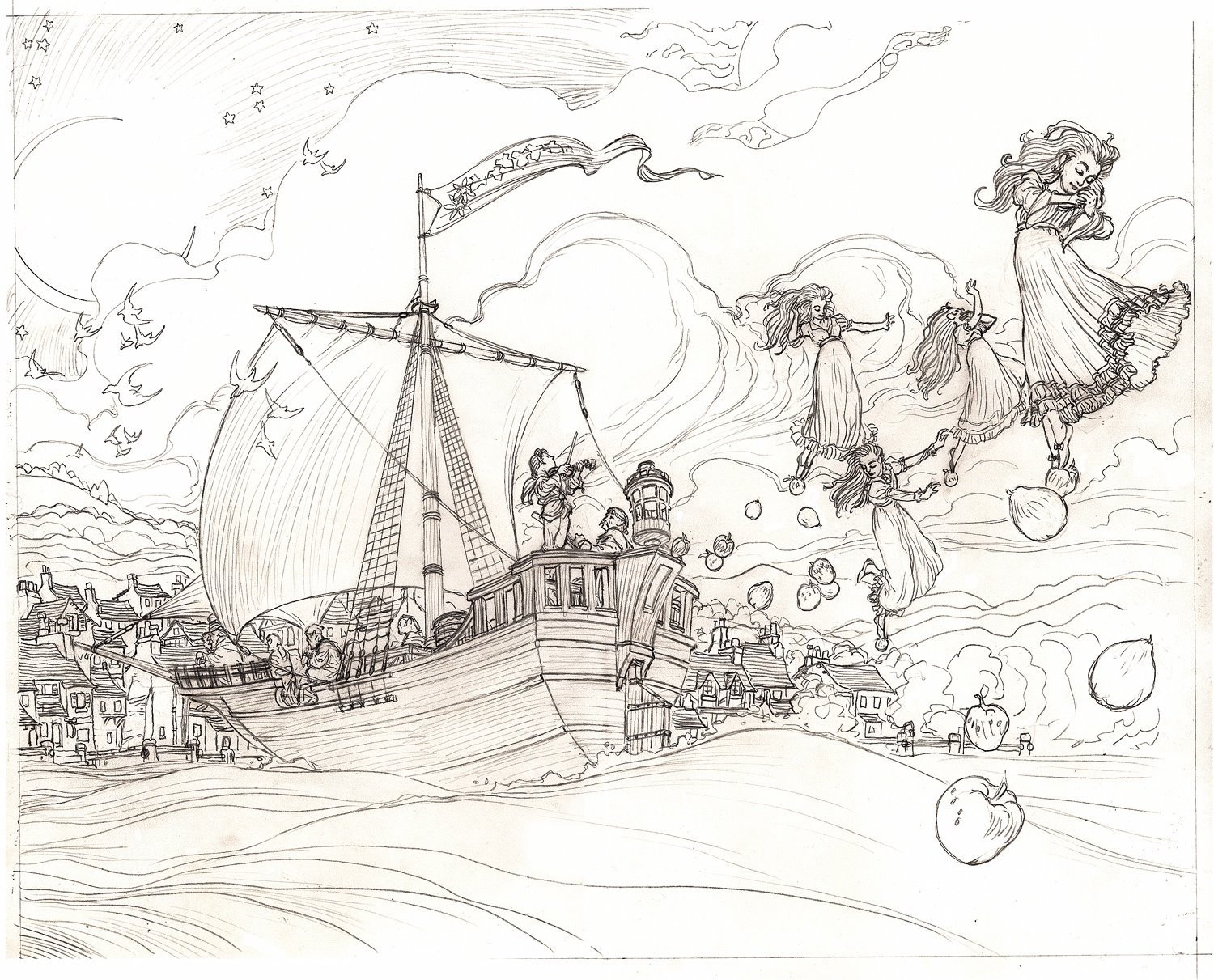
Lud-in-the-Mist is either currently or will soon be out of print and I’d ruminated a while back about seeing if I could get some publisher interested in a graphic novel adaptation of the book. Having though, now seen this great Charles Vess Lud-in-the-Mist drawing that’s included in the Hope Mirrlees biography, Hope-in-the-Mist, I think it’s safe to say, he’s the man for the job:

Drawn in colored pencil and graphite, inked in Digital Manga Studio, colored in Photoshop.

Next week: “O”…

You can find all the AlphaBooks entries to-date at the AlphaBooks tumblr: http://alphabooks.tumblr.com. You can also follow many of the entries as they’re posted in real-time by following the #AlphaBooks hashtag on Twitter on Mondays.

M is for Mattie Ross

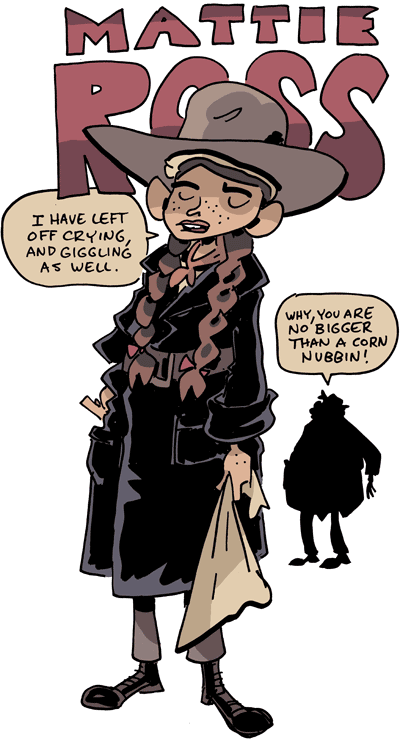
I had a number of good possible choices for this week’s “M” AlphaBooks entry. The others on my “possibles” list for this week were Magwitch from Great Expectations by Charles Dickens, Moaning Myrtle from the Harry Potter series, The Misfit from Flannery O’Connor’s A Good Man is Hard to Find, and The Monster from Mary Shelly’s Frankenstein. I’ve used up my Harry Potter character already and I have another Dickens character in mind for later, so here’s what I went with:

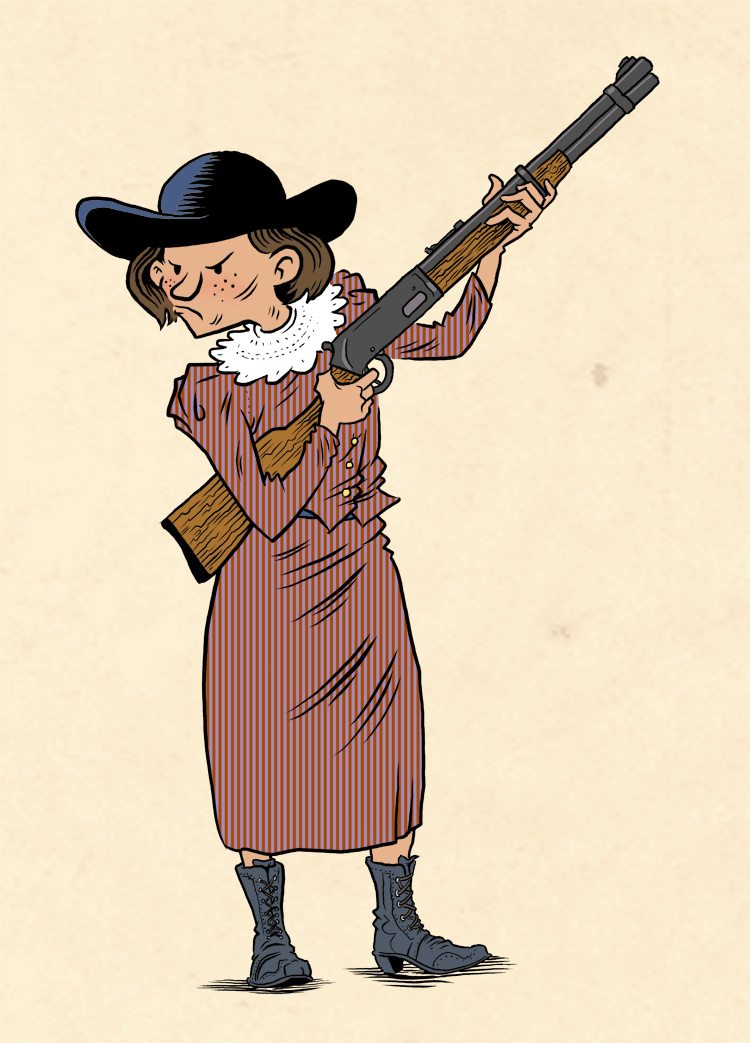
M is for Mattie Ross – From True Grit by Charles Portis

Charles Portis is one of my favorite writers and he’s thankfully gotten somewhat better known now than when I first got interested in him. It wasn’t too long ago that all of his books other than True Grit were out of print. Fortunately, sometime in the mid 90s they all got reprinted. I’d be hard pressed to come up with my definitlve favorite Portis novel, but my top three (in no particular order) are The Dog of the South, True Grit, and Masters of Atlantisand genre wise those are about as disparate as three works can be; the first is a contemporary road novel, the second an Old West adventure, and the third a conspiracy theory send-up.

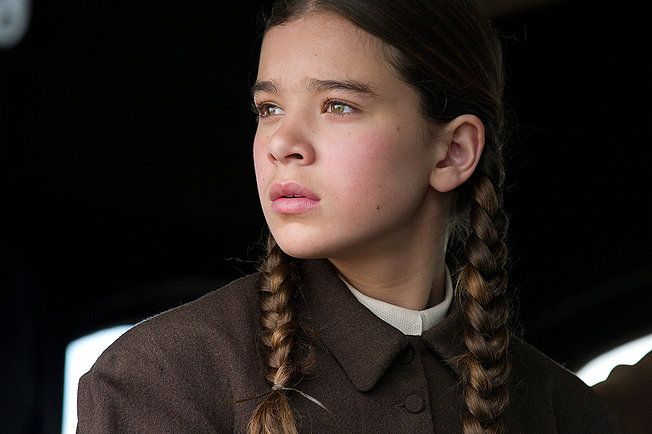
True Grit has of course entered the spotlight again relatively recently due to the great Cohen Brothers adaptation of it. One really notable difference between the film and the book, though, is that the book is narrated in the first person by Mattie. I’d put True Grit among the best first person-narrated books I’ve ever read. In the film you get a lot of Mattie’s lines taken directly from the novel, but in the book you get her quirky, distinctive diction narrating everything.

Hailee Steinfeld plays Mattie in the film version. Here she is:

When I set out to draw my version of Mattie, I couldn’t help but picture her, but as with all my other AlphaBooks entries, I tried to go back to the text for a description of her. Interestingly, though, the book really doesn’t contain a description of her since she’s narrating the story. I skimmed the text and really couldn’t even find much in the way of other characters remarking on her appearance.

One of the film Mattie’s most distinctive visual details are her pigtails and indeed when Chris Schweizer recently did a series of True Grit drawings, he gave her pigtails:

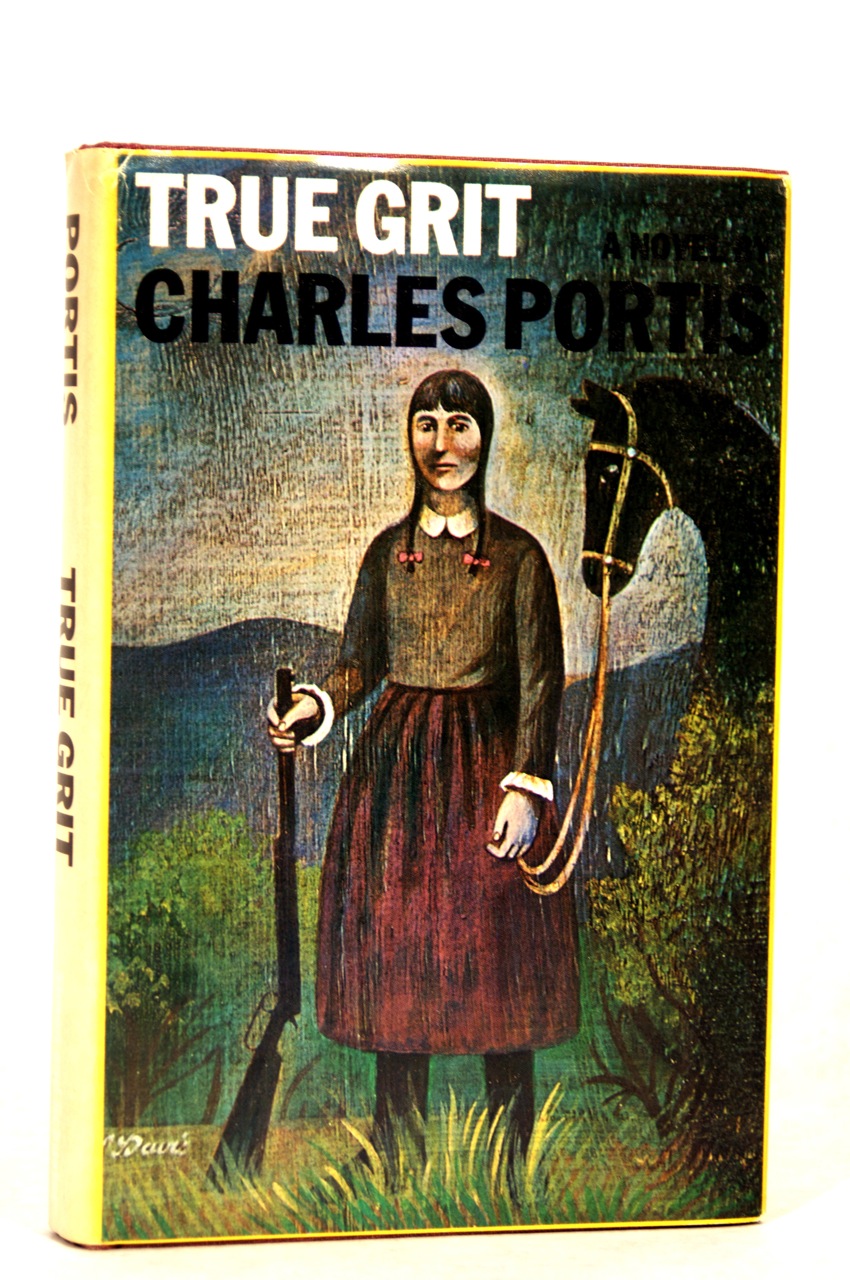
I got an ebook version of the book and searched for “pigtail,” “hair,” etc. and could turn up no references to Mattie’s hair other than her describing it as ruffled up at one point. I can only conclude that the Mattie-with-pigtails thing originates with this cover art from original edition of the book:I decided I wanted her to have pinstripes and in the process of coloring her, I found this really handy “stripe generator” that allows you to create little stripe swatches that you can use with Photoshop’s pattern stamp tool. That’s how I did her stripes here.

As usual, this drawing was done in my sketchbook in colored pencil, inked in Manga Studio, and colored in Photoshop.

Next week: “N”…

You can find all the AlphaBooks entries to-date at the AlphaBooks tumblr: http://alphabooks.tumblr.com. You can also follow many of the entries as they’re posted in real-time by following the #AlphaBooks hashtag on Twitter on Mondays.

L is for Luna Lovegood

I was on the fence about whether to “use up” my Harry Potter character on “L” since I had another good choice in Lee Scoresby from Philip Pullman’s His Dark Materials trilogy, and because it would knock out Xenophilius Lovegood for the difficult-to-fill “X” spot. My list, as it now stands, is fairly short on women, though, so I went ahead and drew Luna:

L is for Luna Lovegood — From the Harry Potter series by J. K. Rowling

Luna is mentioned in Harry Potter and the Goblet of Fire, but first appears in Harry Potter and the Order of the Phoenix. I’ve read all of the Harry Potter books, but I’ve not yet seen the last few films, so it wasn’t too much of a struggle to work up this image just from the description of her in the books. It’s also helpful that J.K. Rowling writes such vivid visual descriptions of her her character, usually giving you a lot of physical details that add up to a pretty definite “vibe”:

She had straggly, waist-length, dirty blonde hair, very pale eyebrows, and protuberant eyes that gave her a permanently surprised look. Harry knew at once why Neville had chosen to pass this compartment by. The girl gave off an aura of distinct dottiness. Perhaps it was the fact that she had stuck her wand behind her left ear for safekeeping, or that she had chosen to wear a necklace of Butterbeer caps, or that she was reading a magazine upside down

There seems to be some debate in the Harry Potter community as to whether Butterbeer has corks or caps, but it seems to be pretty clear here that they’re caps–presumably metal. I kept seeing stuff like this–I’m assuming this is what she wears in the movies:

People, those are clearly corks, not caps.

Luna is the daughter of Xenophilius Lovegood, who publishes The Quibbler–sort of the Harry Potter equivalent of the U.K.’s celebrity news tabloid, The Sun–so I drew her here reading that (right side up). She’s also wearing some Spectrespecs, which are big, colourful glasses that were given away with an issue of The Quibbler. They make their wearer look like a “demented, multicoloured owl.” I’ve also got her wearing her Dirigible plum earrings, which the book says look like radishes.

I started the drawing for this one in my sketchbook, but foolishly didn’t give myself enough room to work with, so the top 3/4 of the drawing was done in colored pencil and the bottom quarter completed in Sketchbook Pro:I then inked it with Digital Manga Studio and colored it in Photoshop.

Special bonus! Check out this hilarious Sears Photography Studio-type image I stumbled on:

Next week: “M”…

You can find all the AlphaBooks entries to-date at the AlphaBooks tumblr: http://alphabooks.tumblr.com. You can also follow many of the entries as they’re posted in real-time by following the #AlphaBooks hashtag on Twitter on Mondays.

K is for Kurt Barlow

Man, it was hard to come up with a K entry this week! I’ve been confining myself to books I’ve actually read, and the way I made my initial list was just by scanning my book shelves. That, though, misses potential characters from books I’ve read but no longer own–and between my selling stuff off to the local used book store and just loaning stuff out, that’s a significant well of possible characters. Although I no longer own the books, I had a “Stephen King phase” in high school and read all of his books up through Pet Cemetery or so and that’s where this week’s AlphaBooks character is from:

K is for Kurt Barlow — From ‘Salem’s Lot by Stephen King

‘Salem’s Lot is basically King’s homage to Bram Stoker’s Dracula and Kurt Barlow is the stand-in for the original Count Dracula. In fact, the physical descriptions of the two characters are nearly identical. Here’s how Stoker describes the Count:

”a tall old man, clean shaven save for a long white moustache”. His mouth ”was fixed and rather cruel-looking, with peculiarly sharp teeth; these protruded over the lips, whose remarkable ruddiness showed astonishing vitality in a man of his years”.

Here’s King’s description of Barlow:

”a tall, extremely thin silhouette”. His ”cheekbones were high and Slavic, his forehead pale and bony, his dark hair swept straight back” and ”[h]is teeth curved out over his full lips, white with strong streaks of yellow, like ivory”.

‘Salem’s Lot–which has been aptly described as “Payton Place with vampires”–though, takes place in the then-present day, the late 1970s. Clothing-wise, Barlow is described as, ”all tricked out in a suit, vest and all,” so I figured it was safe to assume he’d be wearing some pretty snazzy late ’70s apparel. I cribbed together a quick collage of 1979 fashion as inspiration for his outfit:

As usual, the drawing was hand-drawn in colored pencil, inked in Digital Manga Studio, and colored in Photoshop.

Next week: “L”…

You can find all the AlphaBooks entries to-date at the AlphaBooks tumblr: http://alphabooks.tumblr.com. You can also follow many of the entries as they’re posted in real-time by following the #AlphaBooks hashtag on Twitter on Mondays.


A Few Points In Defense Of The Film Brave

(Merida and Angus, drawn by me in the style of E.C. Segar)

If you read my blog you know that movies aren’t really my thing. My main passions are comics and music (and I try to keep the music chatter to a bare minimum here). I do, though, very occasionally make it out to the theater. These days my theater-going is usually confined to kids’ movies, since I can haul my daughter along with me. Such was the case when my wife, daughter, and I went to see the most recent Pixar film, Brave, a few weeks ago.

I absolutely loved Brave.

I make a point to read/know as little about a film as possible before seeing it, and so I knew very little about Brave going into it. Not too long after I returned from the film, though, I decided to get online and see what kind of reviews the film had received. I was really surprised by the lackluster reaction to the film among critics. Not only was this contrary to my own feelings about the film, but it also contrasted sharply with the very positive online Brave chatter I’d seen via Twitter. So here is not so much a “defense” of Brave, but just a few random thoughts on what might be behind the odd disparity between the critics’ reviews and casual viewers’ reactions to this film. Needless to say, beware spoilers:

  • Reviewers are dudes – I suspect that at the core of this weird discrepancy there’s something gender-related. I’m betting that the audience that saw Brave probably skewed a lot more female than the guy-dominated movie reviewing community. Just grabbing the main page from Rotten Tomatoes here, you can see that among the 25 or so featured reviews, only two are written by women:
  • There’s a princess = people be freakin’ – A surprising number of the lackluster Brave reviews I read mentioned how disappointing it was that Pixar had done a “princess movie.” Some even theorized that this was the result of some insidious corporate mandate from Disney to make Pixar fare fall in line with the Disney “Princess” features like The Beauty and the Beast, Snow White, etc. If you think that there’s any real narrative similarity between those films and Brave, you’re not paying attention. If anything, Brave is a reaction to and refutation of the standard Disney princess story–the “the tired and unrealistic plot of waiting around for your true love to come and find you, sweep you up on his majestic white horse and save you” as Brave writer Brenda Chapman puts it in this excellent post about the Princess trope.
  • It’s a message people don’t want to hearBrave sends a message that’s starkly at odds with today’s dominant “me, me, me” culture. In the film, Merida ultimately realizes that she needs to sublimate her own desires and do what’s best for her family/clan. No, she doesn’t wind up actually going through with the marriage, but she decides that she’s willing to. Relating back to my first point about general gender disparity, I wonder if this concept isn’t something that resonates more with women, who have historically often had to sublimate personal ambitions for their families? At the very least, I suspect that this message of self-sacrifice–of not getting what you want when you want it–probably didn’t fly with the notoriously narcissistic baby boomers who dominate the movie reviewing sphere.
  • Compromise is not a “Hollywood ending” – My wife mentioned to me how much she liked the fact that the ending of Brave was a compromise. This is a very astute observation and I think this aspect of the story may also contribute to the film’s tepid reception. American audiences expect films with the good guy beating the bad guy, with the crime solved and the killer in jail, etc. In Brave, though, the film’s essential point of conflict–the relationship between Merida and her mother–is resolved via compromise. Each party here “gives” a little; neither gets 100% of what she wants, but ultimately everyone is better off at the end. Blowing up the Death Star, it ain’t.
  • Not enough bells and whistles – Many of these reviews compared Brave unfavorably to the two recent Pixar films Up and Wall-E, suggesting that Brave wasn’t as ambitious or imaginative as either of those two movies. Up is arguably Pixar’s best film and the first hour or so of Wall-E is pretty amazing stuff, but I think here people are conflating the number of moving parts for quality. Up and Wall-E are “big” films with lots of fantastic characters interacting in fantastic places–jungles, outer space, etc. Frankly, though, I’m more impressed by Brave‘s narrative elegance. Brave is a story with basically two characters–Merida and her mother–and the entire film hinges on their relationship and how it changes. I saw Brave described as being “safe” compared to previous Pixar fare. There’s nothing “safe” about a 90 minute kids’ film that hinges on a complex mother/daughter relationship instead of flying robots or anthropomorphized animal characters. That’s daring.