My other contenders for this week’s “P” drawing were pretty easy to eliminate since I’ve already drawn characters from both of the books they’re from: Pilon from Tortilla Flat and Portunus from Lud-in-the-Mist. That left just this fella:
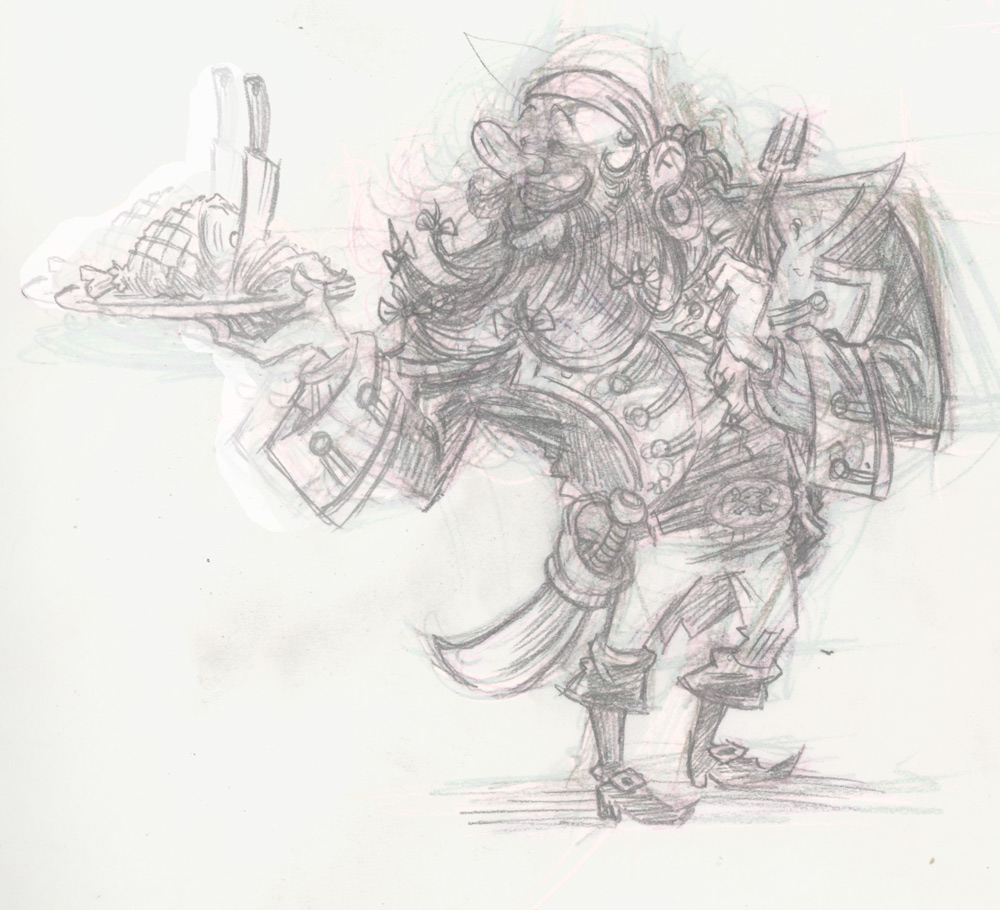
P is for The Pirate Captain — From Pirates! In Adventure With Scientists by Gideon Defoe
 Before anyone starts giving me grief about it, please note that this character’s name in the book is in fact, The Pirate Captain–it’s a proper name and capitalized throughout.
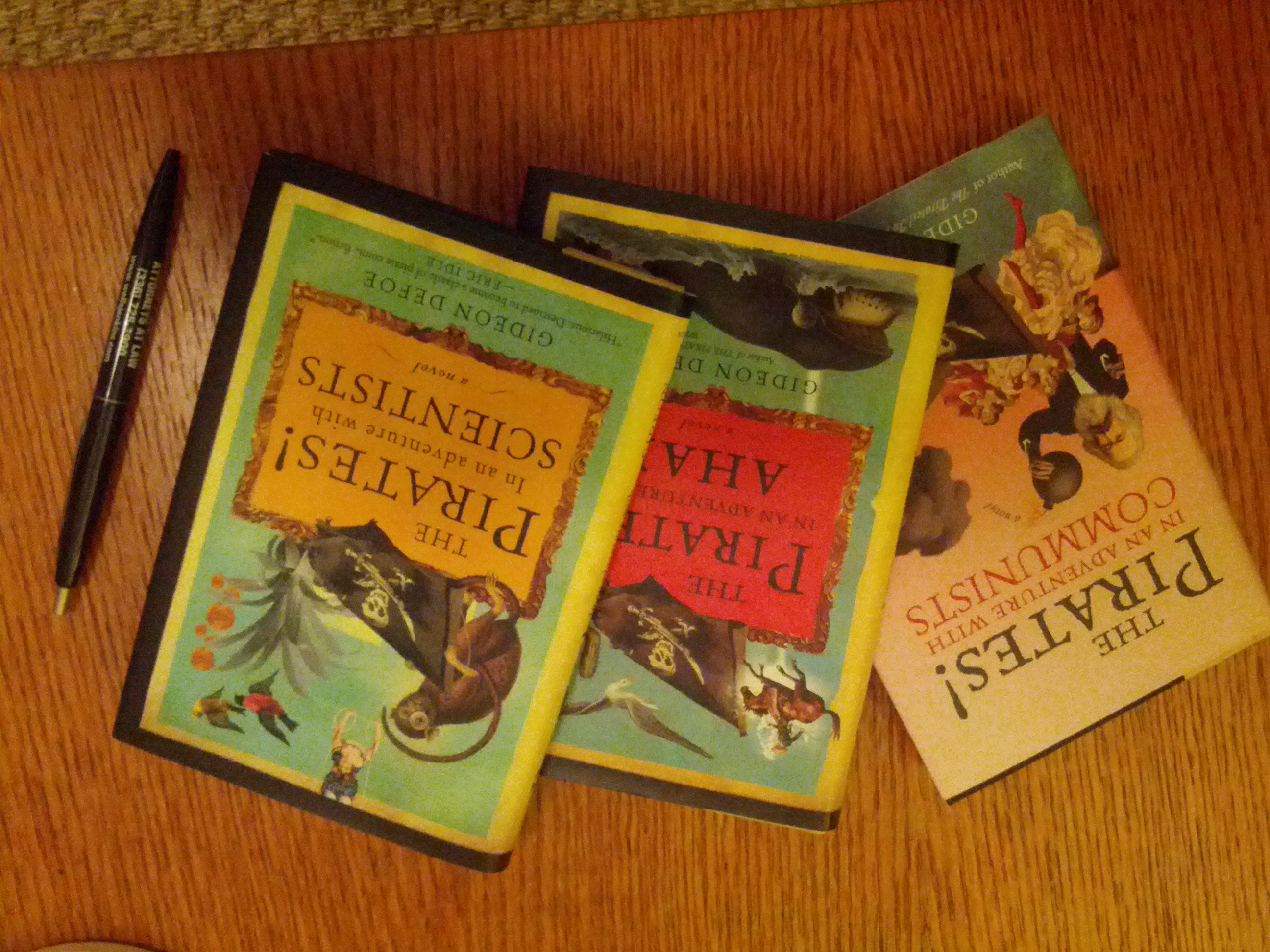
There are very few books I can think of that made me laugh out loud reading them, but Pirates! In An Adventure With Scientists is one of them. It’s the first book in Defoe’s series of Pirates! books, the first three of which I’ve read. While I’m sure it’s a comparison that the author has probably grown to bristle at, the tone of these books is somewhat Monty Python-esque; this volume even has an endorsement from Eric Idle on the cover. While all three books are really fun–and hysterically funny–this first one was by far my favorite. They’re quite short, and beautifully designed as well:
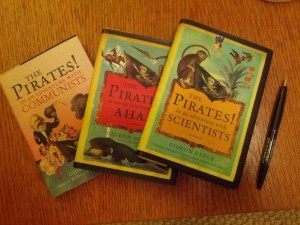 The pirates in the Pirates! series aren’t particularly good at the usual pirate stuff–looting, pillaging, etc.–but instead prefer to spend their time sunbathing on the deck, grooming their “luxurious beards,” and eating ham. They’re never referred to by proper names, but rather as “the pirate with gout,” or “the pirate with a scarf,” for example. Their leader, The Pirate Captain, is described as so:
The Pirate Captain cut an impressive figure. If you were to compare him to a type of tree—and working out what sort of tree they would be if they were trees instead of pirates was easily one of the crew’s favorite pastimes—he would undoubtedly be an oak, or maybe a horse chestnut. He was all teeth and curls, but with a pleasant, open face; his coat was of a better cut than everybody else’s, and his beard was fantastic and glossy, and the ends of it were twisted with expensive-looking ribbons. Living at the sea tended to leave you with ratty, matted hair, but the Pirate Captain somehow kept his beard silky and in good condition, and though nobody knew his secret, they all respected him for it. They also respected him because it was said he was wedded to the sea. A lot of pirates claimed that they were wedded to the sea, but usually this was an excuse because they couldn’t get a girlfriend or because they were gay pirates, but in the Pirate Captain’s case, none of his crew doubted he was actually married to the sea for a minute.
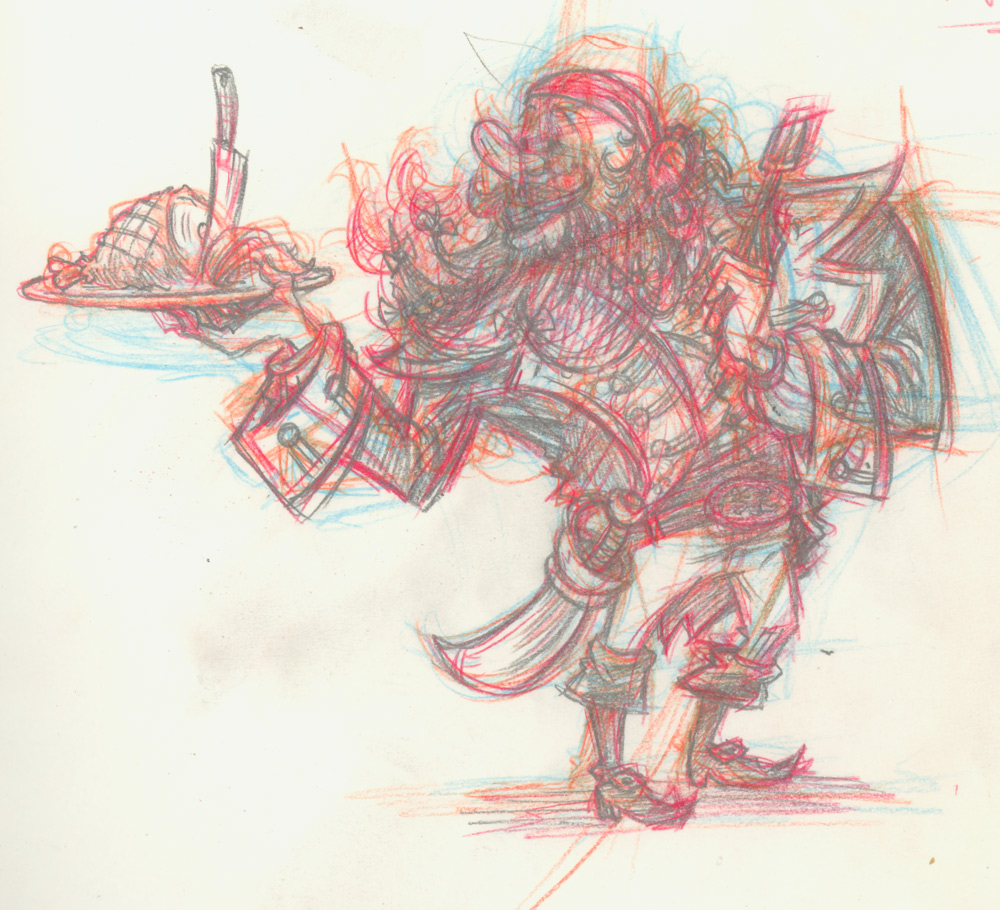
While I’m pretty happy with the final image here, it took a lot of doing to get there, as this pencil sketch image demonstrates. It took me four “layers” (blue, orange, red, graphite pencil) to get an image I was happy with:
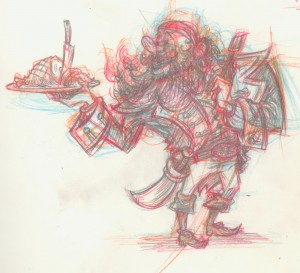 Once I pulled everything but the final graphite pencil out, though, I had a pretty solid drawing:
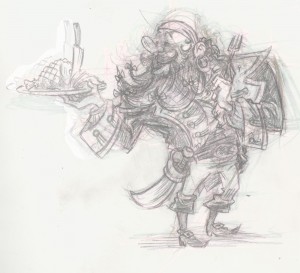 I inked it in Manga Studio and colored in Photoshop.
Next week: “Q”…
You can find all the AlphaBooks entries to-date at the AlphaBooks tumblr: http://alphabooks.tumblr.com. You can also follow many of the entries as they’re posted in real-time by following the #AlphaBooks hashtag on Twitter on Mondays.

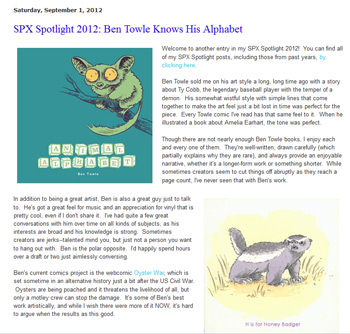
 Second: Panel Patter. While Rob McMonigal doesn’t make comics, he’s also a blogger and all around nice guy. He’s been doing a really great, extensive pre-SPX series over at his blog Panel Patter. You can find all the features under the “spx spotlight” tag, and the article on me here.
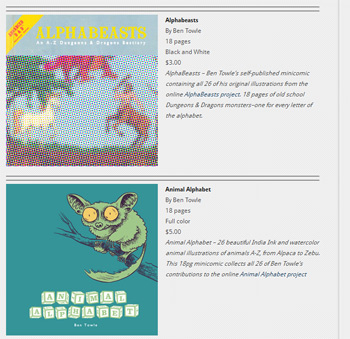
 Third, speaking of SPX…. Over on the official SPX website, you can find a list of all of the books debuting at the show this year–including write-ups on my Animal Alphabet and AlphaBeasts minis that I’ll have at the show.
 I’ll do a full blog post about SPX and the Alphabet Press table (which I’ll be manning, along with some other Alphabet project folks) soon…




Recent Comments