D&D Drawings – Gary Gygax R.I.P.

Gary Gygax, co-creator of Dungeons & Dragons died today. I should be (but refuse to be) ashamed of the amount of time I spent as a youngster playing Dungeons & Dragons. Like a lot of folks my age, I became interested in the game well before I was old enough to really play it. Fortunately, by the time I was in junior high school, my friend Karl’s dad–a longtime D&D player–had taken us young folk under his wing and, playing dungeon master himself, taught us how to play the game properly. Probably (also like a lot of other folks as well) I stopped playing D&D in the 80s when it became a pop culture phenomenon, cartoon series included. Since then, though, I’ve often reminisced about the great times I had years ago, and contemplated starting playing again but never really got around to it.

The last time a remember playing D&D as an adult was when hurricane Hugo swept though North Carolina while I was attending Davidson College. While we were trapped in our dorms without power, a few friends–including the woman who would later become my wife–and I struck up a game, remembering as best we could how to play with what little reference we had at hand.

So, enough reminiscing… Now I gotta (as they say) pour out a little liquor for my homey:

gygax.jpg

(By the way, if you recognize this dragon, you’re as big a goon as I am.)

To take things back a few years, here’s a drawing of a D&D lizard man (Armor class 5, Hit dice: 2 + 1 hit point!) I did as a child. Like a lot of folks, I sort of worked my way back to Frazetta from those little illustrations in D&D books. I may not be drawing sword and sorcery stuff these days, but there’ s no mistaking the influence the D&D artwork had on me as a young man:

lizard.jpg

Sketchbook 2/29

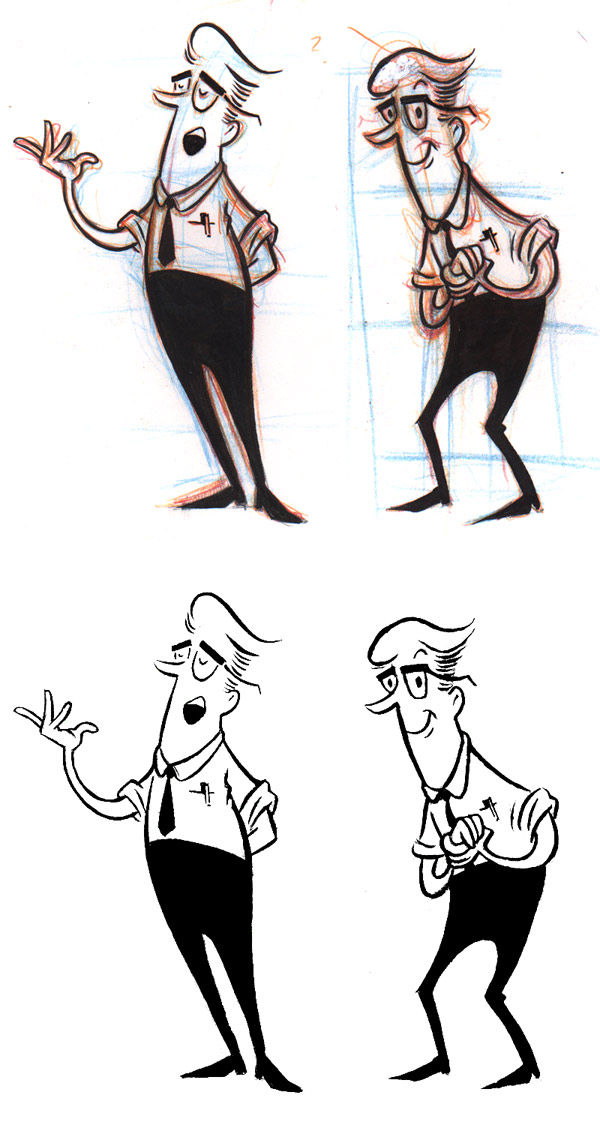
I’m thinking that my contribution to the dinosaur/caveman-themed Wide Awake Press Free Comic Book Day comic (Piltdown is the name of the book) is going to require a paleontologist “guide” who will introduce three separate one-page stories.   This is where he’s heading–original sketches up top, cleaned up on the bottom:

sketch_022908.jpg

A Few More Pics From Ma-Con Comics Convention

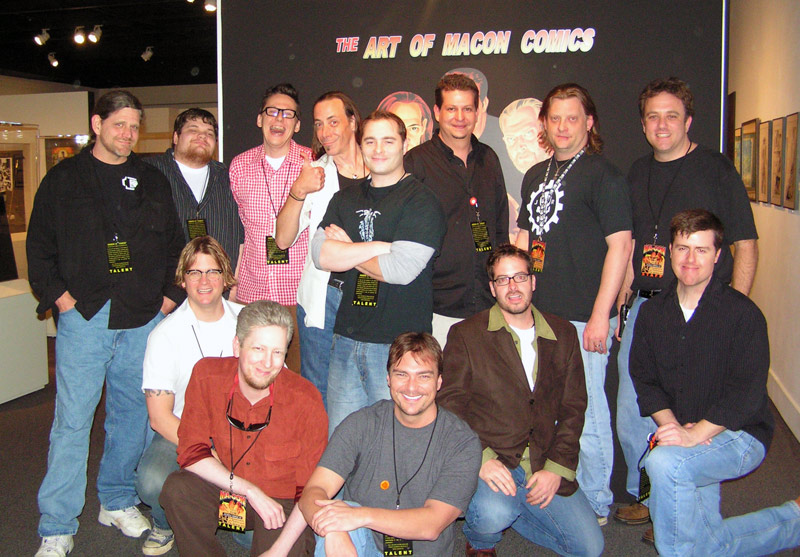
Museum curator Eric O’Dell just sent me a couple more pics from the Ma-Con comics convention last weekend. Here’s the whole gang:

ma_con-talent.jpg

On the pic, standing from left to right:

William McCrainie
William’s son
Josh Latta
Craig Hamilton
Ray Snyder
Tony Harris
Eric O’Dell

Kneeling, left to right:

Ben Towle
Nathan Massengill
Steve Scott
Daniel Way
Rhett Thomas

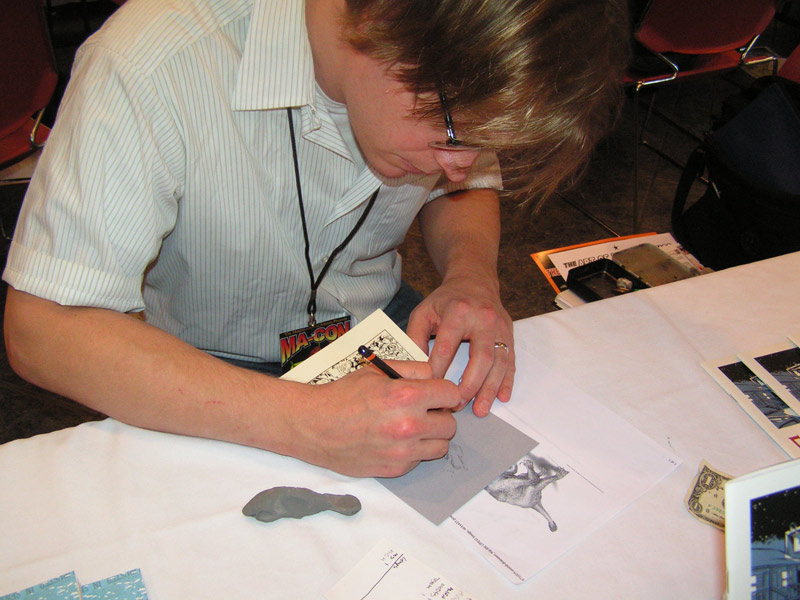
…And here’s me doing a sketch on the inside cover of my mini-comic, Hush.  One of these sorts of shots of me turns up at a surprising number of conventions I attend.  I must be easy to sneak up on when I’m drawing.

ben-1.jpg

Con Report: Ma-Con, Macon GA

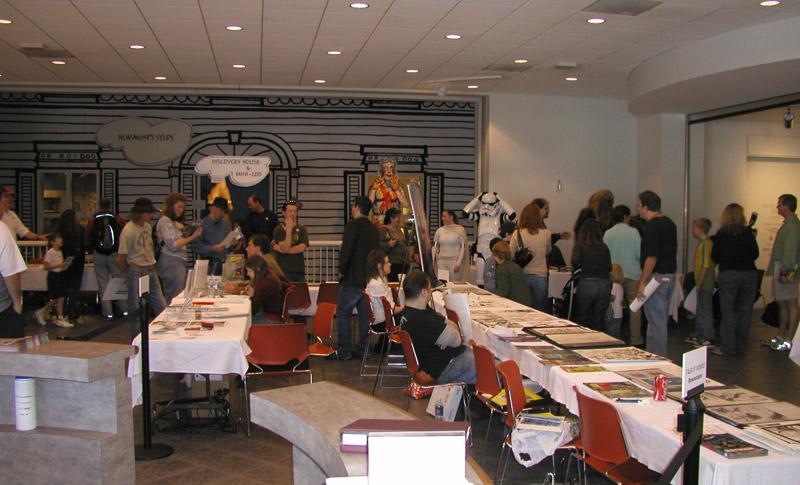
If the inaugural year of Ma-Con—a new comics con/expo in Macon, Georgia—is any indication, this is an event to keep an eye on. It was truly a comics event unlike any other I’ve attended. First off: the venue. Occasionally you hear folk say they’re skipping the big San Diego Comic-Con because it’s “become a real zoo.” It’s got nothing on Ma-Con in that department, however; Ma-Con is actually held in a zoo. Well, OK, it’s not really in a zoo, but it is in the Macon Museum of Arts and Sciences, which does in fact house a “mini-zoo,” among other things… so, just around the corner from the “artists alley” you could enter a miniature rain forest, inhabited by tamarin monkeys, tarantulas, snakes, lizards and exotic birds. These paparazzi-fearing creatures forbid flash photography, so this isn’t an actual tamarin monkey from the museum, but if you took a wrong turn from the comics event, this is pretty much what you’d see:

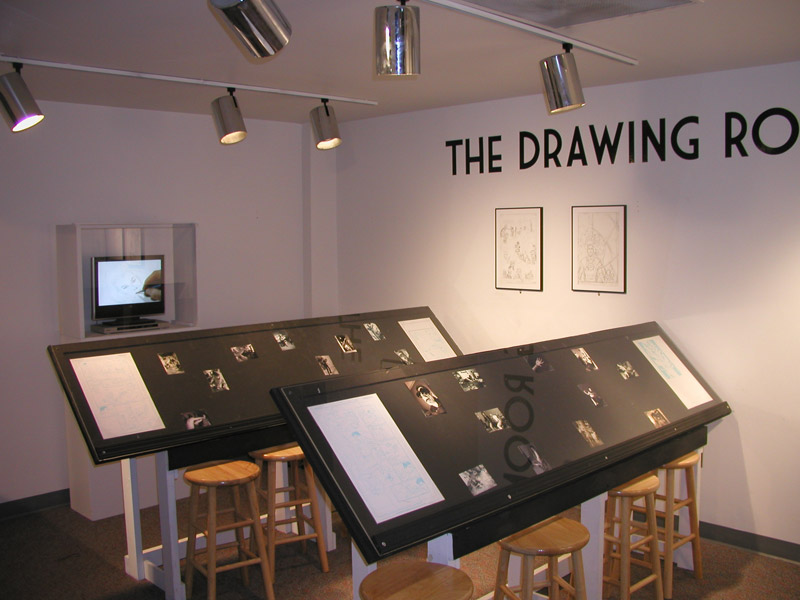
Also notable is the general format of the event. Today’s convention happening was technically the museum’s “comics family weekend” which ties in with a three-month long exhibit in featuring the art of local comics professionals Craig Hamilton, Tony Harris and Ray Snyder. The event’s planners were clearly museum folk, and some of the extra touches they threw in were things I wish I’d see at more comics events. For example, given the kid-focused nature of the day, they’d set up a drawing room, featuring a “how to” video looping on a monitor (the few seconds I saw looked like John Buscema drawing Sue Storm?) in a room with big drafting tables and art supplies. I’d have been all about this kinda setup as a young whippersnapper:
drawing.jpg

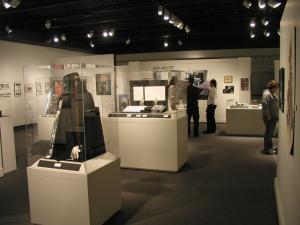
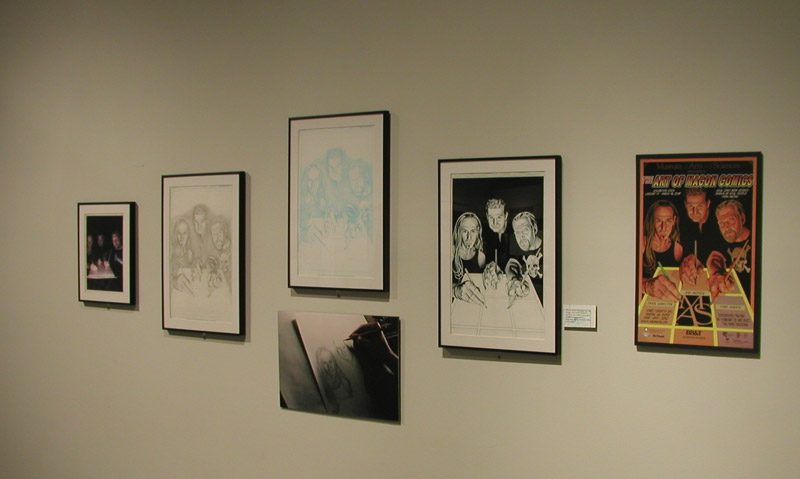
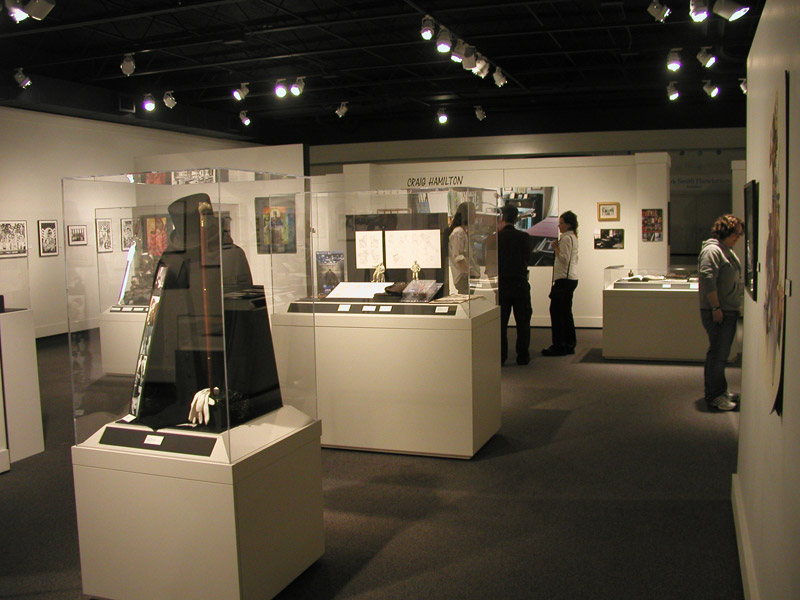
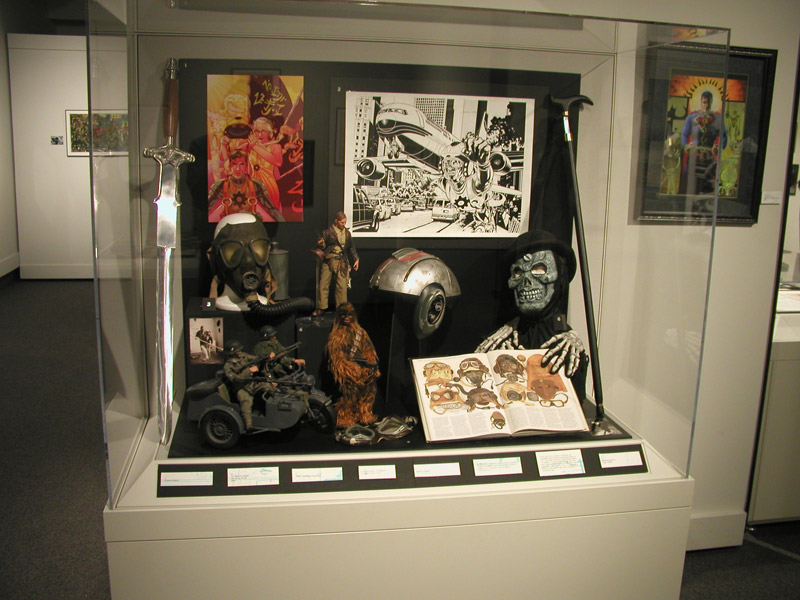
The exhibit itself was really nicely done, and featured an emphasis on the comics-making process, with framed inked pages often mounted next to the photo-reference the poses therein were derived from. The museum and other folks involved had done a great job promoting the event and Macon was plastered with posters and playbills featuring a drawing of Craig, Tony and Ray… and, as per its focus on process, the exhibit showed how the poster’s image was made—from photo, to pencils, blue line, inks, all the way to the final image.
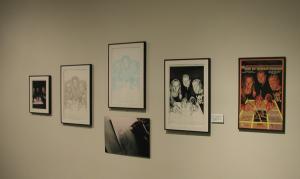
poster.jpg

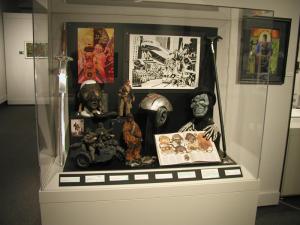
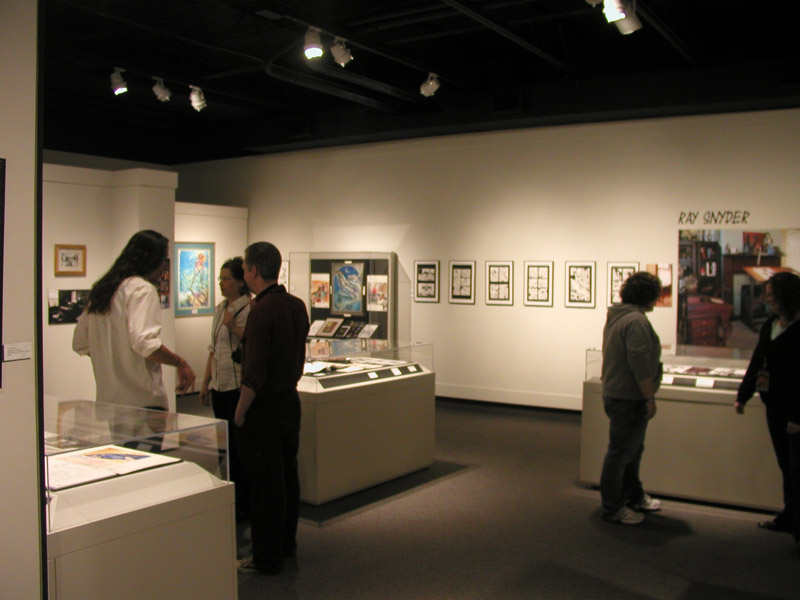
The bulk of the exhibit consisted of inked pages and various photo-reference items and props:
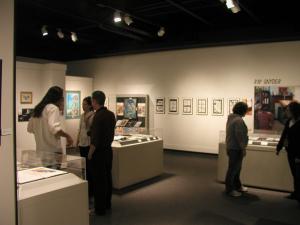
exh1.jpg

exh2.jpg

case.jpg

The artists were seated right at the entrance of the museum, and that positioning was pretty much reflective of the great treatment we all received from the organizers, even down to arranging a city trolley (known as “Miss Molly”) which transported us from our hotel to the event. After a slow-ish start, I wound up selling a surprising amount of books given the (relative to other big cons) smallish number of folks there. More important, though, everyone I spoke to was really nice and seemed to be genuinely interested in comics even if they knew little about the art form. The event was pretty much entirely art and creator-focused, with panel discussions running throughout the day and drawing good attendance. I participated in a panel on “The Southern Comics Creator” with Craig Hamilton that was attended by I’d guess fifty people –a pretty respectable crowd, but reportedly one of the least attended panels of the day.
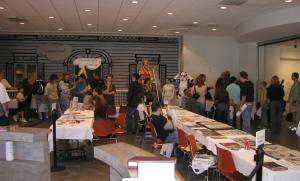
room.jpg

Clearly, though, the single most bizarre and very, very unusual event of the day was when it was announced that the city of Macon, Georgia had officially declared February 23th to be “Comic Creators Day” in the city from now on, and all the artists received a photocopy of the declaration from city hall, in which the city encouraged “all citizens, young and old, individually and as families, to enjoy the stories found in comic books the world over through the efforts of those talented creators who make them possible.”

I hear ya, Macon! Looking forward to next year…

The Untrustworthy Narrator – MS Review

Here’s another review of Midnight Sun that’s appeared on those crazy internets. This one’s from Greg Burgas of “Comics Should be Good” who had reviewed the first installment of the now-canceled serialized run of the book and, though generally liking the setup, felt that a self-contained book would have been a better package from the get-go given the pacing of the storytelling. Now, reading the whole thing beginning-to-end as a graphic novel though, he gives it quite a favorable review, saying that it would potentially have made his “best of” 2007 list, had that list gone to ten rather than five (insert Spinal Tap joke here).

Greg astutely notes one aspect of the story that gave me some real trouble when putting Midnight Sun together: untrustworthy narrators. He mentions this specifically when citing from the book, “People (who) tell their stories about what happened, but they may be lying or have incomplete information.” Having a story relayed by an untrustworthy narrator is a longstanding literary device in prose fiction that’s been used to great effect, for example, in one of my favorite novels, Lolita, by Vladimir Nabokov. The device that really drives Lolita is specifically its untrustworthy narrator, Humbert Humbert, who relays the story of his bizarre and immoral “romance” with a child in such a way that the book becomes a black comedy because of the obvious contrast between his version of the events—in which he makes himself out as some sort of victim—and what we, the readers, can clearly deduce is the real and quite inverse story behind this narration.

But for us comics folk, this is a pretty hard trick to pull off. In comics, like its distant cousin film, the visual element is there, smack in front of the viewer, with a weight and authority that says THIS is what happened. Pictures have a sort of existential authority that prose does not necessarily have, particularly prose that we know to be from an unreliable source. But in comics, even when a bit of first-person dialog is placed in a caption box over an image, the image will tend to be seen by the reader as an accurate telling of events, and getting around that can be difficult. Here’s the best I could do for a solution to this in Midnight Sun: on this page a narrator, about whom cannibalism will later be implied, is relaying how he (claims he) abandoned a fellow crewman at that crewman’s specific request:

123.png

The problem here, of course, is that when the prospect of cannibalism is brought up a page or two later, the reader will likely flip back and review the narrator’s version of events and, more important, the images in each panel. In light of this prospect, what I attempted to do here was to pose the main figure (the one who was either left behind at his own request, or was possibly killed and devoured, depending on who you believe) such that his gestures and facial expressions could be interpreted first go-round as that of someone desperate and miserable, asking to be left to die, yet could also be read in light of later innuendo as a person being threatened by aggressors and pleading for mercy.

Now, whether I was wholly successful at this (or, really, whether anyone would even bother to look back a few pages!) is something that the book’s readers, not I, can say…