Oh, to be the layout guy…. Here’s an example from the Amelia Earhart book I’m working on now.
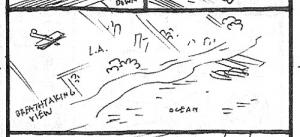
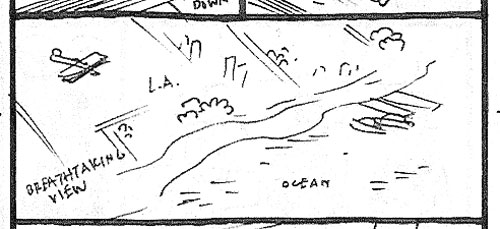
First, the layout panel from the thumbnail:
Here, the penciled panel:
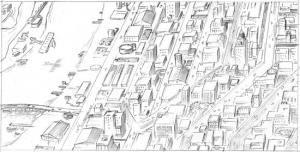
Now, why can’t I just write “breathtaking view” and be done with it instead of having to draw hundreds of buildings!?
I’ve reversed the location of the water here because I wanted to create a visual analog with the opening pages of the book, which show just the shadow of a plane on ocean waves, and also because I wanted to really set the plane off visually by having it against a solid background rather than against the clutter of the cityscape. We’ll see whether I can get away with that as the book goes through its various editing processes.
Joking aside, this is the first time that I’ve done a book for which I’m given thumbnail breakdowns done by someone else (in this case, Jason Lutes) and it’s been an interesting experience so far. I’m definitely learning a lot by seeing how another cartoonist goes about setting up panel to panel action and transitions. It’s interesting to me, though, that in the few cases I’ve discussed this process with non-cartoonists, they’ve been surprised to hear me mention the workmanlike nature of my end of things; many folks apparently assume that the actual rendering of panels–the drawing itself–is the most challenging and engaging aspect of comics-making.
It may not be the case for every cartoonist, but for me the most interesting part of creating comics is the stuff that comes before the actual drawing: developing the story, coming up with characters, and most of all putting things together visually via the thumbnailing process. On the other hand, because of the “right brain” nature of the actual rendering work, it’s the only part of the process I can do while listening to NPR. I’m certain to be ready to compete on “Wait, Wait, Don’t Tell Me” by the time this is all done…


Recent Comments