Has Comics as an Art Form “Arrived”? Don’t Count on It…

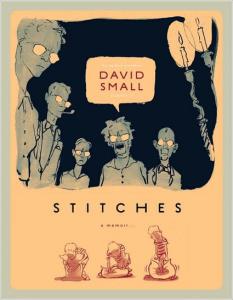
stitches

It’s great to see comics getting more press and more recognition in the form of awards and awards nominations.  Whenever some high-profile instance of this occurs, those of us who are interested in comics tend to see these sorts of events as indicators that comics is finally beginning to receive the recognition and appreciation it justifiably deserves.  I recall a conversation I was having with another cartoonist a few years back (I can’t remember who exactly–maybe James Sturm?) and he declared simply, “Comics has arrived.”   Has it though?

The latest high-profile nod to a graphic novel is from the National Book Awards, which has selected illustrator David Small’s childhood comics memoir, Stitches, as a nominee in its literature for young people category (an odd category for this particular book, but that’s a whole other discussion).  A comment or two into the discussion from the link above , someone says, “…it is great that Graphic Novels are getting realized as real literature by mainstream sources.”  As you can see if you scroll down, I’m not sure I can really agree with this.  Rather than further derail the discussion over at The Beat (which really should be about congratulating David Small, not grousing about other stuff) I thought I’d address my concerns here instead.

My point is straightforward: until there’s a sizable adult readership for comics/graphic novels which do not derive their appeal from a factual/memoir-based connection to their narratives, comics cannot be said to have truly “arrived” as an art form.  Yes there are a number of GNs that have sold well in the mass market, but the vast majority of them rely on the novelty of some kind of appeal to events or circumstances beyond simply a well-crafted narrative to do so: the author’s tragic childhood (Stitches, Fun Home, Blankets), the author’s personal involvement in political strife and/or war (MAUS, Palestine, Persepolis), the author’s tragedy in adulthood (Cancer Vixen, various other cancer-related books), etc.   (And of course, there are things like Watchmen that “regular people” will buy when movies are made of them.)  Where is the readership, though, for general fiction GNs?  Beyond comics folk, I’d say it’s in the realm of very small to non-existent.

I certainly don’t mean to deride or de-value the recognition that comics seems to be getting these days in the form of awards, nominations and high-profile reviews; I simply question whether that recognition is truly translating into a readership that’s interested in comics beyond its current “novelty value” in the publishing market.  (A book about surviving cancer?  And it’s, like, a comic book!? OMG!!!)  Cartoonist Ted Rall raised a similar point about MAUS in his now-notorious 1999 essay for The Village Voice, “The King of Comics.”  In it, he asks as a thought experiment to, “…consider the sales potential of a similar work about the Turkish genocide of Armenians.”  I think the more pertinent point now, ten years later, is to try to imagine the sales potential of a similar work if it were entirely fictional–if it were, say, a science fiction work about a war and holocaust far, far in the future.

There’s certainly no reason to be a full-on “gloomy Gus,” though.  I’m delighted to see the art form get the sort of recognition it’s getting and I think it’d be great if Stitches won a National Book Award.  You won’t hear me griping about GNs being reviewed in the New York Times, nor is there anything not encouraging about only having to explain what a “graphic novel” is to maybe 75% of people who hear the term, but I think it’s important to be realistic about where the art form is in its development and readership.  When the guy who wanders into Borders to pick up the latest Dan Brown novel also picks up a copy of Bookhunter because it looks interesting, color me convinced.

Heavy Metal Mag’s Submissions Policy: Slight Disconnect

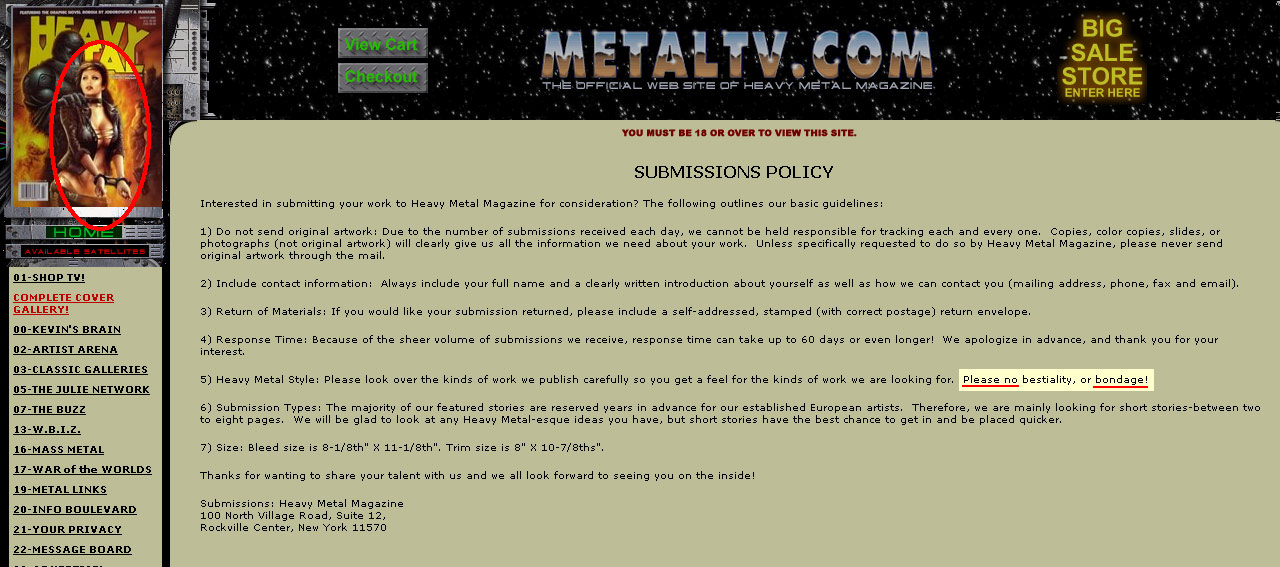
Folks on a comics forum I occasionally check out were discussing anthologies that have open submissions policies and someone had linked to Heavy Metal magazine’s submissions page.  I figured I’d check it out just for fun, despite the fact that absolutely nothing I do would work stylistically in Heavy Metal.  Is it just me, or is there a strange disconnect between one of the items in their submission policy and the ad being served up in the top left corner?

hvy_mtl

Sketchbook 10/13

I’m still tinkering around trying to come up with some crewmen/women both for the pirates and for the oyster navy vessel from Oyster War:

101309_sketchbook

I’m thinking that these folks might work well in a possible Count of Monte Cristo GN as well.

No, THIS Is The Way To Improve SPX

Every year after SPX,  alt-comix’s venerable gathering in Bethesda, there are usually a few folks who blog about ways to improve the show.  This year’s most circulated post is from Susie Cagle.  I’ve even dabbled in the SPX critique/suggestion game myself.  Usually folks who discuss possible changes to SPX do so drawing on and citing various other comics events, whether from the domestic mainstream like the San Diego Comic-Con or from the European scene like the Angoulême festival.  I think, though, it’s time to look at events outside the insular world of comics to find ways to improve comics events.  Fortunately I happened to be at just such an event this evening, Winston-Salem’s Dixie Classic Fair, which since 1882 has been drawing folks from around the state for an evening of fun, games, rides, and yes, one attraction in particular that I feel would really improve most comics events a thousand-fold: FRIED STUFF

df_butter

SPX has its “buzz books,” but each year of the Dixie Classic seems to have a new fried “buzz item.”  This year it was…. wait for it…. fried butter!  While I’m not sure that it really made my “heart flutter” as advertised, it was pretty damn good.  Basically, it was a small column of butter wrapped in multiple layers of filo dough, deep fried, and then sprinkled with powered sugar.  Also available were fried Oreos, fried Snickers bars, fried Three Musketeers bars, Fried pickles, fried cheese, etc. (The fried Snickers is the best one I’ve tried so far.  It’s a Snickers bar on a stick, dipped in funnel cake batter, deep fried, and then topped with powdered sugar.)

I’m glad that SPX’s attendance was up 19% to around 1800.  Attendance of the the Dixie Classic is regularly in the hundreds of thousands.  Hear me now and believe me later, SPX… BUY A GODDAMN FRYER!!!

Sketchbook 10/4

sketchbook_100409

I just finished reading The Count of Monte Cristo and, being obsessed with all things comics, it occurred to me that it’d make for a great comics adaptation.  As far as I can tell, no one has attempted this to date–although Alan Moore’s V for Vendetta and to a lesser extent Garon Tsuchiya’s Manga Oldboy borrow from it heavily.  The story in Count of Monte Cristo is a fairly straightforward example of the classic revenge tale that I usually refer to as the “don’t mess” story: a person (or persons) unwittingly winds up messing with the wrong person, and that person returns and wreaks a terrible revenge.  The moral of the story?  Don’t mess!

The story would work in any number of eras, not just set in France’s Second Empire-era as in the original.  Given my interests, I’d probably set it in America directly after the Civil War (or as we refer to it in these parts, “The War of Northern Aggression”!) in some border state–West Virgina would be a good candidate, I think–and substituting the Bonapartists and Royalists in the book for Confederate and Union sympathizers.  Anyway, the above drawing from my sketchbook is a doodle of The Count (left to right) first as The Count of Monte Cristo, then Abbé Busoni, and finally as the young Edmond Dantès.